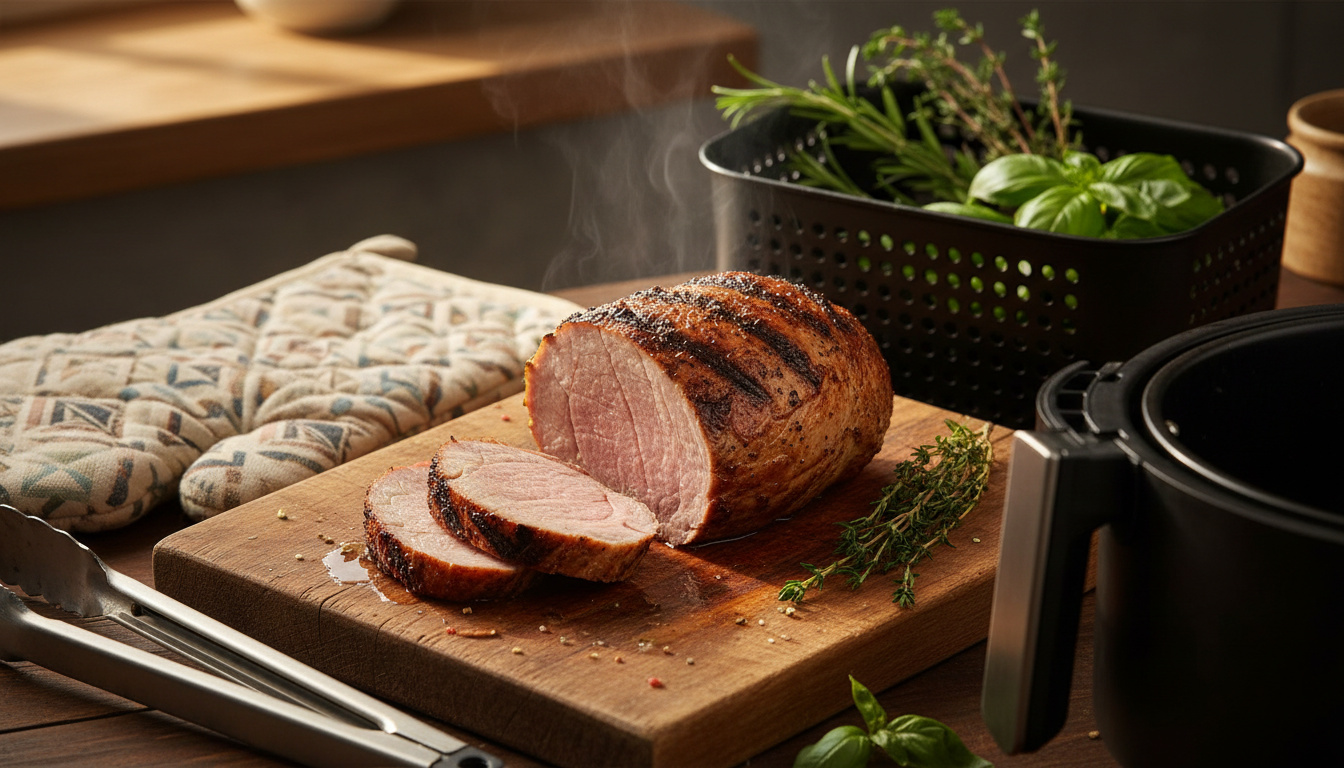
Pork tenderloin offers a lean, tender cut that cooks quickly across multiple methods, yet its low fat content makes precise temperature control essential for juicy results. Home cooks often struggle with dryness, but understanding the interplay between heat, time, and internal temperature transforms this economical cut into a reliable weeknight centerpiece.
Whether roasted in the oven, seared on the grill, or cooked in an air fryer, the principles remain consistent: remove silver skin, season aggressively, and monitor internal temperature rather than clock time. Modern USDA guidelines have shifted away from overcooking pork, allowing for a slightly pink center that remains both safe and succulent.
How Long to Cook Pork Tenderloin in the Oven?
Oven roasting remains the most common preparation method, requiring approximately 20 to 30 minutes at 375°F to 400°F for a standard one-pound tenderloin. Larger cuts of two to three pounds extend this window to 35-50 minutes. The oven method produces consistent results when the tenderloin rests on a rack, allowing hot air to circulate evenly.
| Oven | Grill | Air Fryer | Instant Pot |
|---|---|---|---|
| 375-400°F 20-30 min (1 lb) |
Medium-high 20-30 min |
370-380°F 20-26 min |
High pressure 15-20 min + NPR |
Quick method comparison for 1 lb tenderloin
- Always cook to 145°F internal temperature for safety and juiciness
- Rest meat 5-10 minutes post-cook to redistribute juices
- Trim silver skin before seasoning to prevent toughness
- Cook uncovered to promote browning and crust formation
- Insert thermometer into thickest part for accurate readings
- Frozen tenderloins require approximately 50% additional cooking time
- Carryover cooking raises internal temperature 5-10°F after removal from heat
| Attribute | Detail |
|---|---|
| Safe Internal Temperature | 145°F (63°C) |
| USDA Mandated Rest Time | 3 minutes minimum |
| Average Market Weight | 1-2 lbs |
| Preparation Time | 10 minutes |
| Recommended Rest Duration | 5-10 minutes |
| Calories per 4 oz Serving | 140-180 |
| Protein per 4 oz Serving | 20-25g |
What Temperature Should Pork Tenderloin Reach Internally?
The USDA Food Safety and Inspection Service recommends cooking fresh pork tenderloin to an internal temperature of 145°F followed by a three-minute rest period, a standard revised from the previous 160°F guideline. This change reflects modern pork production practices and confirmed bacterial kill rates during the resting phase, yielding medium doneness with a slightly pink center.
Understanding Safety Guidelines
Ground pork requires a higher 160°F threshold due to increased surface area exposure during processing, while whole muscle cuts like tenderloin remain safe at 145°F. The National Pork Board emphasizes that color alone proves unreliable; only a calibrated meat thermometer provides definitive safety verification.
Medium vs. Well-Done Preferences
For those preferring well-done pork, temperatures of 160-165°F deliver fully opaque meat but increase the risk of dryness. When grilling, experienced cooks remove the tenderloin at 135-140°F, anticipating a 5-10 degree rise during the mandatory rest period.
Insert the probe into the thickest portion of the tenderloin, avoiding fat pockets or silver skin remnants. For irregular shapes, check multiple points to ensure the lowest reading reaches 145°F.
How to Cook Pork Tenderloin Using Alternative Methods
Beyond the oven, air fryers and grills offer distinct textural advantages. Air fryers produce a concentrated crust through rapid air circulation, while grilling imparts smoke flavor and attractive char marks. Both methods demand the same internal temperature endpoint but require adjusted timing.
Air Fryer Technique
Air Fryer Pork Tenderloin cooks efficiently at 370°F to 380°F, requiring 20 to 26 minutes for a one-pound cut according to tested air fryer methods. Turn the meat every four to five minutes and spritz lightly with oil to promote even browning. Start checking temperature at the 20-minute mark to prevent overcooking.
Grilling Method
Grilled Pork Tenderloin benefits from a two-zone fire: sear over direct medium-high heat, then move to indirect heat to finish cooking without burning. Total grilling time ranges from 20 to 30 minutes. Probe the meat when it reaches 135-140°F, allowing carryover heat to reach the safe 145°F during the rest.
Basic Steps and Seasonings for Pork Tenderloin
Proper preparation determines final quality more than cooking method. Removing the silverskin membrane prevents curling and toughness during cooking, while adequate seasoning penetrates the lean meat for flavor.
Essential Preparation
Trim away the silverskin—a thin, pearlescent membrane running along the surface—using a sharp boning knife. Leave minimal fat caps, as tenderloin contains little intramuscular fat. Pat the meat dry before applying oil and seasonings to ensure proper adhesion and browning.
Slide the knife blade between the silverskin and meat, angling slightly upward to preserve flesh. Remove in strips rather than attempting one large piece to minimize waste.
Flavor Applications
Dry rubs containing paprika, garlic powder, onion powder, thyme, or cumin create a flavorful crust. Wet marinades incorporating soy sauce, mustard, honey, garlic, or sriracha penetrate deeply when applied 30 minutes to 24 hours before cooking. Visual seasoning guides demonstrate basting with remaining marinade halfway through cooking for enhanced glaze.
Exceeding 145°F significantly increases dryness probability. Carryover cooking continues raising internal temperature 5-10°F after removal from heat. Always account for this rise when planning removal timing.
What Is the Step-by-Step Timeline?
- 0-10 minutes: Preheat appliance, trim silverskin, apply seasonings or marinade
- 10-35 minutes: Cook using selected method (oven, grill, or air fryer), flipping or rotating halfway
- 35-45 minutes: Rest tented in aluminum foil to redistribute juices and complete carryover cooking
- 45+ minutes: Slice against the grain into half-inch portions for serving
What Is Certain vs. Uncertain About Pork Doneness?
Established Facts
- USDA mandates 145°F internal minimum for whole muscle pork
- Three-minute rest period is scientifically validated for safety
- Modern pork trichinosis risk is negligible at proper temperatures
Variable Factors
- Exact cooking minutes vary by thickness and starting temperature
- Equipment calibration differences affect actual vs. set temperatures
- Altitude and humidity impact cooking times slightly
Why Is Temperature Control Critical for Pork Tenderloin?
Pork tenderloin ranks among the leanest cuts available, containing minimal intramuscular fat to lubricate muscle fibers during cooking. Unlike fattier shoulder cuts that braise well, tenderloin lacks collagen and moisture reserves. This anatomical reality makes precise temperature monitoring essential; even five degrees over target accelerates moisture loss exponentially.
The shift from 160°F to 145°F USDA guidelines in 2011 acknowledged improved feeding practices and processing standards that reduced pathogen risks. This change allows cooks to serve pork at medium doneness—slightly pink and significantly more succulent—without safety concerns.
What Guidelines Do Experts Follow?
Federal food safety standards and industry organizations provide the foundation for modern pork preparation recommendations.
Pork is safe to eat when cooked to an internal temperature of 145°F followed by a three-minute rest time. This change reflects the science supporting the safety of pork cooked to lower temperatures.
USDA Food Safety and Inspection Service
The National Pork Board maintains similar guidelines, emphasizing that ground pork requires 160°F while whole cuts like tenderloin remain safe at 145°F. USDA cooking temperature updates specifically address the confusion between old and new standards.
How Do You Achieve Consistently Juicy Results?
Success requires internal temperature vigilance rather than strict adherence to clock time. Remove silverskin, season adequately, cook to 145°F using a reliable thermometer, and rest the meat sufficiently. Whether choosing oven roasting, Air Fryer Pork Tenderloin, or Grilled Pork Tenderloin, these principles deliver safe, succulent pork without the dryness associated with outdated overcooking practices.
Frequently Asked Questions
Can you cook pork tenderloin from frozen?
Yes, though thawing first ensures more even cooking. Frozen tenderloins require approximately 50% additional cooking time; for air fryers, this extends the 20-minute baseline to roughly 40 minutes.
Can you overcook pork tenderloin?
Absolutely. Exceeding 145°F internal temperature accelerates moisture loss, resulting in tough, dry meat. Carryover cooking raises temperatures 5-10°F after removal, necessitating early removal from heat.
Should pork tenderloin be cooked covered or uncovered?
Uncovered cooking promotes browning and crust formation. Covering traps steam, softening the exterior and preventing the Maillard reaction that creates flavor complexity.
How do you store leftover pork tenderloin?
Refrigerate in airtight containers for three to four days, or freeze sliced or whole portions for two to three months. Always reheat to 145°F internal temperature.
What is the best way to reheat pork tenderloin?
Reheat gently in a 325°F oven wrapped in foil with a tablespoon of broth, or slice and sauté quickly in a pan. Avoid microwave reheating, which toughens the lean meat.
Related stories





Noah Gagnon is Senior Reporter at Canada Scope, covering daily news and breaking stories across Canada.