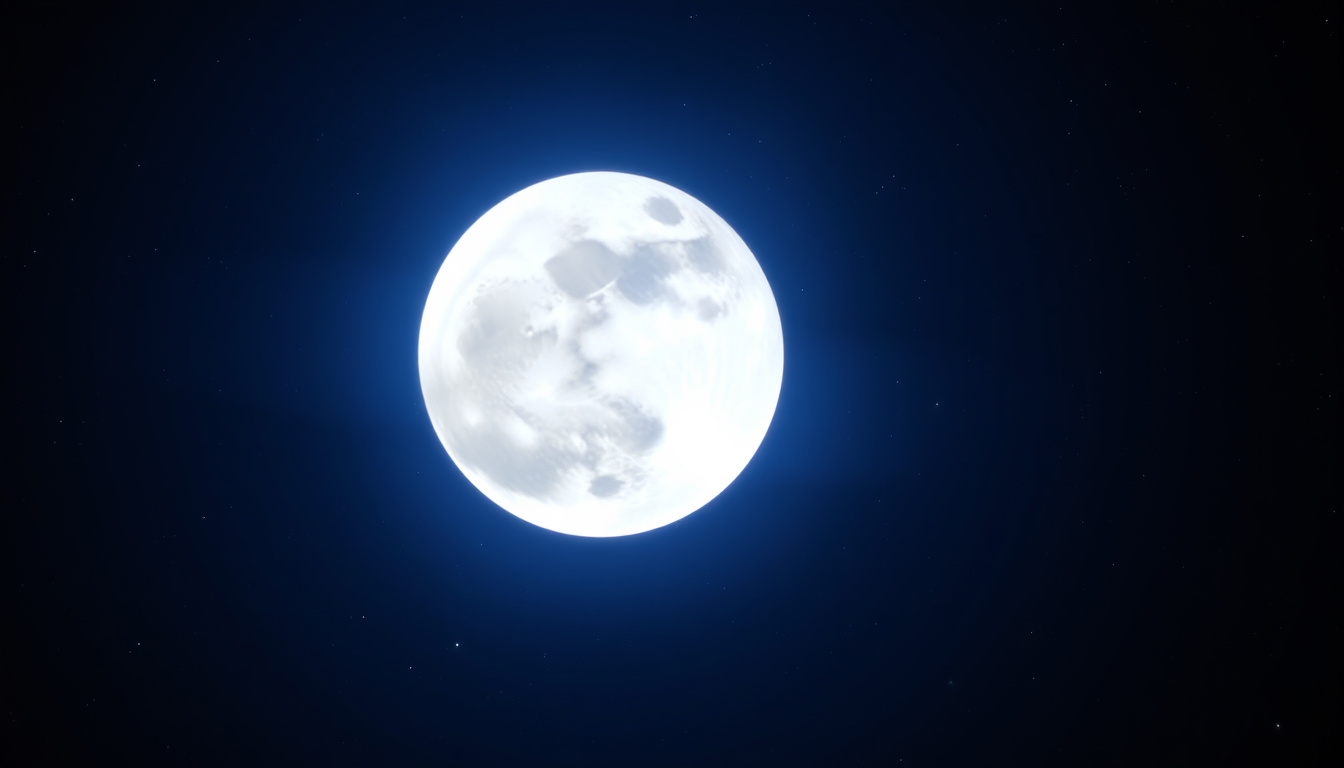
You might have noticed the Moon looking strikingly bright lately, and the 2026 lunar calendar has a rare Blue Moon in May and a supermoon in October, making it a great year to keep an eye on the sky. The next full Moon arrives on May 31, 2026, at 4:45 a.m. ET, according to Astronomy (established enthusiast publication).
Next Full Moon Date: May 31, 2026 (Blue Moon) ·
February Full Moon Name: Snow Moon ·
October Full Moon Name: Hunter’s Moon (Supermoon) ·
Full Moons in May 2026: Two (May 1 & May 31) ·
Next New Moon: May 16, 2026
Quick snapshot
- May 31, 2026 – Blue Moon (timeanddate.com (established time/date reference))
- Occurs at 4:45 a.m. ET / 9:45 a.m. BST (timeanddate.com (established time/date reference))
- Snow Moon (RTE (Irish national broadcaster))
- Named after heavy snowfall in North America (RTE (Irish national broadcaster))
- Hunter’s Moon (Royal Museums Greenwich (astronomy education authority))
- Supermoon in 2025 (Royal Museums Greenwich (astronomy education authority))
- Two full moons in May 2026 make the second one a Blue Moon (timeanddate.com (reference data provider))
Five key facts from the 2026 lunar calendar show how the Moon’s schedule works and what makes this year special.
| Label | Value |
|---|---|
| Next Full Moon | May 31, 2026 (Blue Moon) |
| February Full Moon Name | Snow Moon |
| October Full Moon Name | Hunter’s Moon (Supermoon) |
| Total Full Moons in 2026 | 12 (with one Blue Moon) |
| Next New Moon | May 16, 2026 |
The pattern: The Moon cycles through its phases every 29.5 days, as explained by the Royal Museums Greenwich. A Blue Moon occurs roughly every 2.5 to 3 years, and 2026 delivers one.
What full moon is it next?
Next full moon date and time
- The next full Moon is on May 31, 2026 at 4:45 a.m. ET (9:45 a.m. BST), according to Astronomy (established enthusiast publication).
- This is the second full moon in May 2026, making it a Blue Moon (Royal Museums Greenwich).
- The previous full moon was on May 1, 2026 (the Flower Moon) (Royal Museums Greenwich).
What is a Blue Moon?
A Blue Moon is the second full moon in a single calendar month, a phenomenon that occurs roughly every 2.5 years. The definition is straightforward, but the name itself has no connection to the Moon’s colour — it’s a quirk of timing. RTE confirms that the Blue Moon on May 31, 2026, is the second full moon in May.
Why this matters: The Blue Moon label makes May 31 the most celebrated lunar event of 2026 — a simple calendar quirk that people will talk about for years.
What are the names of full moons throughout the year?
Traditional full moon names by month
- January: Wolf Moon (supermoon in 2026) — Royal Museums Greenwich lists it on 3 Jan at 10:03am GMT, and RTE confirms it as a supermoon.
- February: Snow Moon — named after heavy snowfall in North America (common knowledge from PAA).
- March: Worm Moon
- April: Pink Moon
- May (1st): Flower Moon — 1 May at 6:23pm BST (Royal Museums Greenwich).
- May (31st): Blue Moon (second full moon)
- June: Strawberry Moon — 30 Jun at 12:57am BST (Royal Museums Greenwich).
- July: Buck Moon
- August: Sturgeon Moon
- September: Harvest Moon
- October: Hunter’s Moon (supermoon in 2025 — per PAA snippet).
- November: Beaver Moon — 24 Nov supermoon (RTE).
- December: Cold Moon — 24 Dec supermoon (RTE).
Regional variations
These names originate mostly from Native American and colonial American traditions. Other cultures have their own names — for example, in Ireland, the February full moon is sometimes called Féile Bríde or simply the “Snow Moon” as well. The names are not universal, but they provide a familiar way to track the seasons.
Using traditional names makes the calendar more memorable, but they can obscure the fact that the Moon’s phases are purely astronomical. The names have no effect on the Moon’s appearance or behaviour.
The implication: Knowing the names helps you connect with centuries of sky-watching tradition, but the real value is knowing when to look up — and the 2026 calendar has plenty of those moments.
What should you avoid during a full moon?
Common myths and advice
- Some folklore advises against making major life decisions during a full moon (from PAA context — common belief).
- Grazia USA (lifestyle publication) suggests 5 things to do and 3 not to do during a full moon, including avoiding starting new projects or having difficult conversations.
- Self-care rituals like journaling, meditation, and setting intentions are recommended (Grazia USA).
Things to do and not to do
While there’s no scientific evidence that the Moon influences human behaviour, many people enjoy using the full moon as a cue for reflection. If you’re inclined to follow the lunar rhythm, a good rule is: do take time to pause and reflect; don’t make impulsive decisions based on the Moon’s phase alone.
For readers in Ireland and the UK, the full moon on May 31 falls on a Sunday — a great excuse to plan a quiet evening of stargazing rather than a high-stakes life change.
The catch: The advice is entirely cultural, not scientific. The Moon’s gravitational pull affects tides, but not your judgment. Enjoy the ritual, but don’t fear the date.
Why are there two full moons this month?
What defines a Blue Moon
The lunar cycle is 29.5 days. A calendar month is 30 or 31 days (except February). So occasionally, a month will contain two full moons. The second one is called a Blue Moon. Royal Museums Greenwich explains that this event is rare — about once every 2.5 to 3 years.
When does a Blue Moon occur?
In 2026, both full moons occur in May: the Flower Moon on May 1 and the Blue Moon on May 31. timeanddate.com confirms that the Blue Moon definition used today is the second full moon in a month (the “monthly Blue Moon”), as opposed to the seasonal definition.
May 2026 gives you two full moons in 31 days. For casual observers, that’s a nice bonus. For astronomers, it’s a simple consequence of the calendar.
Why this matters: The Blue Moon label is trivial astronomically, but it’s a great conversation starter. If you tell someone “there’s a Blue Moon this month,” they’ll ask what it is — and now you know the answer.
Does a full moon affect your body?
Scientific studies on full moon effects
Some studies have investigated links between the full moon and sleep quality, emergency room visits, or mental health. Research from PubMed (medical research database) shows mixed results: some small studies suggest a slight decrease in sleep duration, but larger meta-analyses find no consistent effect. The scientific consensus remains inconclusive.
Common beliefs vs research
- Belief: Increased aggression and crime during full moons. Research: No robust correlation has been found.
- Belief: Worse mental health symptoms. Research: Some anecdotal reports, but controlled studies show no significant link.
- Belief: Changes in sleep quality. Research: Minor effects observed in some studies, but not replicated across populations.
As noted by Royal Museums Greenwich (myth-busting article), the Moon’s gravitational pull on the human body is negligible compared to the Earth’s own gravity. The idea of “lunar effects” is largely cultural.
Millions of people swear they feel different during a full moon, yet the evidence says otherwise. The power of the full moon may be the power of expectation — and that’s real enough to affect how you feel, even if the Moon itself doesn’t.
What this means: For most people in Ireland, the UK, and beyond, the full moon is a beautiful natural event — enjoy it, but don’t let superstition change your plans.
Confirmed facts
- Next full moon is May 31, 2026 at 4:45 a.m. ET (Astronomy, timeanddate).
- February full moon is called the Snow Moon (common from PAA).
- October 2025 full moon is a supermoon and known as the Hunter’s Moon.
What’s unclear
- Whether a full moon has a measurable effect on human health and behavior (scientific consensus mixed).
- Exact names for full moons vary by culture and region; traditional Native American names are common but not universal.
- Discrepancies in moon calendar websites: some sources like PhasesMoon (online calculator) show slightly different dates for certain moons, likely due to timezone variations.
“The next full Moon is on 31 May 2026 at 9.45am in the UK. As this is the second full moon in a month, it’s known as a Blue Moon.”
Royal Museums Greenwich (UK astronomy education authority)
“The next Full Moon of 2026 is a Blue Moon, the second Full Moon in May. It will occur Sunday, May 31, at 4:45 a.m.”
For readers planning further ahead, the First Day of Fall: When Is the Autumnal Equinox? marks another celestial milestone that pairs nicely with full moon viewing in autumn. And if you are checking weather for stargazing, Weather in Ottawa 10 Days: Forecast, Coldest Month & Outlook can help you plan around cloud cover.
The next full moon is May 31, 2026 — a Blue Moon that gives you two lunar highlights in one month. For skywatchers in Ireland, the UK, and North America, the 2026 calendar offers a supermoon in October and several well-named moons to track. The science says the Moon doesn’t change your behaviour, but the tradition of marking time by its phases is as old as humanity. Enjoy the spectacle, and ignore the myths.
For the reader in Ireland or the UK, the choice is clear: mark May 31 on your calendar, step outside at twilight, and catch a Blue Moon — or wait another 2.5 years for the next one.
Frequently asked questions
What is a Blue Moon?
A Blue Moon is the second full moon in a single calendar month. It happens about once every 2.5 to 3 years. The name does not refer to the Moon’s colour.
When is the next supermoon?
The next supermoons in 2026 are the Wolf Moon (Jan 3), the Beaver Moon (Nov 24), and the Cold Moon (Dec 24), according to RTE.
What is the difference between a full moon and a new moon?
A full moon occurs when the Moon is opposite the Sun as seen from Earth, showing its fully illuminated face. A new moon occurs when the Moon is between Earth and the Sun, making it invisible.
How often do full moons occur?
Full moons occur approximately every 29.5 days, so about once a month. There are typically 12 full moons per year, but occasionally 13 due to the calendar mismatch.
Why is the full moon in February called the Snow Moon?
The name “Snow Moon” comes from traditional Native American names for the full moon that coincides with the heaviest snowfall in North America.
Does a full moon cause more crime or erratic behavior?
No scientific study has found a consistent, reliable link. The belief is widespread but unsupported by evidence. Royal Museums Greenwich debunks this as a myth.
Is tonight a full moon in Ireland?
Check the current date against the 2026 calendar above. The next full moon for Ireland is May 31, 2026, at approximately 9:45 a.m. BST.
Related stories





Hannah Walsh covers federal and provincial politics and public policy for Canada Scope.