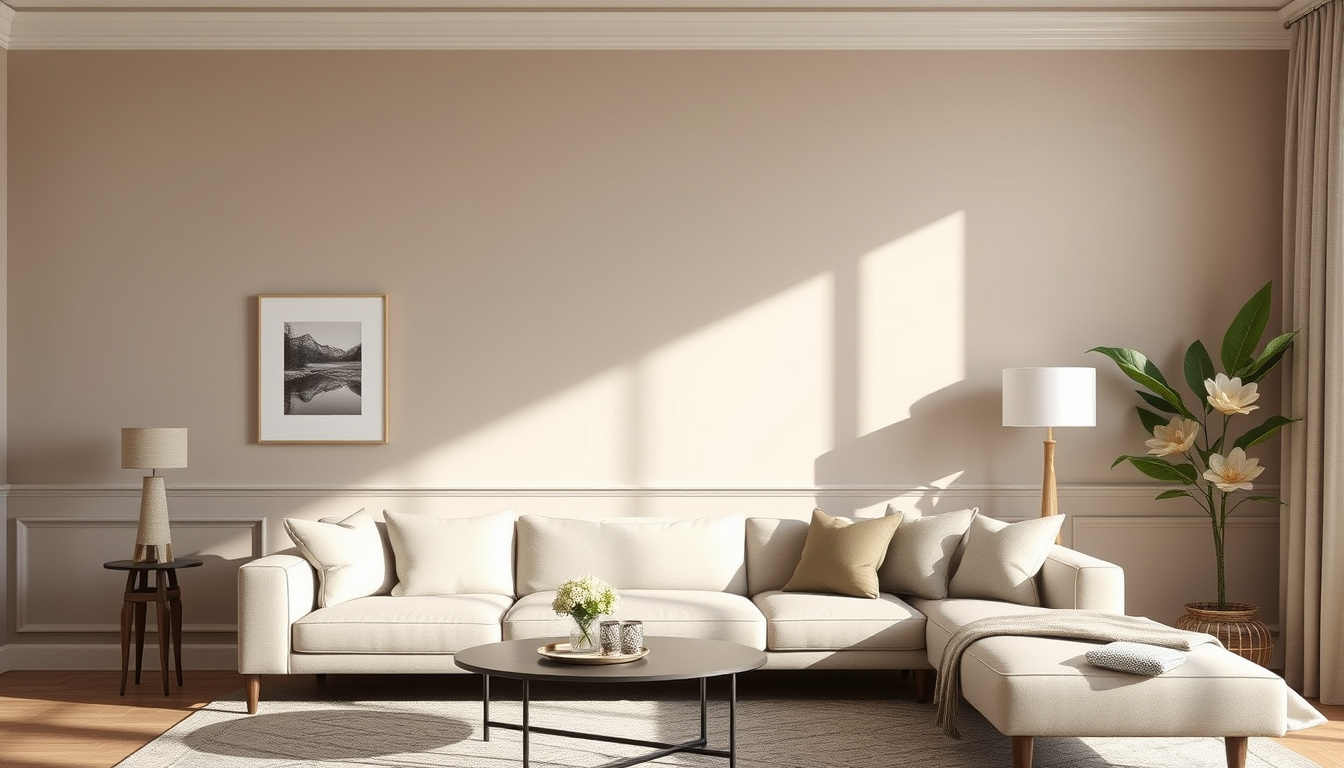
Benjamin Moore Pale Oak stands out as a versatile light neutral that bridges the gap between warm gray and soft beige. Classified as a taupe greige, this color from the Off-White Collection has earned recognition among homeowners and designers seeking an understated yet sophisticated backdrop for modern interiors. Its subtle warmth and balanced tone make it particularly well-suited for whole-home color schemes, open floor plans, and spaces that require a neutral canvas capable of adapting to changing light throughout the day. For those considering similar color approaches in apartments for rent in Thunder Bay, understanding how neutrals perform across different spaces provides valuable insight.
Unlike stark whites or heavier grays, Pale Oak delivers depth without overwhelming a room. The color draws inspiration from the natural grain of white oak, offering a refined quality that works equally well on walls, cabinetry, and exterior surfaces. Homeowners appreciate how the shade creates cohesive transitions between rooms while maintaining visual interest through its chameleon-like response to different lighting conditions.
What Is Benjamin Moore Pale Oak?
Pale Oak carries the official color designation OC-20, placing it within Benjamin Moore’s celebrated Off-White Collection. This collection groups colors that transcend traditional white boundaries, offering nuanced alternatives for spaces where pure white feels too stark or clinical. The designation OC stands for “off-white,” signaling that the color occupies that liminal space between white and the warmer neutrals that define today’s interior design preferences.
The color’s versatility stems from its ability to perform across multiple room types and lighting scenarios. Living rooms benefit from its calming presence, while kitchens gain warmth without appearing dated. Bedrooms achieve a serene atmosphere, and even exterior applications showcase how Pale Oak adapts beautifully to natural outdoor lighting. The shade performs particularly well in north-facing rooms where cool light might make other neutrals appear flat or unwelcoming. Those exploring options for retirement home considerations often find this color adaptable to various room orientations and lighting conditions.
Key Insights
- Pale Oak maintains consistent warmth that prevents rooms from feeling cold or sterile
- The color shifts noticeably between natural daylight and artificial evening lighting
- North-facing rooms bring out its gray undertones more prominently
- South and west-facing spaces amplify its warm taupe characteristics
- The shade pairs successfully with both cool blues and warm earth tones
- Multiple coats can intensify purple undertones, so testing is essential
| Specification | Value |
|---|---|
| LRV (Light Reflectance Value) | 68.64–69 |
| Collection | Off-White Collection |
| Undertones | Warm gray, taupe, subtle purple-pink |
| Temperature | Warm |
| Position | Between gray and beige |
| Recommended Finishes | Eggshell, Satin |
| Coordinates Well With | Chantilly Lace, Balboa Mist |
Is Pale Oak Warm, Cool, or Greige?
The question of whether Pale Oak qualifies as warm, cool, or greige requires understanding how each term functions in color classification. Warm colors contain undertones of red, orange, yellow, or brown. Cool colors lean toward blue, green, or violet. Greige represents a hybrid classification that combines gray’s neutrality with beige’s warmth, creating something that exists between the two without fully belonging to either camp.
Understanding Warm Gray and Taupe Influence
Pale Oak occupies a position within the warm gray spectrum, though it distinguishes itself through prominent taupe undertones. Taupe itself sits comfortably in the brown-gray zone, lending earthy sophistication that pure warm grays lack. These taupe undertones give Pale Oak its distinctive character, preventing it from appearing as simply another gray while keeping it from reading as beige-dominant.
The purple-pink dimension mentioned in reviews and professional assessments likely stems from the taupe base. Taupe colors frequently contain trace amounts of magenta or warm violet that become more apparent under certain lighting conditions. In Pale Oak’s case, these undertones remain subtle in single coats but can emerge more noticeably as paint layers accumulate. This characteristic explains why some homeowners report seeing purple-pink notes in their finished rooms while others perceive only warm gray.
The same wall painted in Pale Oak will appear up to two shades different depending on the time of day and lighting type. Direct sunlight brings out warmer taupe qualities, while overcast or northern exposure reveals the color’s gray side. Always test samples at different times before committing to large areas.
Where Pale Oak Falls on the Color Spectrum
Pale Oak sits closer to the warm gray end of the spectrum than to pure beige. Comparisons with similar Benjamin Moore colors confirm this positioning. Stonehearth and Cedar Key, both popular beige-greige options, contain more pronounced beige influence than Pale Oak. Meanwhile, colors like Revere Pewter carry warmer yellow-brown undertones that distinguish them from Pale Oak’s more balanced taupe approach.
The color’s warmth never overwhelms, however. Unlike stronger warm neutrals that can appear orange or pink in certain lights, Pale Oak maintains enough gray neutrality to stay sophisticated. This balance explains its popularity among designers seeking warmth without the risk of a color appearing dated or too bold.
What Colors Pair Best with Pale Oak?
Selecting companion colors for Pale Oak requires attention to undertones and contrast. The goal is creating combinations where each color enhances the others without competing for attention. Pale Oak’s versatile nature accommodates several pairing strategies, from high-contrast drama to seamless monochromatic schemes.
Trim and Cabinetry Colors
White trim adjacent to Pale Oak walls creates classic contrast, but the specific white matters considerably. Pale Oak contains enough color depth that pairing it with the wrong white produces visual clash rather than crisp definition. The purple-pink undertones in Pale Oak can intensify when placed next to overly creamy whites, creating an unintended violet cast across both surfaces.
Clean, bright whites perform best with Pale Oak. Benjamin Moore’s Chantilly Lace emerges as the most frequently recommended pairing, offering pure white without cream or pink influences. This combination creates clean lines and contemporary appeal suitable for modern interiors. Alternatively, Benjamin Moore’s Cloud White provides slightly softer contrast while maintaining the cool clarity that complements Pale Oak’s warmth.
Accent and Furniture Colors
Warm blues and muted greens make excellent accent choices alongside Pale Oak. These colors share Pale Oak’s sophisticated restraint while providing enough distinction to create visual interest. Navy blues, sage greens, and dusty teals all work harmoniously, whether appearing in upholstery, artwork, or smaller decorative elements.
Earth tones and warm metallics also complement Pale Oak beautifully. Terracotta, rust, and camel colors bring out the color’s warm undertones, creating inviting spaces suited to comfortable living. Brass, copper, and warm nickel hardware all blend naturally with Pale Oak’s palette.
Pale Oak vs. White Dove: A Direct Comparison
White Dove (OC-17) represents one of Benjamin Moore’s most popular off-whites, making the comparison between these two colors inevitable. Both belong to the Off-White Collection, sharing similar positioning strategies within the color spectrum, yet their differences prove significant for specific applications.
| Aspect | Pale Oak (OC-20) | White Dove (OC-17) |
|---|---|---|
| Tone | Warm greige with taupe undertones | Creamy white with subtle warmth |
| LRV | 68–69 | 83–85 |
| Depth | More pigment, greater visual depth | Lighter, more airy appearance |
| Undertones | Purple-pink taupe influence | Soft cream, minimal color cast |
| Best Use | Walls requiring subtle color | Trim, cabinetry, ceilings |
The LRV difference of approximately 15 points means White Dove reflects significantly more light than Pale Oak. This distinction makes White Dove better suited for areas where brightness takes priority, while Pale Oak excels where subtle warmth and depth provide the desired atmosphere.
Using White Dove as trim adjacent to Pale Oak walls can produce unexpected results. The creamy warmth in White Dove may amplify Pale Oak’s purple-pink undertones, creating a violet cast that neither color alone would produce. Consider testing this combination on sample boards before committing to full application.
Pale Oak Reviews and Real-World Performance
Professional designers and homeowners consistently praise Pale Oak for its versatility and refined appearance. The color ranks among the most requested neutrals for whole-home painting projects, open floor plans, and modern interiors seeking sophisticated simplicity. Multiple design professionals cite its ability to serve as a cohesive foundation while maintaining enough character to prevent spaces from feeling generic.
Positive Feedback and Design Applications
Reviews highlight Pale Oak’s effectiveness across diverse room types and lighting conditions. Living rooms benefit from the color’s calming presence, with designers noting how it creates comfortable gathering spaces without appearing boring or flat. Kitchens painted in Pale Oak achieve warmth without the dated quality that plagues certain beige options, while the color’s light-reflecting properties keep cooking areas feeling open and airy.
Bedroom applications receive particular praise for the serene atmospheres Pale Oak helps create. The shade’s balanced warmth promotes relaxation while its gray undertones provide enough sophistication for adult spaces. Unlike cooler neutrals that can feel clinical in bedrooms, Pale Oak contributes to cocooning environments suited to rest and rejuvenation.
Exterior applications demonstrate the color’s remarkable adaptability to outdoor lighting. Pale Oak’s subtle warmth avoids the stark appearance of pure white exteriors while remaining light enough to read as neutral from the street. The color photographs well in both direct sunlight and shaded conditions, making it popular for homes seeking traditional appeal with contemporary restraint.
Challenges and Considerations
Not every review proves entirely positive, and understanding common criticisms helps prospective buyers set appropriate expectations. The most frequently mentioned issue involves the color’s chameleon nature—how significantly it shifts between different lighting scenarios. What appears as soft taupe in morning light may read as distinct gray by afternoon, and some homeowners find this variability unsettling rather than interesting.
The purple-pink undertone that emerges in multiple coats draws mixed reactions. Some homeowners appreciate this dimension as sophisticated complexity, while others find it too prominent for their preferences. Testing large sample areas over several days in actual room lighting provides the best indicator of whether these undertones will complement or conflict with your space.
In extremely bright rooms, Pale Oak can appear almost off-white, washing out sufficiently that the color’s distinctive character becomes imperceptible. South-facing rooms with abundant natural light often experience this phenomenon, potentially disappointing homeowners who selected Pale Oak specifically for its warm gray characteristics.
Professional painters and designers universally recommend testing Pale Oak samples extensively before application. Apply test patches to multiple walls, observe them throughout the day and in evening lighting, and live with the samples for at least 48 hours. This approach reveals how the color performs in your specific space with your particular lighting conditions.
The Evolution of Pale Oak
Understanding a color’s history provides context for its current popularity and helps explain its enduring appeal. Pale Oak emerged as part of Benjamin Moore’s strategic expansion of the Off-White Collection, which launched during a period when homeowners increasingly sought alternatives to pure white and traditional beige.
- Initial Release: Pale Oak joined the Off-White Collection during the 2010s, a decade marked by shifting preferences away from the golden beiges that dominated earlier decades
- Rising Popularity: As the “greige” trend gained momentum between 2015 and 2020, Pale Oak emerged as a leading option for homeowners seeking balanced warmth and gray sophistication
- Peak Recognition: By 2020–2023, Pale Oak consistently appeared on designer recommendation lists and home improvement media as a top neutral choice for modern interiors
- Current Status: Through 2024 and into 2025, Pale Oak maintains strong sales performance and continues receiving positive attention despite emerging competition from newer neutral releases
The color’s sustained popularity reflects broader shifts in interior design preferences toward nuanced neutrals that provide visual interest without strong color commitment. As bold colors have risen and fallen in fashion, versatile options like Pale Oak continue serving homeowners who prefer timeless sophistication over trend-driven selections.
What We Know—and What Remains Uncertain
Transparency about established facts versus areas of genuine uncertainty serves readers seeking accurate information for color decisions. Pale Oak enjoys substantial documentation from both manufacturer sources and independent reviewers, though certain specifics remain approximate or disputed.
| Established Information | Information That Remains Uncertain |
|---|---|
| Official LRV of 68.64 from Benjamin Moore | Precise RGB and HEX values not officially published |
| Part of the Off-White Collection | Exact digital color representation varies between monitors |
| Classified as warm gray with taupe undertones | Degree to which purple-pink manifests varies by formulation |
| Works in north-facing and sunlit spaces | Specific performance under various artificial lights |
| Popular and actively sold | Long-term color stability and yellowing resistance |
| Not discontinued; readily available | Precise comparisons to Sherwin-Williams equivalents |
The absence of officially published RGB or HEX values means digital representations of Pale Oak remain approximations based on visual analysis rather than manufacturer specifications. Anyone seeking precise digital color matching should request physical samples or rely on spectrophotometer readings of actual paint.
Understanding Greige in Contemporary Interior Design
The term “greige” has become ubiquitous in interior design discussions, yet understanding why this classification gained such prominence helps contextualize Pale Oak’s place within broader color trends. Greige represents more than a marketing term—it describes a genuine color category that fills specific needs in residential and commercial spaces.
The rise of greige correlates with changing attitudes toward color in living spaces. Where previous generations embraced warm beiges or cool grays as dominant neutrals, contemporary interiors increasingly seek colors that bridge these traditional categories. Greige satisfies this demand by offering warmth without yellow or orange bias, neutrality without cool blue or green influence, and complexity without strong color saturation.
Pale Oak represents a particularly successful greige implementation because its taupe undertones provide warmth while remaining sophisticated. Some greige colors tip too far toward beige, becoming bland or dated in appearance. Others lean too heavily into gray, risking cold or institutional aesthetics. Pale Oak maintains balance that accommodates diverse design styles, from contemporary minimalism to traditional comfort.
The color’s performance across lighting conditions represents another factor in its design relevance. Modern homes feature open floor plans, large windows, and varied artificial lighting that would expose color weaknesses quickly. Pale Oak’s adaptability across these scenarios—maintaining coherent appearance while shifting appropriately with light changes—makes it practically suited to contemporary architecture.
What Designers and Homeowners Say
Professional insights and homeowner experiences provide valuable perspectives beyond technical specifications. Designers who work extensively with neutral palettes consistently identify Pale Oak as a reliable choice for projects requiring sophisticated warmth, while homeowners share experiences that illuminate the practical realities of living with this color daily.
“Pale Oak has become my go-to recommendation for clients wanting whole-home neutrals. It provides enough interest to keep spaces from feeling flat while remaining versatile enough to accommodate changing décor preferences over time.”
— Design professional review from Welsh Design Studio
Interior design sources consistently describe Pale Oak using terms like “elegant,” “refined,” and “versatile.” The color appears frequently in project photography showcasing modern homes, suggesting alignment with current aesthetic preferences. Design bloggers and social media content creators have contributed to its visibility, though this user-generated popularity exists alongside genuine professional endorsement.
“We painted our entire first floor in Pale Oak and couldn’t be happier. It looks completely different in our morning sun kitchen versus our north-facing living room, but both versions feel right for the space. The color just seems to understand what the room needs.”
— Homeowner experience documented in design publications
Is Pale Oak Right for Your Home?
Selecting a whole-home color demands careful consideration of multiple factors beyond simple aesthetic appeal. Pale Oak performs best in spaces where subtle warmth and gray sophistication create the desired atmosphere, while rooms requiring distinct color presence or stark brightness may benefit from alternatives.
The color excels in open floor plans where multiple connected spaces need coherent visual treatment. Rather than selecting different colors for adjacent rooms—which can create jarring transitions—Pale Oak provides unified warmth that flows naturally through connected spaces. This characteristic proves particularly valuable in contemporary homes featuring kitchen-living-dining combinations.
Pale Oak represents a sound investment for homeowners seeking timeless appeal over trend-driven novelty. Its sustained popularity suggests lasting relevance rather than fleeting fashion, while its versatility accommodates evolving design preferences without requiring repainting. Those who appreciate nuanced neutrals with genuine character will likely find Pale Oak satisfies requirements that simpler whites or beiges cannot meet.
Frequently Asked Questions
Where can I purchase Benjamin Moore Pale Oak paint samples?
Benjamin Moore Pale Oak samples are available through authorized Benjamin Moore retailers, including local paint stores and home improvement centers. Online options include peel-and-stick sample services that allow testing on actual walls before committing to full purchase.
Has Pale Oak been discontinued by Benjamin Moore?
No, Pale Oak remains an active product within Benjamin Moore’s Off-White Collection. The color continues appearing on the manufacturer’s official website and maintains availability through their retail network.
What finish should I use for Pale Oak walls?
Eggshell and satin finishes work best for most interior wall applications. Eggshell provides subtle sheen with good durability, while satin offers slightly more washability suited to high-traffic areas like hallways and family rooms.
How does Pale Oak perform in bathrooms and kitchens?
Pale Oak performs well in moisture-prone areas when appropriate high-quality paint is used. Semi-gloss or satin finishes in bath-specific formulations resist humidity and cleaning better than flat alternatives while maintaining the color’s visual appeal.
Can Pale Oak be used on kitchen cabinets?
Yes, Pale Oak works effectively on cabinetry, though proper preparation and durable finish selection prove essential. Cabinets require thorough cleaning, sanding, and priming before painting, followed by multiple coats of cabinet-grade paint for lasting results.
How does Pale Oak compare to Sherwin-Williams equivalent colors?
While direct color matching between manufacturers involves approximation, Pale Oak occupies similar territory to several popular Sherwin-Williams neutrals. Color consultants often suggest Agreeable Gray or Perspective as comparable warm greiges, though subtle differences exist between any cross-manufacturer equivalents.
Why does Pale Oak look different in various rooms?
Pale Oak’s lighting-responsive appearance stems from its balanced undertones. Natural light from different window orientations brings out different aspects of the color, while artificial lighting—incandescent, LED, or fluorescent—further modifies the appearance. This chameleon quality represents the color’s design intent rather than inconsistency.
Related stories




Hannah Walsh covers federal and provincial politics and public policy for Canada Scope.