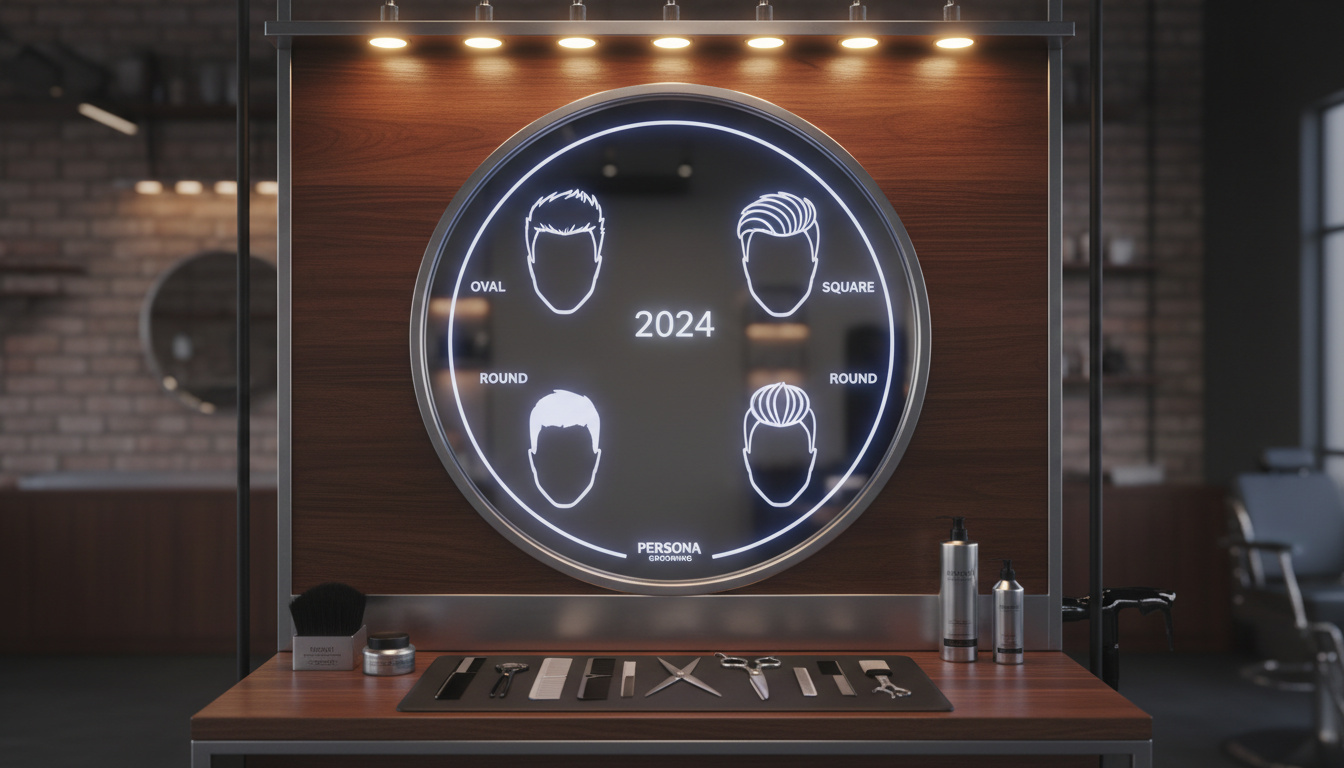
Selecting the right men’s haircut requires balancing facial geometry, hair texture, and lifestyle demands. The 2024-2026 landscape prioritizes personalization over rigid trends, with barbers emphasizing styles that elongate, soften, or accentuate natural features while accommodating busy schedules.
Current trends favor low-maintenance, textured finishes that work with rather than against natural hair growth patterns. From precision fades to relaxed crops, the focus remains on cuts that require minimal daily styling while maintaining a polished appearance.
This guide examines the morphological principles linking face shape to hairstyle, the defining trends of 2024, and practical maintenance considerations to help you make an informed decision.
Which Men’s Haircut Should You Choose Based on Face Shape?
Face shape serves as the primary determinant for elongation, widening, or softening techniques. Quelle coupe de cheveux homme choisir selon la forme du visage depends on balancing proportions through strategic length distribution.
Textured Crop with Mid-Fade
Undercut or Slick Back
Buzz Cut or Crew Cut
Dégradé Progressif Variations
- Round faces require vertical volume to offset width, making high fades with quiffs optimal.
- Square faces benefit from textured crops that highlight angular jawlines without harsh lines.
- Oval faces accommodate the widest range, though excessive forehead coverage disrupts balance.
- Rectangular faces need side-swept fringe or scissor sides to visually shorten length.
- Heart-shaped faces require weight at the chin level, often achieved through longer tops paired with beards.
- The dégradé progressif (low to mid fade) remains the universal professional standard across all face types.
- Bowl cuts and straight fringes consistently accentuate roundness, making them widely unsuitable.
| Style | Face Shapes | Maintenance | Trend Score 2024 |
|---|---|---|---|
| Textured Crop | Oval, Square, Round | Low | High |
| Undercut | Oval, Square | Medium | High |
| Buzz Cut | Square, Oval | Minimal | Medium |
| High Fade + Quiff | Round, Oval | Medium | High |
| French Crop | Oval, Heart | Low | High |
| Side Part | Rectangular, Oval | Medium | Medium |
| Slick Back | Oval, Heart | Medium | Medium |
| Taper Fade | All | Low | High |
What Are the 2024 Men’s Haircut Trends?
The current cycle emphasizes natural texture and graduated transitions. According to Esprit Coiffure, short practical cuts lead preferences for their clean aesthetic and minimal styling requirements. Synergie Barber notes that fades and dégradés remain staples, offering clean transitions from short sides to textured tops.
The Undercut Resurgence
The undercut maintains prominence through 2024, characterized by short sides and nape with longer top sections styled back or textured. Braun’s grooming research confirms this versatile cut suits oval and square faces particularly well, requiring only light product application for daily styling.
Fade Variations and Textured Finishes
Fade terminology distinguishes between taper fade, high fade, burst fade, and the dégradé à blanc (bald fade). These variations elongate round faces while providing modern structure. The textured crop, featuring short choppy layers with a fade, dominates as the signature low-maintenance style of 2024.
Texture sprays offer effortless hold for cropped styles, reducing morning styling time to under two minutes while maintaining volume throughout the day.
Which Men’s Haircut Is the Easiest to Maintain?
Maintenance levels vary significantly between styles. Olabo Coiffure identifies the buzz cut and crew cut as the ultra-low upkeep category, requiring only occasional trimming to maintain their net appearance. For those preferring slightly more length, the textured crop and French crop offer air-dry simplicity with minimal product needs.
Zero-Effort Cuts
The buzz cut stands as the practical standard for active lifestyles, eliminating styling entirely. The taper and burst fade grow out gracefully over four to six weeks, extending time between barber visits without appearing unkempt.
Daily Management
Curly and wavy hair requires medium upkeep to manage frizz, even with faded sides. O’Barbershop specialists recommend avoiding high-precision pompadours for those with time constraints, as these demand significant daily effort.
Most faded styles require refreshing every three to four weeks to maintain clean lines, though textured crops can extend to six weeks due to their intentional disheveled aesthetic.
Which Haircuts Suit Men Best by Age and Length?
Age-appropriate styling focuses on balancing maturity with contemporary edge. While sources lack strict age brackets, general patterns emerge for different life stages and hair conditions.
Age-Specific Adaptations
Men in their 20s and 30s increasingly choose dynamic textured crops, French crops, and burst fades for trendy yet low-effort appearances. For those over 40, classic dégradés, side parts, and mid-length slick backs soften facial lines while maintaining masculine structure, often paired with beard integration.
Length Considerations
Short options like the buzz cut and crew cut dominate for thinning hair, creating the illusion of density. Longer modern options, including six to twelve centimeter textured tops and side-swept styles, suit oval and heart-shaped faces while growing out gracefully between cuts.
Solutions for Fine Hair
Fine hair benefits from textured crops that create visual density through choppy layering. Gouiran Beauté recommends avoiding heavy products that weigh down delicate strands.
Defining the Dégradé
The dégradé (fade) describes the graduated transition from longer top hair to shorter sides. Variations include the dégradé américain (taper fade), dégradé à blanc (skin fade), and progressive fades. This technique serves as the foundation for most contemporary styles.
High fades and crests further elongate rectangular faces, while bowl cuts accentuate roundness. Always verify fade height against your facial proportions before committing.
How Have Men’s Haircut Trends Evolved Recently?
- 2010-2015: The undercut rises to prominence, characterized by dramatic length disparities between sides and top, popularized by military-inspired aesthetics.
- 2016-2019: Textured crops gain traction, moving away from slicked precision toward natural, matte finishes.
- 2020-2023: Low-maintenance fades dominate as lifestyle shifts prioritize home styling simplicity and longer intervals between cuts.
- 2024: Messy fades and textured crops reach peak popularity, emphasizing natural movement over rigid structure.
- 2025-2026 Forecast: Industry observers anticipate continued focus on customization and beard integration, with personalization superseding universal trends.
What Is Definitively Known About Men’s Haircuts?
| Established Facts | Information Requiring Further Confirmation |
|---|---|
| Face shape morpho-coiffure principles effectively balance proportions through elongation or widening techniques | Specific age brackets for style appropriateness remain loosely defined, with individual variation exceeding general guidelines |
| Fades and textured crops dominate 2024 trends across European markets | Long-term durability of the textured crop trend beyond 2026 remains uncertain |
| Buzz cuts and French crops require minimal daily maintenance | Precise maintenance intervals vary significantly by hair growth rate and texture, requiring individual assessment |
| Dégradé techniques suit most face shapes when adjusted for height and graduation | Universal “best” styles for combined face shapes (e.g., round-square hybrids) lack comprehensive research |
What Cultural Shifts Drive Modern Men’s Haircut Preferences?
The contemporary men’s grooming landscape reflects broader cultural movements toward authenticity and efficiency. The 2024-2026 shift away from rigid trend-following toward personalization mirrors workplace dress code relaxations and the normalization of remote work, where video call appearance balanced with low maintenance drives decision-making.
This evolution also signals the professionalization of barbering, with practitioners now functioning as image consultants rather than mere technicians. The integration of beard styling with haircuts represents a holistic approach to male grooming previously fragmented across separate services.
What Do Industry Experts Recommend?
Barbers at Synergie Barber emphasize that face shape determination should always incorporate hair texture analysis, noting that thick curly hair behaves differently than fine straight hair when cut to identical lengths. Their methodology prioritizes balancing facial asymmetries through strategic weight distribution.
According to Le Barboteur, the move toward easy natural looks pairs specifically with beard styling to create jawline definition, particularly for heart-shaped faces where the chin requires visual weight. This source notes that consultation remains essential for hair type-specific adjustments.
O’Barbershop specialists highlight that progressive fades (dégradé progressif) with four to eight centimeter top lengths offer the most versatile professional appearance, growing out gracefully while maintaining structure between appointments.
What Is the Key Takeaway for Choosing Your Next Haircut?
Select a style that harmonizes with your facial geometry—adding height for round faces, width for rectangular ones—while respecting your daily time constraints. Prioritize textured crops or graduated fades for 2024-2026 relevance, and consult a professional barber to adapt these principles to your specific hair density and growth patterns. Choisir la coupe idéale pour son visage remains the foundational step before committing to any trend.
Frequently Asked Questions
Which haircut works best for a round face?
High fades paired with quiffs or pompadours add verticality that slims the appearance. Avoid bowl cuts or straight fringes that emphasize roundness.
What defines a modern long men’s haircut?
Modern long styles feature six to twelve centimeter textured tops, often side-swept or slicked back, paired with tapered sides to maintain structure.
How often should you visit the barber for maintenance?
Faded styles require refreshing every three to four weeks. Textured crops and longer styles can extend to six weeks between visits.
Can fine hair support an undercut?
Yes, though fine hair benefits from texturizing techniques that create visual density. Light products prevent the style from appearing flat or greasy.
What distinguishes a French crop from a textured crop?
The French crop features a specific short fringe with a fade or undercut, while the textured crop emphasizes choppy layers throughout the top with varying fringe lengths.
Are buzz cuts appropriate for professional environments?
Yes, the buzz cut delivers a clean, net appearance suitable for conservative settings while requiring virtually no daily styling.
How do you transition from short to long hair?
Request regular trims every eight weeks to shape the hair during awkward growth phases, focusing on maintaining clean neckline and side contours.
Related stories





Hannah Walsh covers federal and provincial politics and public policy for Canada Scope.