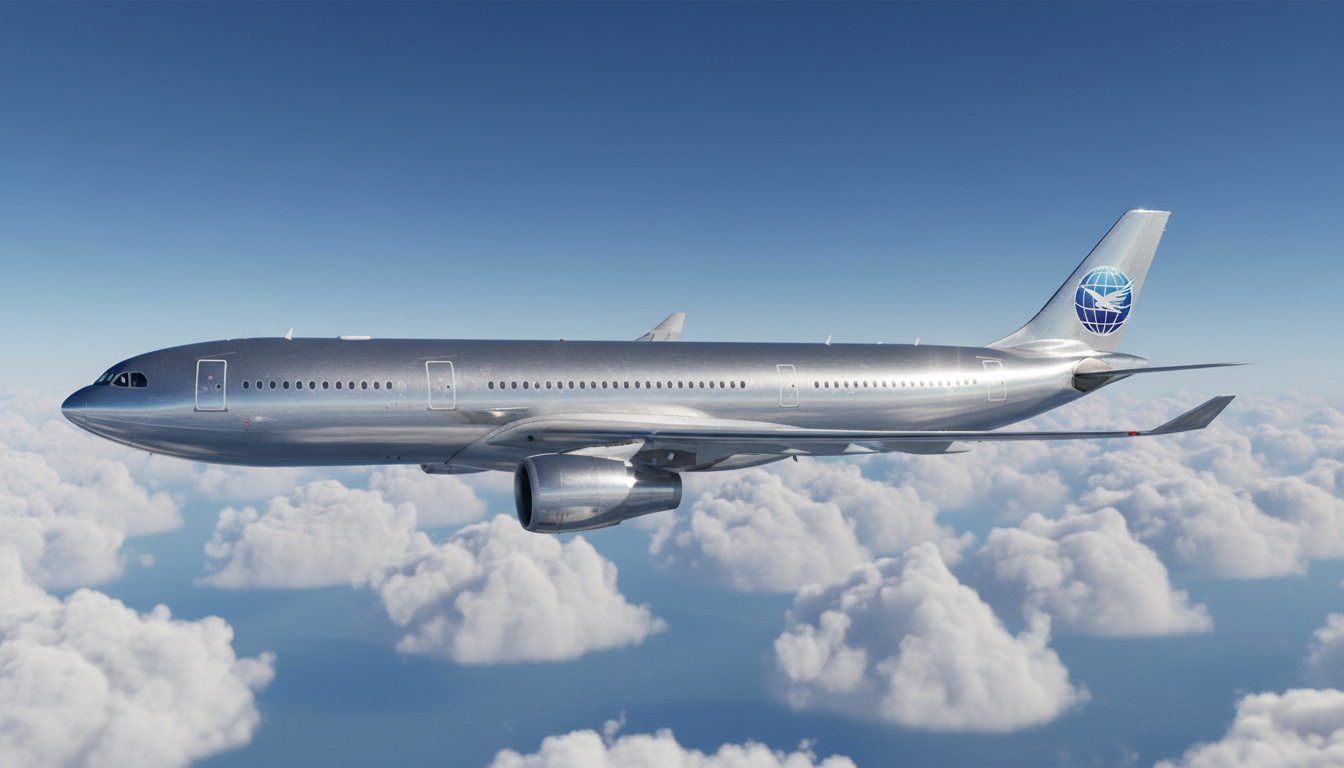
The Airbus A330-200 is a twin-engine, wide-body airliner developed by Airbus for medium- to long-haul routes. Featuring a shorter fuselage than the A330-300, it was designed to offer extended range capabilities while maintaining operational commonality with its larger sibling. The aircraft entered commercial service in 1998 and remains part of the active A330 family production line, offering variants including passenger, dedicated freighter (A330-200F), and passenger-to-freighter conversions.
Development of the A330-200 began in the early 1990s as part of Airbus’s strategic response to Boeing’s 777 and 767 programs. The type addresses market demand for efficient twin-engine widebody operations on intercontinental sectors, prioritizing fuel economy and ETOPS certification over the higher capacity of four-engine alternatives. Major operators worldwide utilize the platform for passenger and cargo services.
Available configurations span from high-density single-class layouts to premium three-class cabins, with engineering support for General Electric, Pratt & Whitney, or Rolls-Royce powerplants. The design emphasizes versatility across route networks ranging from transcontinental to extended-range transoceanic services.
What is the Airbus A330-200?
Wide-body twinjet optimized for medium- to long-haul efficiency.
58.82 m length, 60.3 m wingspan, 220-260 typical seats.
Active within A330 family line; freighter and P2F variants available.
Intercontinental passenger service, dedicated cargo operations, hybrid configurations.
Key Insights:
- Shorter fuselage than A330-300 enables longer range up to 15,094 km (8,150 nm)
- First flight occurred November 13, 1997, with entry into service April 30, 1998
- Compatible with General Electric CF6, Pratt & Whitney PW4000, or Rolls-Royce Trent 700 engines
- Maximum takeoff weight ranges from 242 to 251 tonnes depending on configuration
- Typical three-class seating accommodates 247 passengers
- A330-200F freighter variant delivers 70-ton payload capability
- ETOPS-330 certified for extended twin-engine over-water operations
| Specification | Value | Unit |
|---|---|---|
| Length | 58.82 | meters (193 ft) |
| Wingspan | 60.3 | meters (197 ft 10 in) |
| Height | 17.39 | meters (57 ft 1 in) |
| Maximum Takeoff Weight | 242-251 | tonnes |
| Typical Range | 13,450 | km (7,260 nm) |
| Maximum Range | 15,094 | km (8,150 nm) |
| Typical Seating (3-class) | 247 | passengers |
| Maximum Seating | 406 | passengers (one-class) |
| Cruise Speed | 875 | km/h (Mach 0.82) |
| Maximum Speed | 912 | km/h (Mach 0.86) |
| Fuel Capacity | 139,090 | litres |
| Service Ceiling | 41,100 | feet |
What are the key specifications and performance details?
Dimensions and Airframe
The A330-200 measures 58.82 meters in length, though some operator specifications cite 58.37 meters depending on configuration standards. The wingspan extends 60.3 meters with a wing area of 361.6 square meters. Overall height reaches 17.39 to 17.40 meters, while the cabin width measures 5.26 meters, accommodating standard wide-body dual-aisle layouts.
Performance Metrics
Range capabilities vary by passenger load and configuration. KLM cites operational ranges of 8,800 km, while manufacturer specifications indicate up to 15,094 km maximum. Typical missions cover 13,450 km with 247 passengers. Cruising speeds range from 875 to 880 km/h, with maximum operating speeds of Mach 0.86. The service ceiling reaches 41,100 feet.
The platform supports three powerplant families: General Electric CF6, Pratt & Whitney PW4000, and Rolls-Royce Trent 700. This multi-engine compatibility allows operators to align fleet choices with existing maintenance infrastructure and commercial agreements.
Weight Specifications
Maximum takeoff weight spans 242 to 251 tonnes, while maximum landing weight reaches 186 tonnes. The maximum zero-fuel weight stands at 176 tonnes. Operating empty weight varies significantly by configuration, ranging between 120 and 175 tonnes depending on interior fit-out and system selections.
What is the development and first flight history?
Program Origins
Airbus launched the A330-200 program alongside the A330-300 in the early 1990s. The initiative formed part of the manufacturer’s strategic response to Boeing’s 777 and 767 families. Development priorities centered on fuel efficiency, extended-range twin-engine operational standards (ETOPS), and maintaining maximum commonality with the longer A330-300 variant to reduce operator training and maintenance costs.
The shortened fuselage addressed specific demand for a lower-capacity, longer-range alternative to the baseline A330-300, targeting routes where passenger volumes did not justify larger aircraft but range requirements exceeded narrowbody capabilities.
First Flight and Certification
The prototype first flew on November 13, 1997. Following certification testing, the type entered commercial service on April 30, 1998, with Cathay Pacific operating the inaugural revenue flights. The launch customer configuration established the type’s reputation for transpacific and intercontinental routes previously served by four-engine aircraft.
Who operates the Airbus A330-200 and what is its seating capacity?
Seating Configurations
Standard three-class layouts accommodate approximately 247 passengers, while typical two-class configurations range between 220 and 260 seats. Maximum high-density single-class arrangements can transport up to 406 passengers. Delta Air Lines operates configurations totaling 223 seats, divided among 34 Delta One, 21 Premium Select, 24 Comfort+, and 144 Main Cabin positions. KLM utilizes a 268-seat arrangement with General Electric engines.
Actual seating capacities vary significantly between operators based on cabin class mixes, seat pitch selections, and regulatory requirements. Published maximums represent certified limits rather than typical operational layouts.
Major Operators
Cathay Pacific served as the launch customer in 1998. Current major operators include IAG Cargo, which maintains 22 aircraft in hybrid configurations carrying 14 tonnes of cargo alongside 271 passenger seats. The type serves intercontinental networks for legacy carriers favoring twin-engine efficiency over quad-jet operations. Airlines-Inform documents high-density capabilities up to 406 passengers for specific charter operators.
What are the key milestones in A330-200 development and service?
- : Program launch alongside A330-300 as Airbus response to Boeing 777/767 competition
- : First flight of prototype aircraft
- : Entry into commercial service with Cathay Pacific
- : ETOPS certification expansion enabling extended over-water routes
- : Introduction of A330-200F dedicated freighter variant with 70-ton payload
- : Continued production within A330neo family updates and P2F conversion programs
What information is established versus uncertain regarding the A330-200?
| Established Information | Information Remaining Unclear |
|---|---|
| First flight date: November 13, 1997 | Specific global fleet count for A330-200 variant distinct from total A330 family |
| Length: 58.82 meters (Airbus specification) | Precise operating empty weight without configuration variables (ranges 120-175 tonnes) |
| Entry into service: April 30, 1998 with Cathay Pacific | Subtype-specific accident statistics separate from overall A330 family data |
| MTOW: 242-251 tonnes across variants | Current production rates specific to A330-200 versus A330neo line |
| Maximum range: 15,094 km certified | Operator-specific payload-range performance under varying environmental conditions |
How does the A330-200 compare to the A330-300?
The A330-200 features a significantly shorter fuselage than its sibling, measuring 58.82 meters compared to the A330-300’s 63.66-64.00 meters. This dimensional reduction enables superior range capabilities—13,450 kilometers typical versus 11,750 kilometers for the larger variant—while sacrificing approximately 30-40 seats in standard configurations. Airbus documentation confirms the A330-300 prioritizes capacity over ultimate range.
Operators select the A330-200 for thinner long-haul routes where demand does not support the A330-300’s higher capacity, while the stretched variant serves denser regional and transcontinental markets. Both share wing designs and cockpit commonality, allowing mixed-fleet operations with minimal transition training. The Airlines Guide provides additional widebody comparison data for route planning purposes.
What sources provide the data on the A330-200?
Specifications and performance data derive from manufacturer documentation, regulatory filings, and operational records provided by major fleet operators including Airbus, KLM, Delta Air Lines, and IAG Cargo.
Primary sources include Airbus official aircraft documentation, Wikipedia aviation archives, and operator-specific fleet pages.
What defines the operational legacy of the A330-200?
The Airbus A330-200 established itself as an efficient bridge between quad-engine long-haul aircraft and narrowbody limitations, offering carriers twin-engine economics on extended routes. Its continued relevance through freighter conversions and ongoing production within the neo family demonstrates the design’s adaptability across evolving market conditions. Flights to Calgary from Toronto illustrate typical route applications for comparable widebody equipment.
Frequently Asked Questions
What engines power the Airbus A330-200?
The aircraft accommodates General Electric CF6, Pratt & Whitney PW4000, or Rolls-Royce Trent 700 engines, allowing operators to select powerplants matching existing fleet infrastructure.
Is the Airbus A330-200 still in production?
Production continues within the A330neo family updates, with additional activity in passenger-to-freighter conversion programs and new-build freighter variants.
What is the maximum speed of the Airbus A330-200?
Maximum operating speed reaches Mach 0.86, equivalent to approximately 912 kilometers per hour or 567 miles per hour.
What is the fuel capacity of the A330-200?
The maximum fuel capacity is 139,090 liters (36,750 US gallons), supporting extended-range missions up to 15,094 kilometers.
What is the service ceiling of the A330-200?
The certified service ceiling is 41,100 feet (12,500 meters).
How does the A330-200F differ from the passenger version?
The A330-200F is a dedicated freighter offering 70-ton payload capacity and 4,100 nautical miles range, with structural modifications for cargo operations.
What is the maximum seating capacity in high-density configuration?
In single-class high-density layouts, the aircraft can accommodate up to 406 passengers, though typical three-class configurations carry approximately 247.
Related stories





Hannah Walsh covers federal and provincial politics and public policy for Canada Scope.