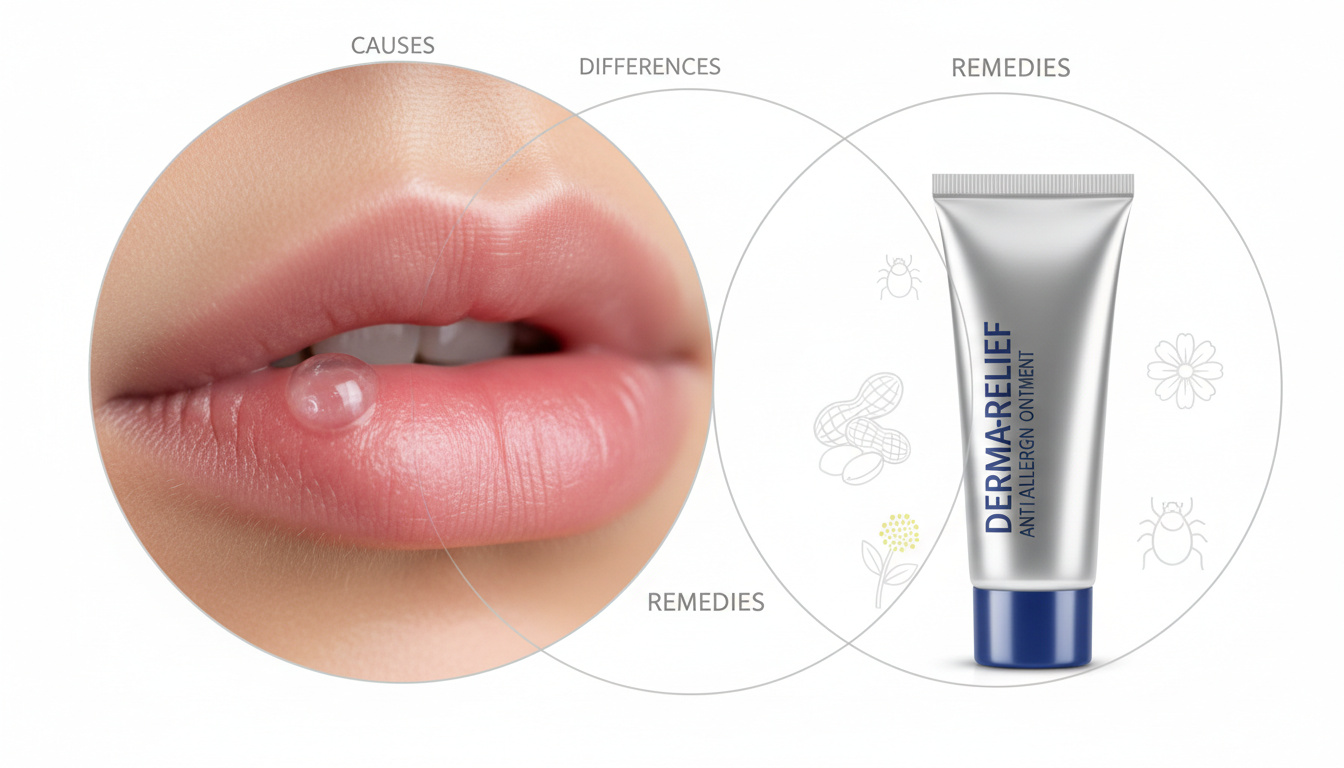
A blister on the lip does not always signal a cold sore. While herpes simplex virus type 1 produces the familiar clustered, fluid-filled lesions that tingle before crusting over, numerous other conditions create similar-looking bumps that require entirely different management. Mucoceles, angular cheilitis, allergic reactions, and sunburn represent common alternatives, each presenting distinct clinical features that allow accurate identification without laboratory testing.
Unlike cold sores, these alternative lesions are not contagious, though they may cause significant discomfort or cosmetic concern. Proper differentiation relies on specific visual cues—location, color, and trigger factors—rather than assuming all lip vesiculation stems from viral infection. Understanding these distinctions prevents unnecessary antiviral treatment and ensures appropriate therapeutic interventions target the underlying pathology.
This guide examines the differential diagnosis of blister on lip not cold sore conditions, detailing evidence-based treatments and clear indicators for when professional evaluation becomes necessary.
What Causes Blisters on Lips Besides Cold Sores?
Angular Cheilitis
Cracked, inflamed corners of the mouth caused by fungal or bacterial overgrowth in trapped moisture.
Mucocele
Clear or bluish cyst inside the lower lip resulting from blocked salivary ducts due to trauma.
Allergic Reaction
Swollen, itchy red blisters triggered by cosmetics, toothpaste, or food contact.
Sunburn
Fluid-filled lesions on the exposed lower lip following ultraviolet overexposure.
- Location provides the primary diagnostic clue: internal lesions indicate mucoceles or canker sores, while corner fissures suggest angular cheilitis.
- All non-cold sore blisters lack the characteristic prodromal tingling that precedes herpetic outbreaks.
- Trauma from lip biting or hot beverages creates solitary fluid-filled lesions unrelated to viral infection.
- Angular cheilitis specifically targets the commissures where lips meet, never appearing as isolated central vesicles.
- Allergic reactions typically present with diffuse swelling and erythema rather than discrete clustered blisters.
- Sunburn lesions exclusively affect the sun-exposed vermilion border, particularly the lower lip.
- Non-herpetic etiologies account for significant diagnostic confusion due to similar fluid-filled appearances.
| Condition | Location | Appearance | Common Triggers | Contagious |
|---|---|---|---|---|
| Canker Sore | Inside mouth/lip | Single white/yellow ulcer with red border | Injury, stress, acidic foods | No |
| Mucocele | Inside lower lip | Soft, smooth, clear/bluish cyst | Blocked salivary gland, lip biting | No |
| Angular Cheilitis | Corners of mouth | Cracked, red, inflamed skin; shallow blisters | Moisture, bacteria/fungus, dentures | No |
| Allergic Reaction | Anywhere on lips | Red, itchy, swollen, possibly crusty | Lip balms, cosmetics, toothpaste | No |
| Sunburn | Lower lip (exposed) | Fluid-filled, red, painful | UV exposure | No |
| Trauma/Burn | Anywhere | Single raised fluid-filled lesion | Biting, friction, hot food/drinks | No |
What Is Angular Cheilitis and Does It Cause Lip Blisters?
Angular cheilitis manifests as erythematous fissures at the oral commissures, sometimes developing shallow blistering in chronic cases. The condition stems from microbial overgrowth—fungal or bacterial—thriving in the trapped moisture of deep lip folds or beneath dentures. Unlike cold sores, these lesions remain strictly at the corners and feature cracked, macerated skin rather than discrete vesicles. Clinical guidelines emphasize that angular cheilitis requires antifungal or antibacterial intervention rather than antiviral therapy.
What Is a Mucocele and How Does It Appear on the Lip?
A mucocele presents as a dome-shaped, translucent cyst typically on the inner aspect of the lower lip. These painless pseudocysts result from trauma-induced rupture of minor salivary ducts, causing mucin accumulation in surrounding tissues. They fluctuate in size and often appear bluish due to vascular proximity. According to dermatological assessment, these lesions often resolve spontaneously but may require surgical excision if persistent.
Can Allergies or Sunburn Cause Blisters on Lips?
Contact allergens in lip balms, cosmetics, or toothpaste trigger cell-mediated reactions producing erythematous, edematous plaques with occasional vesiculation. Solar radiation damages lip epithelium, leading to second-degree burn patterns with serous-filled bullae on the exposed vermilion—distinct from the clustered pattern of herpetic lesions. Clinical observation confirms that sunburn blisters exclusively affect photodistributed areas, sparing shaded upper lip regions.
How to Tell If Your Lip Blister Is Not a Cold Sore
Is a Blister on the Lip Always a Cold Sore?
Cold sores follow a predictable prodromal phase involving tingling, burning, or itching at the site before vesicle formation. They appear as grouped yellow-crusted lesions on the external lip border caused by contagious HSV-1. Non-herpetic blisters lack this neurological warning and typically present as solitary, clear-filled structures without the subsequent hemorrhagic crusting characteristic of viral infection. Differential diagnosis protocols rely heavily on the absence of this prodromal sensory phenomenon.
Cold sores exclusively affect the external vermilion border. Blisters appearing inside the oral cavity—on mucosal surfaces—are definitively not cold sores, instead suggesting mucoceles, canker sores, or traumatic lesions.
Visual Differences by Condition
Mucoceles display a characteristic glassy, bluish tint from underlying capillaries, while allergic reactions present with diffuse erythema extending beyond the lesion margin. Angular cheilitis creates bilateral or unilateral fissures at the mouth corners, never producing the central lip vesicles seen in herpes. Dermatological review notes that sunburn blisters remain strictly photodistributed, appearing on the lower lip while sparing the shaded upper vermilion.
How to Treat a Lip Blister That’s Not a Cold Sore
Medical Treatments by Condition
Mucoceles often resolve spontaneously through rupture and mucin resorption, though persistent cases require surgical removal. Angular cheilitis responds to topical antifungal or antibacterial preparations, combined with moisture control at the commissures and denture adjustment where applicable. Allergic reactions require immediate cessation of suspected triggers, with antihistamines or topical corticosteroids managing inflammatory symptoms. Medical literature confirms that sunburn management requires cool compresses and aloe vera rather than antimicrobial agents.
Are There Home Remedies for Non-Cold Sore Lip Blisters?
Petroleum jelly or unmedicated lip balms provide occlusive protection for traumatic or sun-induced lesions, maintaining moisture barrier function. Cold compresses reduce edema in allergic or solar injuries. Saltwater rinses—one teaspoon dissolved in warm water—promote osmotic healing for mucosal irritation. Over-the-counter hydrocortisone addresses allergic or inflammatory reactions, while avoidance of spicy, acidic, or mechanical irritants prevents secondary trauma.
While cold sores require antiviral therapy, non-herpetic lip blisters primarily need supportive care. Angular cheilitis specifically requires keeping corners dry while applying prescribed antimicrobial creams, whereas mucoceles simply need observation unless they persist beyond several weeks.
When to See a Doctor for a Lip Blister
Red Flags Requiring Evaluation
Persistence beyond two weeks warrants professional assessment to exclude actinic cheilitis or squamous cell carcinoma, particularly in patients with tobacco or alcohol histories. Firm, painless sores suggest syphilitic chancres or neoplastic processes requiring immediate serological testing. Rapid spread, systemic fever, or neurological symptoms indicate complicated infection. Doctors diagnose via visual examination, historical analysis of recent products or sun exposure, and occasionally swab cultures or biopsy for suspicious cases. For more information on lip blister causes and treatments, consult our La Roche-Posay B5 guide.
Seek immediate care for blisters accompanied by fever, difficulty eating or speaking, unexplained bleeding, or numbness. These may signal serious infections including syphilis, or malignant transformations requiring oncologic evaluation.
How Long Does a Non-Cold Sore Lip Blister Last?
- Days 1–3: Mucoceles and traumatic blisters reach maximum size; allergic reactions peak in erythema; sunburn vesicles appear 24–72 hours post-exposure.
- Week 1: Angular cheilitis shows improvement with antifungal therapy; canker sores begin epithelialization; sunburn blisters rupture and crust.
- Week 2: Most non-herpetic lesions resolve completely. Persistent mucoceles may require intervention; unhealed cracks at commissures suggest resistant infection.
- Beyond 2 Weeks: Any blister surviving this duration requires medical assessment to exclude malignancy, deep fungal infection, or autoimmune disorders.
What Do Doctors Know vs. What Remains Uncertain
| Established Medical Knowledge | Information Requiring Further Study |
|---|---|
| Cold sores present with prodromal tingling; non-herpetic blisters do not. | Precise immunological triggers for recurrent angular cheilitis in immunocompetent patients. |
| Mucoceles result from mechanical duct rupture and mucin extravasation. | Genetic predispositions to allergic contact cheilitis specific to cosmetic ingredients. |
| Sunburn blisters resolve with standard burn care within 3–7 days. | Long-term comparative efficacy of topical steroids versus antifungals for angular cheilitis. |
| All non-cold sore lip blisters are non-contagious. | Specific correlations between lip balm ingredients and vesicular eruption patterns. |
Why Cold Sore Confusion Happens
The lay public frequently conflates all lip blistering with herpes simplex infection due to the high prevalence of HSV-1. However, the vermilion border and oral mucosa host numerous pathophysiological processes—salivary gland disruption, irritant contact dermatitis, and photodamage—that produce morphologically similar yet etiologically distinct lesions. Misdiagnosis leads to unnecessary antiviral medication use and delayed appropriate therapy for fungal or allergic conditions.
Visual overlap complicates differentiation: fluid-filled vesicles appear in both herpetic and non-herpetic contexts. Without knowledge of specific distribution patterns—commissural versus central, external versus internal—patients may incorrectly self-diagnose based on blister presence alone rather than location, symptom chronology, and trigger factors. Blister on lip resources emphasize that proper identification requires examining these contextual factors rather than appearance alone.
Expert Sources and Medical References
Canker sores are not contagious and differ from cold sores by their exclusive intraoral location, presenting as single white or yellow ulcers with red borders caused by injury or stress rather than viral infection.
— National Institute of Dental and Craniofacial Research
Angular cheilitis involves cracked, red, inflamed skin at the mouth corners caused by trapped moisture and bacterial or fungal overgrowth, distinct from the vesicular pattern of herpes labialis.
— Docus AI Medical Analysis
Summary and Next Steps
Lip blisters unrelated to cold sores encompass mucoceles, angular cheilitis, allergic reactions, and solar injuries—each requiring specific therapeutic approaches distinct from antiviral protocols. Location remains the most reliable diagnostic indicator, with internal lesions definitively excluding herpes simplex. Most resolve within two weeks with supportive care, though persistence mandates medical evaluation to exclude malignancy or serious infection. For detailed diagnostic criteria and treatment protocols, review the complete guide on blister on lip not cold sore presentations.
Are non-cold sore lip blisters contagious?
No. Unlike HSV-1 cold sores, mucoceles, angular cheilitis, allergic reactions, and sunburn blisters cannot transmit between individuals through contact or saliva.
Can stress cause blisters on the lip that aren’t cold sores?
Stress contributes to canker sores—painful white ulcers inside the mouth—but does not cause fluid-filled external blisters. It may exacerbate lip biting behaviors leading to mucoceles.
Why does my lip blister keep returning in the same spot?
Recurrent mucoceles often indicate habitual lip biting or repeated trauma to the same salivary duct. Angular cheilitis recurrence suggests unresolved denture issues or persistent moisture at the mouth corners.
Can I use cold sore cream on a non-cold sore blister?
Antiviral creams provide no benefit for mucoceles, allergic reactions, or sunburn. Angular cheilitis requires antifungal or antibacterial agents instead.
Does lip sunscreen prevent non-cold sore blisters?
SPF protection prevents solar-induced blisters on the lower lip. It does not prevent mucoceles or angular cheilitis but supports general lip barrier health.
Related stories




Hannah Walsh covers federal and provincial politics and public policy for Canada Scope.