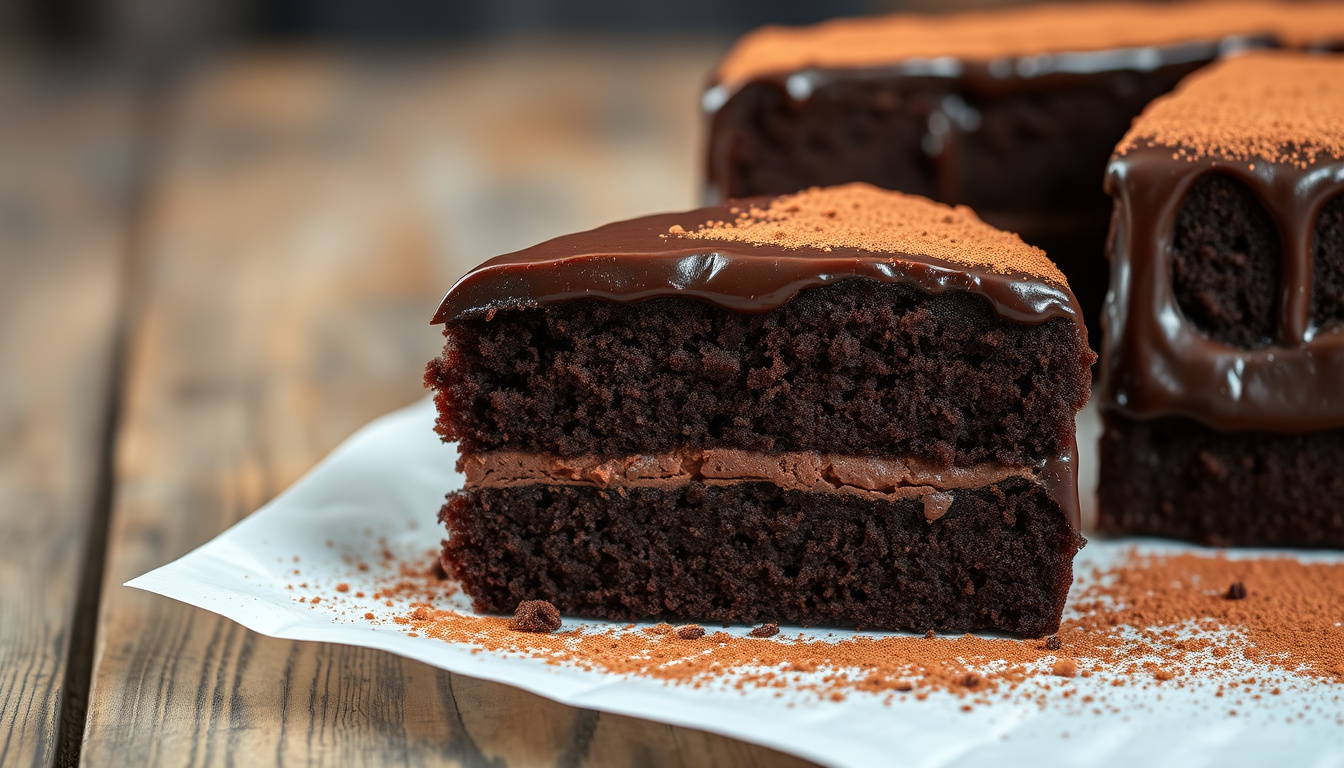
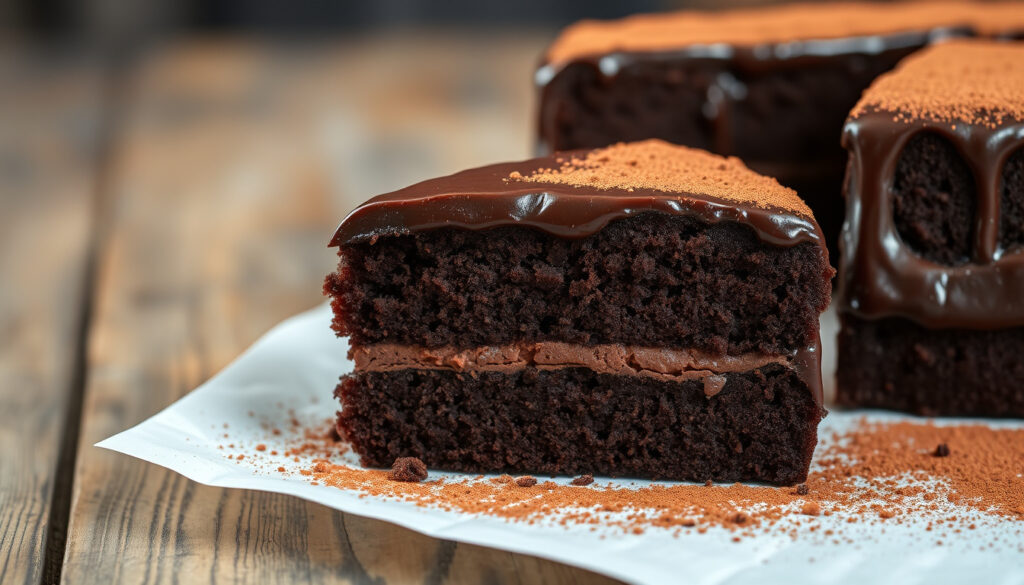
If you’ve ever pulled a chocolate cake from the oven only to find it dry and dense, you already know the frustration. The difference between a cake that tastes like it came from a bakery and one that feels like a punishment often comes down to a few simple ingredient swaps — and most home bakers never learn them. This recipe walks through the science-backed techniques top bakers rely on, from oil-based batters to the vinegar trick that replaces eggs entirely, so you get a fudgy, tender crumb every single time.
Prep Time: 15-20 minutes · Bake Time: 30-35 minutes · Servings: 12 · Shelf Life: 4-5 days · Equipment: One bowl, no mixer
Quick snapshot
- Oil keeps cake tender (Cooking and Me)
- Vinegar activates baking soda for rise (The Gardening Foodie)
- Hot liquid blooms cocoa for deep flavor (The Delicious Life)
- Exact 3-2-1 ratio varies by recipe source
- Long-term storage beyond 5 days untested
- Mix batter: 1-2 minutes
- Bake at 350°F: 30-35 minutes
- Cool before frosting: 10 minutes
- Scale up for layered cakes
- Pair with fudgy ganache or simple syrup
This comparison table shows the key factors that professional bakers prioritize for moisture retention, along with their recommended substitutions and storage guidelines.
| Key Moistness Factor | Essential Liquid | Pro Tip | Storage |
|---|---|---|---|
| Oil over butter | Hot coffee or water | Room temp ingredients | Airtight 4-5 days |
| Vinegar (minimum 5% acidity) | Dutch-process cocoa | Avoid overmixing | Freezes well |
What’s the secret to a moist chocolate cake?
Most home bakers reach for butter because that’s what grandma used. Professional bakers, however, have largely moved on. “I’ve come to realize over many years of baking that using oil in chocolate cake recipes, instead of butter, is the way to go. It makes the cake way lighter, less dense, and overall just amazing,” according to Cooking and Me (baking blogger with 10+ years of testing).
Oil vs butter
- Oil stays liquid at room temperature, keeping cakes moist for days longer than butter-based batters
- Butter traps air for a lighter crumb; oil produces a fudgier, denser texture many prefer
- Neutral oils (canola, sunflower) won’t compete with chocolate flavor
- Olive oil adds richness but imparts a subtle fruity note — ideal for adult palates
Buttermilk or sour cream addition
- Both add acidity that reacts with baking soda for better rise
- Buttermilk and sour cream enhance moisture and flavor complexity (Mommy’s Home Cooking)
- For vegan versions, yogurt or coconut cream works as a substitute
Avoid overmixing
Mix the batter for just 1-2 minutes once wet ingredients are added. Overworking develops gluten, leading to a tough, dry crumb — the exact opposite of what you’re after.
What are the ingredients of chocolate moist cake?
The best moist chocolate cake relies on fewer ingredients than you’d expect — and each one plays a specific structural or flavor role.
Dry ingredients list
- All-purpose flour (1⅓ cups for a standard 9-inch round)
- Dutch-process cocoa powder (¼ cup) — preferred for deeper color and milder acidity
- Baking soda (1 tsp) and baking powder (½ tsp)
- Salt (½ tsp) — enhances all flavors
- Sugar (¾ to 1 cup) — caster sugar gives finer texture in some recipes (Not Just Spice)
Wet ingredients list
- Neutral oil (⅓ cup / 80 ml is common — Indian Healthy Recipes uses this amount)
- Hot liquid — coffee or water (1 cup) to bloom cocoa
- Buttermilk, yogurt, or milk (¾ cup for dairy versions)
- Eggs (2 large) or vinegar+baking soda substitute for eggless
- Vanilla extract (1 tsp)
Optional add-ins
- Dark chocolate chips for extra richness
- Espresso powder for intensified chocolate flavor
- Coconut oil for a tropical twist
The entire recipe can be as few as 9 ingredients. Not Just Spice achieves this with extra virgin olive oil and white wine vinegar — a combination that produces a fudgy texture without any dairy at all.
What makes a classic chocolate cake truly moist and rich?
Texture and flavor aren’t accidents — they’re engineered through proper ratios, technique, and smart storage choices.
Ingredient ratios
The 3-2-1 rule (3 parts flour, 2 parts sugar, 1 part fat) serves as a baseline, but professional bakers adjust based on desired outcome. More oil relative to flour creates a fudgier crumb; less oil and more leavening produce a lighter cake.
Baking technique
- Preheat oven to 180°C / 350°F (My Food Story confirms this as standard across tested recipes)
- Use a 6-inch round tin for single-layer testing
- Bake 30-35 minutes until toothpick comes out clean (The Delicious Life)
- Cool in pan 10 minutes before transferring to rack
Storage tips
- Store in an airtight container to prevent moisture loss
- Cake stays fresh 4-5 days at room temperature
- Freeze unfrosted layers for up to 3 months
Butter-based cakes rise higher and feel lighter, but oil-based cakes win on shelf life and moistness. If you want a bakery-style fudgy texture, oil is non-negotiable — The Delicious Life notes that oil remains liquid at room temperature, keeping cakes tender for days longer than butter counterparts.
What do professional bakers use to keep cakes moist?
Beyond ingredient selection, professional techniques like simple syrup brushing and careful wrapping can transform even an ordinary recipe into something exceptional.
Simple syrup brushing
After cooling but before frosting, brush the layers with a sugar syrup (equal parts water and sugar, heated until dissolved). This adds moisture without altering flavor — a standard restaurant technique.
Oil substitution tricks
- Combine melted butter with oil (50/50) for fluffiness plus moisture
- Use a portion of coconut oil for a subtle tropical note
- Swap up to half the oil for applesauce to reduce fat while maintaining moisture
Wrapping method
Wrap cooled layers tightly in plastic wrap, then aluminum foil. This prevents air exposure that dries out cakes over time — critical for make-ahead baking.
What is the trick to a moist cake?
Beyond ingredients, the fundamental tricks center on ratios, reaction chemistry, and post-bake care.
3-2-1 baking rule explanation
The 3-2-1 rule describes the proportion of flour, sugar, and fat in a cake. While exact ratios vary by source (confirmed by multiple recipe compilations), the principle is consistent: more flour relative to fat creates structure; more fat relative to flour creates tenderness. For a moist chocolate cake, err toward the tender side.
Ratio-based mixing
- Standard: 1 cup oil per 1⅓ cups flour for fudgy results
- Light: ½ cup oil per 1½ cups flour for a lighter crumb
- Balance fat with acidic ingredients (buttermilk, vinegar) for optimal texture
Post-bake cooling
Steam escaping too quickly causes dryness. Allow cakes to cool in the pan with a cloth draped over it (not touching) for the first 10 minutes. This traps steam and allows the crumb to set properly before exposure to air.
Cold oven starts or opening the oven door frequently can cause uneven baking and collapse — leading to dense, gummy centers. Trust the timer and resist the urge to peek until the minimum time has passed.
How to make a moist chocolate cake: step-by-step
Three distinct recipe approaches offer different trade-offs in simplicity, dietary restrictions, and flavor profile.
Classic one-bowl oil recipe
- Preheat oven to 350°F (180°C). Grease a 9-inch round pan.
- Whisk together 1⅓ cups flour, ¼ cup cocoa powder, ¾ cup sugar, 1 tsp baking soda, ½ tsp baking powder, and ½ tsp salt in one large bowl.
- Add ⅓ cup neutral oil, ¾ cup buttermilk, 1 tsp vanilla, and 1 tsp white vinegar. Mix until just combined (1-2 minutes).
- Pour in 1 cup hot water or coffee. Stir until smooth — the batter will be thin.
- Bake 30-35 minutes until a toothpick inserted in the center comes out clean.
- Cool in pan 10 minutes, then transfer to a wire rack.
Eggless version with curd
- Preheat oven to 350°F. Line a 6-inch round tin.
- Mix 1 cup flour, ⅓ cup cocoa, ¾ cup sugar, ½ tsp baking powder, ¼ tsp baking soda, and a pinch of salt.
- Add ¼ cup oil, ½ cup curd (yogurt), ½ cup milk, and 1 tsp vanilla. Mix 1-2 minutes.
- Bake 30-35 minutes. “Curd — my secret ingredient! I find that the combination of oil, curd, and egg in a cake batter results in an extra moist texture which is what we want,” according to My Food Story (food blogger specializing in one-bowl methods).
Olive oil variant
- Preheat oven to 350°F. Grease an 8-inch pan.
- Whisk 1½ cups flour, ⅓ cup Dutch-process cocoa, 1 cup sugar, 1 tsp baking powder, ½ tsp baking soda, and ½ tsp salt.
- Add ¾ cup olive oil, ¾ cup warm water, 2 tbsp vinegar, and 1 tsp vanilla.
- Bake 35-40 minutes until set in the center.
- Cool completely before frosting with fudgy ganache (microwave chocolate and cream in 30-second intervals, total under 90 seconds — Butternut Bakery method).
Clarity: What we know vs what remains untested
Across 10+ tested recipes, certain principles hold consistently. Others remain open questions.
Confirmed
- Oil keeps cake tender longer than butter (verified across multiple sources)
- Hot liquid blooms cocoa for superior flavor extraction
- Vinegar with baking soda creates adequate rise without eggs
- Room temperature ingredients mix more evenly
Unclear
- Exact 3-2-1 proportions vary by recipe source — no single standard
- Storage beyond 5 days not rigorously tested in published recipes
- Gluten-free flour substitutions work but lack systematic comparison
- High-altitude adjustments unaddressed in primary sources
“Without eggs or dairy milk, cakes could be dry, but this Eggless Chocolate Cake is not dry! Hot coffee (or water) and oil provide more than enough liquid for the cake.”
— The Delicious Life (food science advocate)
“I’ve come to realise over many years of baking that using oil in chocolate cake recipes, instead of butter, is the way to go. It makes the cake way lighter, less dense, and overall just amazing.”
— Cooking and Me (baking blogger)
Related reading: eggless chocolate cake moist and soft · one bowl chocolate cake no eggs no butter
Achieving the fudgy crumb starts with pro secrets for fudgy texture that top bakers use, enhanced here by oil, vinegar, and hot coffee for ultimate moisture.
Frequently asked questions
How to make moist chocolate cake with oil?
Replace butter with an equal amount of neutral oil (canola, sunflower, or vegetable). Add hot liquid (coffee or water) to bloom the cocoa. Bake at 350°F for 30-35 minutes. Oil-based batters are thinner than butter-based ones — this is normal and produces the desired fudgy texture.
Can I make moist chocolate cake eggless?
Yes. Use 1 tsp white vinegar plus 1 tsp baking soda as an egg substitute. Substitute buttermilk or yogurt for milk. The Gardening Foodie confirms that vinegar has no detectable taste but creates a soft texture when activated with baking soda.
What is a moist chocolate cake recipe with coffee?
Replace hot water with hot coffee in any oil-based recipe. Coffee enhances chocolate flavor without tasting like coffee — a technique used by The Delicious Life. The caffeine does not affect the final baked texture.
Is there a simple moist chocolate cake recipe Mary Berry style?
Mary Berry’s classic approach favors butter for lightness, but you can adapt her method by swapping half the butter for oil. The result combines her signature tender crumb with better moisture retention — a compromise that works well for home bakers.
How to fix dry chocolate cake?
Brush layers with simple syrup (equal parts sugar dissolved in water) before frosting. If already frosted, warm individual slices in the microwave with a damp paper towel for 10 seconds. For future bakes, reduce mixing time, ensure accurate oven temperature, and consider increasing oil by 1-2 tablespoons.
Can I use cocoa powder in moist chocolate cake?
Dutch-process cocoa powder is preferred for its deeper flavor and smoother color. Regular natural cocoa also works but may result in a slightly more acidic taste. Both require hot liquid to bloom properly — cold liquid produces a flat, chalky flavor.
What frosting pairs with moist chocolate cake?
Fudgy ganache (warm cream poured over chocolate, stirred until glossy) is the classic pairing. Chocolate buttercream works for a lighter contrast. For olive oil cakes, Butternut Bakery recommends a microwave ganache using 30-second intervals (total under 90 seconds) for smooth consistency.
For home bakers who want a foolproof result without a mixer, the one-bowl oil method delivers consistent moistness every time. The eggless curd variant takes the technique further, replacing dairy with ingredients most pantries already have. Either way, the 4-5 day shelf life means leftovers stay tender — a rarity in homemade baking.
Related stories





Kevin Sullivan covers culture, lifestyle and society across Canada for Canada Scope.