
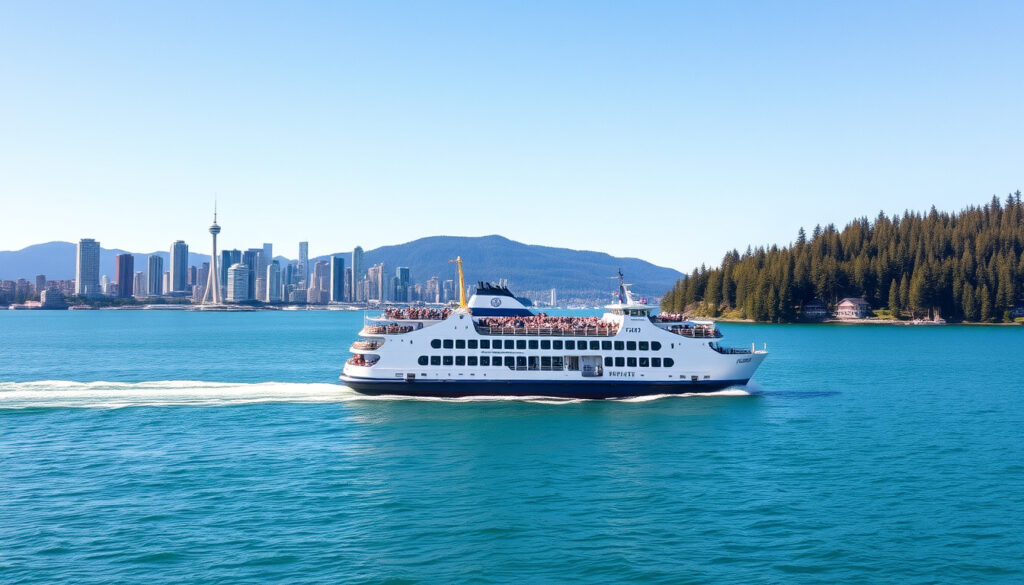
The ferry crossing between Vancouver and Victoria spans approximately 40 kilometers across the Strait of Georgia, connecting mainland British Columbia with Vancouver Island via the Tsawwassen and Swartz Bay terminals. This route, operated by BC Ferries, represents one of the most heavily traveled ferry connections in Canada, serving both vehicles and foot passengers throughout the year. Understanding the schedule, costs, and booking requirements helps travelers plan a smooth journey between these two major population centers.
The Tsawwassen-Swartz Bay corridor functions as the primary maritime link for those traveling between Metro Vancouver and the capital region. Multiple sailings depart daily in each direction, though frequency varies by season. Weather conditions and traffic patterns can affect actual sailing times, making it advisable to check current status before heading to the terminal.
How Long Does the Ferry from Vancouver to Victoria Take?
The crossing itself takes approximately one hour and 35 minutes under normal conditions. This duration can extend to two hours depending on vessel type, sea state, and traffic volume. BC Ferries operates various vessels on this route, with newer ships typically completing the journey more efficiently than older ones.
Sailings run throughout the day, with the first departure typically around 7:00 AM and the last sailing generally before 9:00 PM. During summer months and peak travel periods, additional sailings may be added to meet demand. Winter schedules typically reduce frequency to every two hours rather than the hourly departures seen during high season.
Specific 2024 schedules require verification through official BC Ferries channels. Bus connector services operate only on select sailings, making timing alignment critical for passengers using combined transportation options.
Key Insights for Passengers
- Summer reservations fill quickly; book several weeks ahead for vehicle travel during July and August.
- Vehicle fees vary significantly based on vehicle dimensions and travel season.
- Foot passengers must purchase tickets at terminal desks and cannot reserve specific sailings in advance.
- Weather-related delays occur more frequently during fall and winter months.
- Check-in procedures for connecting bus services require completion within the first 30 minutes of sailing.
| Fact | Details |
|---|---|
| Distance | Approximately 40 km across the Strait of Georgia |
| Typical Duration | 1 hour 35 minutes to 2 hours |
| Daily Sailings | 8 to 10 per direction |
| Peak Season | Summer months with hourly departures |
| Winter Service | Reduced frequency, approximately every 2 hours |
| Connection Options | Bus services align with select sailings only |
What Is the Cost of the Ferry from Vancouver to Victoria?
Ferry fares on the Tsawwassen-Swartz Bay route depend on several factors including vehicle size, passenger count, and travel season. Foot passengers traveling without vehicles pay a separate fare structure, with adult one-way tickets typically ranging between $20 and $25 CAD. These figures represent typical ranges rather than guaranteed 2024 rates, and travelers should confirm current pricing through official sources before their trip.
Vehicle transportation costs constitute the primary fare component for those bringing cars, trucks, or recreational vehicles aboard. Peak season travel with a standard vehicle and two passengers often falls in the $80 to $120 CAD range, while off-peak crossings may cost between $50 and $80 CAD. The size of the vehicle—whether a compact car or a larger truck with camper addition—significantly affects the total fare.
Reservations are strongly recommended for vehicle travel, particularly during summer weekends and holidays. Foot passengers do not require advance reservations but should arrive at the terminal well before their intended sailing to secure passage.
Reservation Requirements
Vehicle passengers can reserve their crossing through the BC Ferries website or mobile application. This advance booking guarantees passage at a specific sailing and time, eliminating the uncertainty of walk-up availability. During high-demand periods, sailings without reservations may fill to capacity, leaving unreserved vehicles unable to board.
Foot passengers approach differently: they purchase walk-up tickets at the terminal foot-passenger desk for the sailing of their choice. No advance reservation system exists for those traveling without vehicles. This means arriving early becomes essential during popular travel times, as ticket sales for a particular sailing close once capacity is reached.
Bus Connector Services
For passengers without vehicles, bus connector services provide an alternative to purchasing separate bus and ferry tickets. These services require separate booking through connector providers. The ferry ticket itself is not included in connector service fees—foot passengers must still purchase their ferry passage at the terminal desk. Drivers handle through-fares for multi-leg journeys involving Gulf Islands connections, but standard Vancouver-Victoria travelers should budget for both connector and ferry costs independently.
Where Does the Ferry from Vancouver to Victoria Depart From?
The Vancouver departure terminal sits at Tsawwassen, located in South Delta approximately 45 minutes from downtown Vancouver via Highway 99. The physical address for the Tsawwassen terminal is 11300 North Coast Highway, Delta, BC. Drivers should account for potential traffic delays when planning their departure time, particularly during rush hours or when crossing the border may be required.
The Victoria arrival terminal operates at Swartz Bay in North Saanich, roughly 30 minutes from downtown Victoria along Highway 17. The address for this terminal is 11300 Patricia Bay Highway, Victoria, BC. This location serves as the primary gateway for ferry traffic entering the capital region from the mainland.
Travelers driving to Tsawwassen should allow extra time during peak periods. Parking facilities at the terminal can fill quickly during summer weekends. Consult local traffic resources for real-time conditions on Highway 99 and surrounding routes.
Taking a Vehicle on the Ferry
Passengers wishing to transport vehicles must reserve separately for their car or truck. The booking system accounts for vehicle dimensions, and oversized vehicles or those with trailers incur additional charges. Upon arrival at the terminal, reserved vehicles proceed to the assigned lane based on their reservation time. Walk-up vehicle passengers may board if space remains after reserved vehicles have loaded, though this cannot be guaranteed during busy periods.
Foot passengers boarding without vehicles proceed directly to the passenger terminal building. They purchase tickets at the foot-passenger desk for their desired sailing, then proceed through security and waiting areas before boarding. Luggage remains with passengers throughout the crossing, though those using bus connectors should be aware that drivers handle luggage retrieval at the journey’s end.
Connecting to Gulf Islands
Travelers heading to Gulf Islands such as Salt Spring Island use the Tsawwassen-Swartz Bay route as their first leg, then connect to smaller vessels from Swartz Bay for the second portion of their journey. Through-fare passes for these multi-leg trips can be obtained onboard the first ferry, simplifying the ticketing process. Drivers provide these passes to passengers continuing toward destinations beyond Victoria.
What Are the Best Options for Foot Passengers or Alternatives?
Foot passengers have several options for completing the Vancouver-Victoria crossing. The standard approach involves purchasing a ferry ticket at the Tsawwassen terminal and boarding as a walk-on passenger. This method provides flexibility without advance commitment, though passengers should monitor sailing times and arrive before ticket sales close for their intended crossing.
Bus connector services offer an alternative for those preferring ground transportation combined with ferry passage. These services transport passengers onboard ferries, with the bus itself traveling on the vessel. Passengers book the connector service separately and must complete check-in procedures within the first 30 minutes of sailing departure. From Vancouver, travelers meet the bus at the Tsawwassen terminal and board the vessel together. Upon arrival at Swartz Bay, passengers disembark with other foot passengers and do not reboard the ferry.
Arrivals at Tsawwassen continuing to Gulf Islands destinations should proceed to Berth 3, accessible via stairs or elevator. Bus services including BC Ferries Connector, Wilson’s, Skylynx, and Universal provide pickup at this location for onward connections.
Alternative Transportation Options
Passengers seeking alternatives to the BC Ferries Tsawwassen-Swartz Bay route have several possibilities depending on their needs. The Tsawwassen-Duke Point route connects to Nanaimo, providing an alternative for those willing to accept a longer drive to Victoria. This route requires purchasing separate tickets for each leg of the journey.
Hullo Ferries offers passenger-only service between Vancouver and Victoria without vehicle accommodation. This option suits travelers who prefer not to drive or who do not require vehicle transport. Floatplane services operated by harbor seaplanes complete the crossing in approximately 35 minutes, though at a significantly higher cost than ferry alternatives. These options serve different market segments and travel preferences.
Seasonal Schedule Variations
The ferry schedule throughout the year reflects changing demand patterns and operational considerations. Summer months bring the highest frequency of sailings, with departures often available every hour during peak afternoon periods. First morning sailings typically depart around 7:00 AM, with the final sailing of the day generally scheduled before 9:00 PM.
- Early morning: First sailing departs approximately 7:00 AM from both terminals
- Morning hours: Sailings every 60-90 minutes through mid-morning
- Afternoon peak: Hourly departures during summer, more frequent spacing in winter
- Evening service: Final sailing typically between 8:00 PM and 9:00 PM
- Winter reduction: Frequency decreases to sailings every two hours or less
- Holiday adjustments: Additional sailings may operate during major holiday periods
What Information Is Verified Versus Uncertain?
Certain details about the Vancouver-Victoria ferry route are well-established and consistently reported across official sources. The route connects Tsawwassen and Swartz Bay terminals, the crossing takes approximately 1.5 to 2 hours, and multiple sailings operate daily in each direction. BC Ferries serves as the primary operator, and both terminals serve vehicles and foot passengers.
| Established Information | Information Requiring Verification |
|---|---|
| Terminal locations and addresses | Specific 2024 fare amounts |
| Crossing duration range | Precise daily sailing times |
| Basic booking procedures | Weather-related delay frequency |
| Vehicle reservation process | Holiday schedule adjustments |
Other details carry greater uncertainty. Exact 2024 fare amounts should be confirmed directly with BC Ferries, as pricing structures may adjust seasonally. Specific sailing times require verification through the official schedule, as these can vary by date and season. Weather-related delays and service disruptions cannot be predicted in advance, making real-time checking essential before travel.
Understanding the Route’s Regional Significance
The Tsawwassen-Swartz Bay corridor serves as the primary maritime connection between mainland British Columbia and Vancouver Island. This route handles substantial passenger and vehicle volumes, supporting tourism, business travel, and resident movement between the two regions. The Strait of Georgia crossing, approximately 40 kilometers at its narrowest point, has been serviced by ferry vessels for decades.
The terminals themselves function as regional transportation hubs, connecting ferry services with highway networks, local transit, and connecting bus services. Tsawwassen links to the Greater Vancouver area through Highway 99, while Swartz Bay connects to Victoria and the rest of Vancouver Island via Highway 17. This infrastructure supports the economic and social connections between island and mainland communities. Those planning to explore Vancouver Island may find additional things to do in Vancouver Victoria helpful for their itinerary.
The BC Ferries Tsawwassen-Swartz Bay route represents the busiest ferry corridor in British Columbia, carrying millions of passengers annually between the mainland and Vancouver Island.
Sources and Official Information
Primary information about schedules, fares, and reservations comes directly from BC Ferries operations. The official website and mobile application provide the most current and comprehensive details about sailing times, availability, and booking procedures. Terminal-specific information, including directions and services, is also available through these official channels.
Bus connector services operate independently and maintain their own booking systems and schedules. Travelers using these services should confirm arrangements directly with providers, as connector schedules align with specific ferry sailings and may not accommodate all departure times.
Planning Your Crossing
Travelers preparing for the ferry crossing between Vancouver and Victoria should take several preparatory steps. Vehicle passengers should book reservations well in advance during summer months, while foot passengers should plan arrival times that allow for potential wait periods at the terminal. Checking real-time status through the BC Ferries app or website helps avoid surprises related to weather or operational changes.
Those considering alternatives such as Hullo Ferries or floatplane services should research availability and compare costs against the traditional ferry route. Each option serves different travel needs, with the best choice depending on budget, schedule flexibility, and whether vehicle transport is required.
For those interested in other transportation options within Canada, information about Flights to Calgary from Toronto provides additional travel planning resources.
Frequently Asked Questions
Do I need a reservation for the BC Ferry from Vancouver to Victoria?
Vehicle passengers should reserve their crossing, especially during summer. Foot passengers cannot make advance reservations and purchase walk-up tickets at the terminal instead.
How do I book BC Ferries from Vancouver to Victoria?
Reservations are made through the BC Ferries website or mobile application. Foot passengers buy tickets at the terminal foot-passenger desk for their chosen sailing.
Can I take my car on the ferry from Vancouver to Victoria?
Yes, vehicles are transported on the Tsawwassen-Swartz Bay route. Vehicle reservations are recommended, and fees vary based on vehicle size and travel season.
How do I get driving directions to the Tsawwassen ferry terminal?
The Tsawwassen terminal is located at 11300 North Coast Highway, Delta, BC. From downtown Vancouver, access via Highway 99 south through South Delta, approximately 45 minutes without traffic.
What are real-time updates for BC Ferries Vancouver to Victoria sailings?
Real-time status information is available through the BC Ferries website, mobile application, or by calling the customer service line. Weather and traffic conditions can cause delays or cancellations.
Are there alternatives to the ferry for traveling between Vancouver and Victoria?
Yes, alternatives include Hullo Ferries for passenger-only service, floatplane crossings taking approximately 35 minutes, or driving to Nanaimo via the Tsawwassen-Duke Point route.
Related stories




Catherine Roy is Editor-in-Chief at Canada Scope, overseeing editorial policy, corrections, standards and publication decisions.