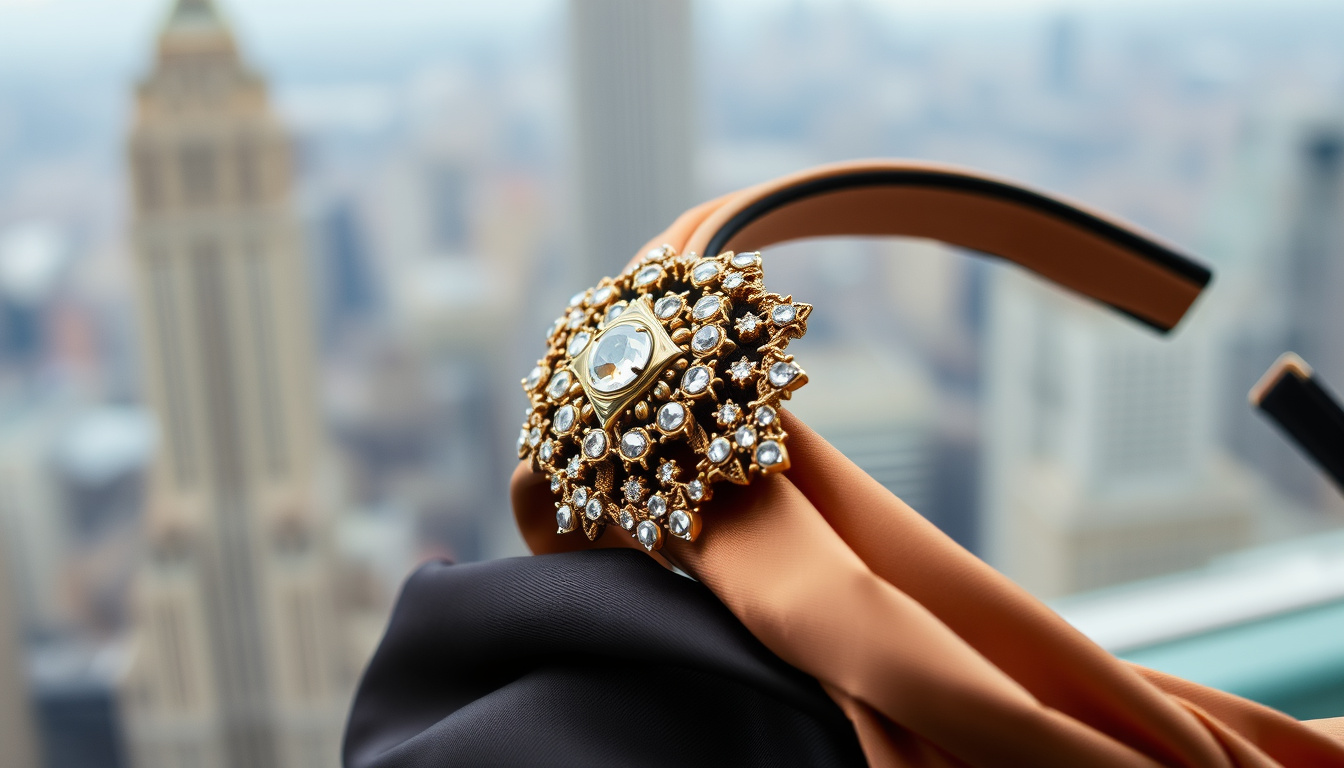
You don’t need to be an Upper East Side native to feel the pull of Blair Waldorf. There’s a reason a character who premiered in 2007 still dominates style Pinterest boards, fan edits, and “How to dress like Blair” queries over a decade later: she is equal parts intimidating and vulnerable.
Full Name: Blair Cornelia Waldorf Bass ·
Portrayed by: Leighton Meester ·
First Appearance: 2007 ·
Last Appearance: 2012 ·
Spouse (in series): Chuck Bass ·
Number of Episodes: 121
Quick snapshot
- Evidence of an eating disorder is implied but never explicitly canonized (Wikipedia)
- The exact net worth of the Waldorf family is never stated (Portuguese Wikipedia)
- Blair’s weight has no official figure (Portuguese Wikipedia)
- TV first appearance: 2007; book first appearance: Gossip Girl novel (Wikipedia)
- The series ran for six seasons and 120 episodes (Wikipedia)
- Blair’s final TV appearance is in New York, I Love You XOXO (2012) (Wikipedia)
- Fan discussions continue to analyze her narrative arc, not just her wardrobe (The Collegian)
- The 2021 HBO Max reboot reframes but doesn’t replace her legacy (Business Insider)
- Style retrospectives keep cataloging her outfits as reference points (Moda Archives)
| Attribute | Value |
|---|---|
| Full Name | Blair Cornelia Waldorf (later Bass) |
| Portrayed by | Leighton Meester |
| First Appearance | |
| Last Appearance | |
| Number of Episodes | 121 (appears in) |
| Spouse (in series) | Chuck Bass |
| Children | One son (in series finale) |
Six seasons of the show produced one constant: Blair’s presence was the gravitational center around which the Upper East Side spun. Creator Cecily von Ziegesar described her as a “girl of extremes” — and that tension between perfectionist control and raw emotion is what made her watchable (Wikipedia).
Why is Blair Waldorf so popular?
Blair’s popularity isn’t a simple accident of casting or era. She worked because she was simultaneously aspirational and flawed, a combination that keeps audiences invested long after the series ended. Her wit and ambition gave her drive, but her insecurities made her relatable — a queen bee who often felt like an outsider in her own life (Wikipedia).
What makes Blair Waldorf relatable?
- Her constant need for control collides with circumstances she can’t manage, which mirrors a familiar adult experience (Wikipedia).
- She treats friendships and romances with a desperate intensity that reads as authentic, even when her methods are manipulative (Wikipedia).
- Her failures — losing her virginity to Chuck and having him disappear, or being left at the altar — are as memorable as her victories (Wikipedia).
How does her fashion influence her popularity?
Style recaps consistently place Blair in classic, preppy, sophisticated territory, heavily associated with black and white, plaid, and headbands (The Collegian (student newspaper)). That’s not accidental costuming; it’s a visual shorthand for her personality. Her wardrobe signals control and tradition, which is exactly how she wants the world to see her.
One particularly remembered look is her Thanksgiving outfit from season 1, episode 9, which layered pearls, tights, and a headband into a single image of polished holiday glamour (The Collegian (student newspaper)). Another style retrospective points to her Victrola outfit as emblematic of that same layered, pearl-adorned aesthetic (Moda Archives (fashion archive)).
Blair’s style became a template for “old money” dressing even though the Waldorf family’s money was, in story terms, newer than Serena’s — a detail that makes viewers envy an image that was partly performance all along.
Are Blair and Chuck married in real life?
No. The actors who played Blair and Chuck — Leighton Meester and Ed Westwick — never married each other in real life. Their on-screen relationship was a fictional arc that concluded with a wedding in the series finale (Wikipedia).
Are Leighton Meester and Ed Westwick married?
Leighton Meester is married to actor Ryan Adams, not Ed Westwick. The confusion is understandable because the characters’ chemistry was so central to the show’s appeal, but the real-life marriage is entirely separate (Wikipedia).
How does their on-screen relationship compare to real life?
- On screen, Blair and Chuck’s relationship was a long, turbulent saga that spanned seasons and involved betrayals, a pregnancy loss, and a final reconciliation (Wikipedia).
- In reality, Meester and Westwick were colleagues who have publicly acknowledged the impact of the role but have not been romantically linked (Wikipedia).
The takeaway: The line between character and actor is easy to blur when a fictional couple becomes iconic, but the real-life facts are straightforward. The marriage was a story event, not a biographical one.
Who was richer, Serena or Blair?
This question surfaces in nearly every “Gossip Girl wealth” thread, and the answer is layered: in the series, the van der Woodsen family is portrayed as having old money, while the Waldorf fortune is newer and tied to her father’s business (Wikipedia).
What are the wealth backgrounds of Serena and Blair?
- Serena’s family is consistently presented as old money, with a lineage that suggests a Vanderbilts-like pedigree (Business Insider).
- Blair’s family is depicted as new money, with wealth derived from her father Harold’s business success, which becomes unstable later in the series (Wikipedia).
The show never actually states a net worth figure for either family, so any comparison is based on story cues, not receipts — a detail that fan debates often overlook.
What this means: In the show’s social hierarchy, Serena’s family status was more established, but Blair’s family could buy the same lifestyle. The distinction was cultural, not just financial — and that’s precisely what fueled Blair’s obsession with status.
What does Blair Waldorf struggle with?
Blair’s struggles are the engine of her arc. She fights for control in every relationship, and that need comes from a real place: perfectionism, self-worth issues, and the crushing pressure of her mother Eleanor’s expectations (Wikipedia).
What are Blair’s main insecurities?
- She constantly fears being replaced — by Serena, by a new queen bee, by her mother’s attention — which drives her to schemes that sometimes backfire (Wikipedia).
- Her need for control extends to her romantic life: she plans weddings, proposals, and even her own marriage to Chuck as a “destiny” narrative (Wikipedia).
How does her mother’s pressure affect her?
Eleanor Waldorf is a demanding, fashion-forward presence who constantly compares Blair to Serena and sets an impossible standard. That pressure is a recurring source of Blair’s anxiety, and it’s a large part of why her need for external validation is so intense (Wikipedia).
The pattern: Blair’s struggles aren’t generic “rich girl problems.” They’re specific — a relentless need for approval that she channels and covers with wit and fashion. It’s a portrait of control as a defense mechanism, not just a personality quirk (Wikipedia).
What is the saddest episode of Gossip Girl?
If there’s a consensus pick among fans, it’s the season 2 finale, The Last Tango, Then Paris, when Chuck tells Blair he loves her but can’t be with her — and then leaves her at a train station. The scene is devastating not because of melodrama, but because it confirms the cycle of their relationship: they keep choosing each other and then choosing to part (Wikipedia).
Which episode features Blair’s most heartbreaking moment?
The runner-up is The Return of the Ring, from season 2, where Blair loses her virginity to Chuck, and he then disappears without explanation. It’s an early signature moment of their toxic bond, where intimacy is immediately followed by abandonment (Wikipedia).
What episode is considered the most tragic?
- The Last Tango, Then Paris: Chuck’s “I love you, but I can’t be with you” is a narrative brick wall (Wikipedia).
- The Return of the Ring: A moment of vulnerability punished by silence (Wikipedia).
- The season 5 episode where Blair loses her baby is also frequently cited for its uncharacteristic quiet grief (Wikipedia).
The takeaway: The saddest moments are the ones that expose how much pain Blair is willing to absorb in exchange for what she believes is love. It’s a tragic pattern, but it’s also what makes her final arc in the series finale — a genuine, stable partnership with Chuck — feel earned.
Comparing Blair and Serena
Two characters, two distinct styles — and the fashion contrast is a direct reflection of their personalities. Blair’s wardrobe is consistently classic, preppy, and sophisticated, while Serena’s is laid back and playful.
| Dimension | Blair Waldorf | Serena van der Woodsen |
|---|---|---|
| Style | Classic, preppy, sophisticated (The Collegian (student newspaper)) | Laid back, playful (Business Insider) |
| Family wealth | Newer money, business-derived (Wikipedia) | Old money, lineage-based (Wikipedia) |
| Key accessories | Headbands, pearls, tights (Moda Archives (fashion archive)) | Boho dresses, fringe, effortless layers (Business Insider) |
| Social role | Queen bee, control-driven (Wikipedia) | It girl, breezy but troubled (Wikipedia) |
| Romantic arc | Planned, intense, destiny-focused (Wikipedia) | Chaotic, spontaneous, often interrupted (Wikipedia) |
The pattern across five dimensions: Serena and Blair are opposites in almost every category, which is why their friendship works — and why it sours. Blair’s need for order clashes with Serena’s ability to float through consequences. But what this comparison also shows is that their trajectories are mirror images: Serena’s old money buys her freedom, while Blair’s new money forces her to fight for the same status.
Key timeline: Blair across the series
The show’s six-season run gives us a clear arc, from queen bee to wife and mother — but the journey takes several sharp turns.
| Year | Event |
|---|---|
| Blair Waldorf introduced as a main character in the Gossip Girl pilot (Wikipedia) | |
| Begins complicated relationship with Chuck Bass (Wikipedia) | |
| Blair becomes pregnant by Chuck but loses the baby (Wikipedia) | |
| Marries Chuck Bass in the series finale; gives birth to their son (Wikipedia) |
Why this matters: The timeline shows a character who spends the first three seasons struggling for control, then gets it — but pays a heavy price (a lost pregnancy, a broken engagement) along the way. Her happy ending is not a fairy tale; it’s a negotiated ceasefire.
What’s confirmed and what’s still unclear
The canon is surprisingly clean on the big facts: Leighton Meester played Blair; the character married Chuck; she had a son in the finale. But fans still debate the finer, unspoken details (Wikipedia).
Confirmed facts
- Blair is played by Leighton Meester, cast in 2007 (Wikipedia)
- Her TV full name is Blair Cornelia Waldorf Bass (Wikipedia)
- She appears from the pilot to the final episode (Wikipedia)
- She is a socialite from the Upper East Side (Wikipedia)
- She has one son in the series finale (Wikipedia)
What’s still unclear
- Whether the character had an eating disorder (implied at points but not explicitly stated) (Wikipedia)
- The exact net worth of the Waldorf family (never stated on screen) (Portuguese Wikipedia)
- Blair’s weight (no official figure confirmed) (Portuguese Wikipedia)
The trade-off: Fans who want a complete, quantified backstory for Blair will be frustrated by the gaps. The show deliberately leaves room for interpretation on her vulnerabilities, which is why fan theories have thrived for over a decade.
Key quotes from Blair and Leighton Meester
“I’m not a stop along the way, I’m a destination.”
— Blair Waldorf, quoted in Wikipedia
“Blair is fun to play because she’s so complex.”
— Leighton Meester, in an interview (Wikipedia)
“A girl of extremes.”
— Creator Cecily von Ziegesar’s description of Blair (Wikipedia)
“Three words, eight letters, say it and I’m yours.”
— Chuck Bass to Blair, in the series (Wikipedia)
The pattern across these quotes: Blair’s own dialogue is about self-worth and destiny, while her creator frames her as an extreme. Meester’s perspective adds a meta layer — the actor sees the complexity as the role’s defining feature, which is exactly what viewers picked up on.
gossipgirl.fandom.com, no.wikipedia.org, chrisindalynch.com, gossipgirlfrance.fandom.com, hero.fandom.com, fr.wikipedia.org
Frequently asked questions
What is Blair’s full name?
Blair Cornelia Waldorf Bass, reflecting her marriage to Chuck Bass in the series finale (Wikipedia).
Who plays Blair Waldorf?
Leighton Meester, who was cast in 2007 (Wikipedia).
Is Blair Waldorf based on a real person?
No, she is a fictional character from Cecily von Ziegesar’s Gossip Girl novel series and the TV adaptation (Wikipedia).
Does Blair have a child in Gossip Girl?
Yes, she gives birth to a son in the series finale, New York, I Love You XOXO (Wikipedia).
What is Blair’s signature accessory?
Her headband, which style retrospectives consistently associate with her classic, preppy look (Moda Archives (fashion archive)).
What happened to Blair’s father?
Harold Waldorf, her father, divorces Blair’s mother and remarries, causing a fracture in the family that plays out over later seasons (Wikipedia).
Why does Blair hate Dan Humphrey?
Dan is an outsider who challenges her social order, publicly humiliates her through his writing, and eventually reveals himself as Gossip Girl — a twist that makes Blair’s initial distrust look prescient (Wikipedia).
Related reading
- Walter White: Biography, Character Analysis, and Breaking Bad Legacy
- Sarah Hyland: Health Battles, Net Worth & Modern Family
For anyone who has spent a single night scrolling through Blair Waldorf edits, the attraction is clear: she’s a character who demands to be taken seriously while admitting, through her actions, that she’s terrified of not being enough. Whether you come for the headbands or stay for the depth, the takeaway is the same — Blair Waldorf’s legacy is not her wardrobe, it’s her willingness to fight for a life she imagined, even when the cost was high.

Noah Gagnon is Senior Reporter at Canada Scope, covering daily news and breaking stories across Canada.