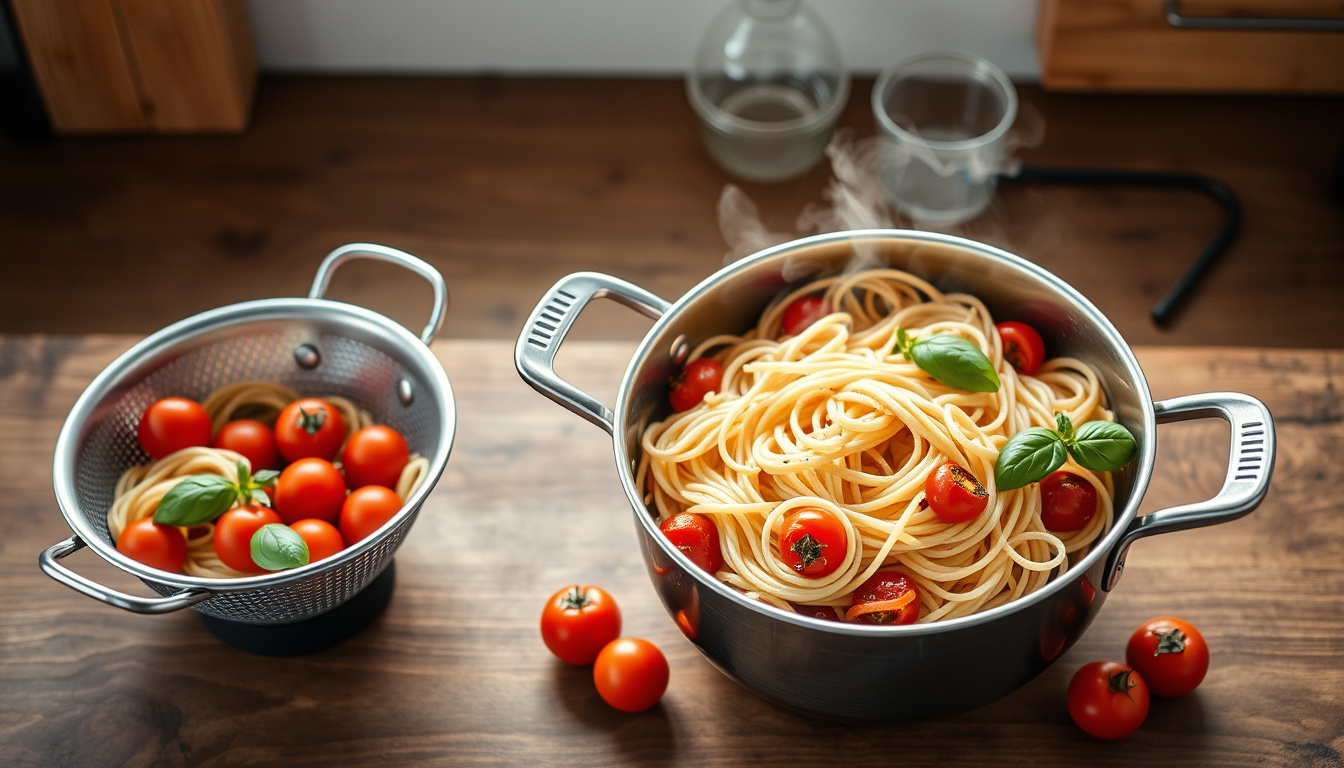

There’s something quietly satisfying about pulling a strand of spaghetti from the pot and biting into it at just the right moment — tender but with a little resistance. That moment is called al dente, and this guide walks you through every step, from boiling and salting to testing for doneness, with modifications for those managing blood sugar.
Ideal water-to-pasta ratio: 1 gallon (3.8 L) per pound (450 g) ·
Recommended salt concentration: 1–2% salt by weight of water ·
Spaghetti cook time (dried): 8–10 minutes ·
Fresh pasta cook time: 2–4 minutes ·
Al dente doneness test: firm bite with a tiny white core
Quick snapshot
- Salt water before adding pasta for flavor (Jamie Oliver)
- Do not rinse pasta after draining for hot dishes (Whirlpool) (Jamie Oliver)
- Reserved pasta water helps bind sauce (Whirlpool) (Jamie Oliver)
- Whether adding oil to water prevents sticking effectively (most chefs advise against it)
- Optimal salt concentration for all pasta shapes (varies by taste)
- Combine pasta with sauce in pan, adding reserved water to adjust consistency (Whirlpool)
Here’s a quick reference for the key numbers.
| Attribute | Value |
|---|---|
| Water-to-pasta ratio | 1 gallon per pound |
| Salt amount | 1–2% of water weight (≈ 1 tbsp per gallon) |
| Spaghetti cook time | 8–10 minutes |
| Al dente test | Firm with slight white core |
| Reserved water volume | 1 cup |
| Fresh pasta cook time | 2–4 minutes |
| Portion per serving (dried) | 2 oz (56 g) |
How do you cook pasta step by step?
- Fill a large pot with 1 gallon of water per pound of pasta and bring to a rolling boil.
- Add salt: about 1 tablespoon per gallon (or 1-2% salt by weight).
- Add pasta, stir immediately, and stir occasionally during the first minute.
- Cook according to package time, testing for doneness 1-2 minutes early.
- Reserve about 1 cup of starchy cooking water before draining.
- Drain pasta (do not rinse for hot dishes).
- Combine with sauce in a pan, adding reserved water as needed to reach desired consistency.
Boil and salt the water
- Fill a large pot with roughly 1 gallon (3.8 L) of water per pound (450 g) of pasta. This gives the noodles room to move and prevents sticking.
- Bring the water to a rolling boil. Then add salt — about 1 tablespoon per gallon. Jamie Oliver insists: “Always, always salt the pasta water!” Salt enhances flavor; the notion that it raises the boiling point significantly is negligible, as J. Kenji López-Alt of Serious Eats has pointed out.
Add pasta and stir
- Drop the pasta into the boiling water. Stir immediately and occasionally during the first minute to prevent clumping.
Cook according to package time
- Set a timer. For dried spaghetti, that’s generally 8–10 minutes. Penne takes 9–13 minutes, fettuccine 10–12. Check the package — it’s the most reliable first reference.
Reserve pasta water before draining
- Just before you drain, scoop out about 1 cup of the starchy cooking water. Whirlpool notes that this water helps sauces reach the right consistency.
Combine with sauce
- Drain the pasta (do not rinse unless making a cold salad). Transfer it directly into the sauce pan and toss. Add reserved water a splash at a time until the sauce coats each strand evenly.
The pasta is still hot and slightly starchy — that’s exactly when it absorbs sauce best. Rinsing washes away the starch that helps sauce cling.
With these steps, you’ll consistently produce pasta that’s ready to absorb sauce and deliver the perfect bite.
How do you cook pasta al dente?
Understanding al dente texture
Al dente is Italian for “to the tooth” — pasta that is tender but still firm when bitten. Whirlpool describes it as “tender but still firm to the bite.” It’s the Goldilocks zone of pasta cooking.
Timing tips for al dente
- Whirlpool advises cooking about two or three minutes less than the package directions. Start testing early.
How to test pasta for doneness
- Fish out a piece with a slotted spoon and bite it. You’re looking for a tiny white core in the center — that’s the sign of perfect al dente.
The catch: pasta continues to cook in the hot sauce after you combine them. If it’s already fully soft in the pot, it will be mushy on the plate. Pull it when it still has that slight resistance.
How to make pasta better for diabetics?
Choose whole grain or legume-based pasta
- Whole wheat, lentil, and chickpea pastas deliver more fiber and protein, which slows digestion. Medical News Today states that people with diabetes can eat pasta, but should choose whole-grain types and watch portions.
Control portion size
- Diabetes Care Community recommends a portion of about 1 cup (250 mL) and says it should not cover the entire plate. Medical News Today suggests a quarter plate or half cup of cooked pasta for some people.
Pair with protein and fiber
- Medical News Today advises pairing pasta with vegetables, lean protein, and low-fat sauces. Non-starchy vegetables like broccoli, spinach, and bell peppers improve the meal’s nutrient balance (World of Pastabilities).
Cook to al dente to lower glycemic impact
- Diabetes Care Community states that firmly cooked pasta (al dente) has a lower glycemic index than overcooked or soft pasta. That’s a meaningful, practical advantage.
For someone managing diabetes, trading a heaping bowl of white spaghetti for a modest portion of whole grain pasta with vegetables and chicken isn’t a compromise — it’s a better meal that still satisfies the pasta craving.
By making these adjustments, pasta remains a satisfying and healthy part of a diabetic meal plan.
How to cook pasta for a beginner?
Gather equipment and ingredients
- You need a large pot (at least 5 quarts), a colander, a long-handled spoon, and a measuring cup for the reserved water. Ingredients: pasta, salt, and whatever sauce you like.
Follow the step-by-step method
- Use the steps above: boil water, salt it, add pasta, stir, cook according to package time, test for doneness, reserve water, drain, and combine with sauce.
Avoid common beginner oversights
- Don’t use a pot that’s too small — it causes boil-overs and sticky pasta.
- Don’t skip salting the water. BBC Good Food editors note: “If you like, or the recipe suggests, salt the water first.”
- Don’t rinse the pasta (except for cold pasta salads).
- Keep the heat on high until the water returns to a boil after adding the pasta, then reduce to medium.
These simple guidelines ensure beginners avoid common pitfalls and succeed on the first try.
How long do you boil your pasta?
Cook times for common pasta shapes
These times serve as a reliable starting point for common shapes.
| Shape | Cook time (minutes) |
|---|---|
| Spaghetti | 8–10 |
| Penne | 9–13 |
| Fettuccine | 10–12 |
| Fresh pasta | 2–4 |
The pattern: thin shapes cook faster, thick shapes slower. Always check the package as the first reference, then adjust based on your texture preference.
Adjusting time for desired doneness
- For softer pasta, cook toward the higher end. For al dente, aim 1-2 minutes below the low end and test.
How altitude affects boiling time
- At higher altitudes, water boils at a lower temperature. This means pasta takes slightly longer to cook. Add 1-2 minutes and test frequently.
Why this matters: if you live in Denver (about 5,280 feet), your spaghetti might need 11 minutes instead of 9. Ignoring altitude is one of those small things that creates big texture disappointments.
What are common pasta cooking mistakes?
Using too little water
Insufficient water concentrates the starch, which makes pasta gluey. Stick to the 1-gallon-per-pound rule.
Not salting the water enough
Salt enhances flavor. Jamie Oliver says you should salt the water “like the sea.” The myth that salt raises the boiling point significantly? J. Kenji López-Alt debunks that — so salt for taste, not for temp.
Overcooking or undercooking
Overcooked pasta falls apart and has a mushy texture. Undercooked pasta is hard and unappealing. The fix: taste-test 1-2 minutes before the package time.
Adding oil to the water
Oil coats the pasta and prevents sauce from adhering. Most chefs advise against it. The exception is cold pasta salads, where a little oil can prevent clumping after draining.
Forgetting to reserve pasta water
That starchy water is liquid gold for thinning and emulsifying sauces. Without it, you end up with dry or clumpy pasta. Whirlpool recommends reserving at least a cup.
Many cooks skip the pasta-water trick once and then never again — after they see how a splash transforms a too-thick tomato sauce into a silky coating, they remember.
Avoiding these mistakes transforms pasta from a mundane side to a standout dish.
Confirmed facts
- Salt water before adding pasta for flavor.
- Do not rinse pasta after draining for hot dishes.
- Reserved pasta water helps bind sauce.
- Fresh pasta cooks in 2–4 minutes.
What’s unclear
- Whether adding oil to water prevents sticking effectively (most chefs advise against it).
- Optimal salt concentration for all pasta shapes (varies by taste).
- Whether al dente pasta has a significantly lower glycemic impact (evidence varies).
- Exact cooking times can vary by brand and freshness.
“Always, always salt the pasta water!”
Jamie Oliver
“Don’t believe the myth that salt raises boiling point significantly.”
“If you like, or the recipe suggests, salt the water first.”
For the beginner or the home cook managing diabetes, the choice is clear: use a big pot, salt generously, cook to al dente, reserve that starchy water, and pair pasta with vegetables and lean protein. Do that, and you won’t just cook pasta — you’ll cook pasta that works for every meal.
Frequently asked questions
Can you cook pasta without boiling?
You can — oven-baking pasta in sauce and water is a popular one-pot method, but the texture differs from traditional boiled pasta. Boiling remains the standard for even cooking.
Is it necessary to add salt to pasta water?
Yes, for flavor. Salt does not significantly raise the boiling point, but it seasons the pasta from the inside out.
Should you rinse pasta after cooking?
Only for cold salads. For hot dishes, rinsing removes the starch that helps sauce cling.
How much water do you need for pasta?
Use about 1 gallon (3.8 L) per pound (450 g) of pasta to prevent sticking and ensure even cooking.
Can you cook pasta directly in sauce?
You can finish undercooked pasta in sauce (the starchy water helps), but starting in plain water is more reliable.
How to store leftover cooked pasta?
Toss with a little olive oil to prevent sticking, refrigerate in an airtight container, and use within 3–5 days.
What is the best pasta shape for beginners?
Spaghetti or penne — both are forgiving, cook evenly, and pair with nearly any sauce.
Related stories





Kevin Sullivan covers culture, lifestyle and society across Canada for Canada Scope.