
Canadian travelers booking winter escapes to the Dominican Republic face a shifting security landscape that demands updated preparation. The destination remains one of the most visited Caribbean nations for Canadians, yet evolving crime patterns and recent government warnings require careful navigation beyond resort boundaries.
While Punta Cana’s all-inclusive properties continue drawing thousands of Canadian families annually, understanding the disconnect between controlled resort environments and broader national risks proves essential. Official advisories now reflect specific urban dangers alongside persistent coastal hazards that affect visitor safety regardless of accommodation tier.
Is the Dominican Republic Safe for Canadian Tourists?
Safety levels vary dramatically between tourist enclaves and urban centers. The Government of Canada currently advises visitors to exercise a high degree of caution throughout the country, reflecting documented patterns of violent crime rather than isolated incidents.
- High degree of caution: Official Canadian advisory level for the entire country as of March 2026
- Concentrated risk: Violent crime clusters in large cities after dark rather than resort zones
- Resort security: Punta Cana properties maintain dedicated tourist police (POLITUR) and private patrols
- Roadside danger: Armed robberies specifically target vehicles traveling after sunset
- Response delays: Police reaction times remain slow outside major tourist infrastructure
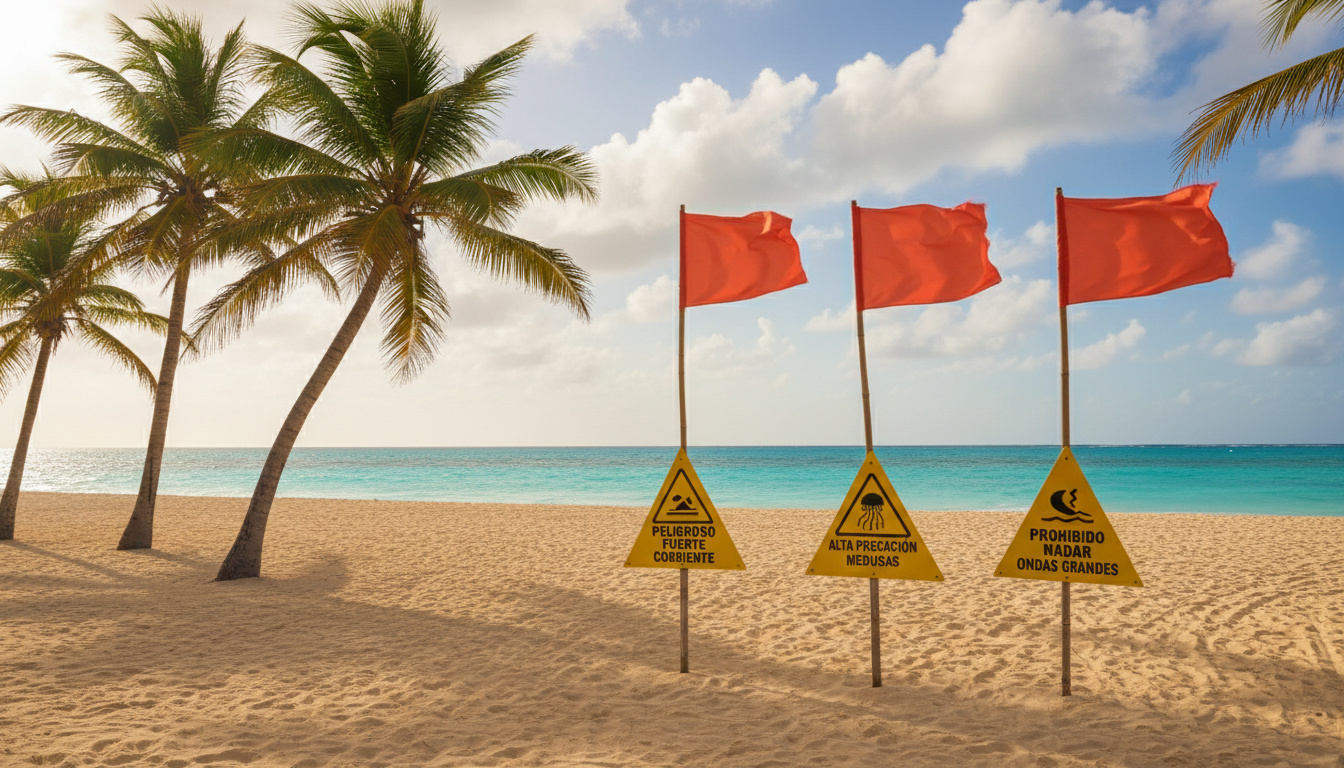
- Water hazards: Several drowning deaths occur annually due to strong currents and limited lifeguard coverage
- Border exclusion: Canadian officials explicitly warn against travel near the Haiti border due to volatility
| Fact Category | Current Status | Source |
|---|---|---|
| Official Advisory Level | Exercise high degree of caution | Government of Canada |
| Primary Crime Concerns | Armed robberies, assaults, burglaries | travel.gc.ca |
| Resort Security | POLITUR presence, private security | US State Department |
| 2024 Specific Incidents | No Canadian deaths detailed in advisories | Advisory databases |
| Water Safety | Strong currents, limited rescue services | Government of Canada |
| Emergency Contact | 911 (nationwide except Haiti border) | Smartraveller |
| US Advisory Level | Level 2 – Exercise increased caution | US State Department |
| Regional Comparison | Similar to Jamaica crime caution level | Comparative advisory analysis |
What Is the Current Travel Advisory for Canadians Visiting DR?
Multiple governments maintain active warnings for the Dominican Republic that align on core risks while differing in specific regional guidance. Flights to Calgary from Toronto – Cheap Fares from $32, Airlines Guide Official infrastructure provides granular detail unavailable through general tourism portals.
Official Canadian Position
Global Affairs Canada updated its advisory in March 2026, maintaining the high degree of caution designation nationwide. The directive specifically emphasizes avoiding the Haiti border region, which remains closed and volatile, while urging daylight-only travel between destinations and secured accommodation protocols.
International Consensus
The United States State Department maintains a Level 2 advisory, advising travelers not to resist robberies and to enroll in the STEP program for emergency notifications. Their guidance mirrors Canadian concerns regarding urban crime concentrations. Australian authorities similarly recommend high caution, specifically noting the availability of POLITUR assistance through 911 emergency services.
The 2024-2025 updates highlighted rising crime across Caribbean nations, prompting synchronized warnings from Canadian, American, and Australian authorities regarding the Dominican Republic specifically.
Recent Incidents Involving Canadian Tourists in Dominican Republic
Documented cases of Canadian victims within resort zones remain statistically rare, though urban centers present elevated exposure. The absence of specific 2024 deaths or disappearances involving Canadian nationals in Punta Cana properties contrasts with broader crime upticks affecting metropolitan areas.
Urban Crime Patterns
Santo Domingo and other major cities experienced measurable increases in theft and violent crime during 2024, prompting the elevated advisory status. These incidents predominantly occur after dark and involve armed robbery or assault in non-tourist districts.
Resort Zone Security
Punta Cana’s tourism corridor maintains contrasting security conditions. While opportunistic theft and room break-ins persist as documented risks, the presence of specialized tourist police (POLITUR) and private security infrastructure creates a protective buffer absent in urban environments.
How Can Canadian Tourists Stay Safe in the Dominican Republic?
Practical safety protocols extend beyond standard travel insurance to address specific vulnerabilities identified in consular reporting. Apartments for Rent Thunder Bay – Prices, Neighborhoods and Listings Guide Risk mitigation begins with transportation choices and situational awareness.
Transportation and Movement
Driving restrictions demand strict adherence to daylight hours only. Roadside armed robberies specifically target vehicles after dark, with slow police response times compounding the danger outside resort areas. Travelers should lock doors and windows, avoid stopping for road debris (a common robbery lure), and utilize resort-approved transportation rather than public transit.
Scam Recognition
Criminal networks employ specific social engineering tactics targeting tourists. Scams frequently involve strangers offering unsolicited assistance, rides, or social invitations that transition into robbery situations. Solo travelers face heightened risk when walking alone at night away from secured properties.
Avoid unattended drinks, accept no unverified invitations from strangers, and stay within designated resort areas after sunset. Emergency services respond to 911 nationwide except near the Haiti border.
Health and Water Safety
Coastal drowning risks exceed many Caribbean destinations due to strong currents and limited lifeguard coverage. Several drowning deaths occur annually; swimming should occur only in designated areas with active flag warning systems. Medical facilities outside major cities often lack resources for serious emergencies, necessitating evacuation coverage.
Insurance Requirements
Canadian advisories mandate comprehensive travel insurance covering medical evacuation, as local services may prove inadequate for severe injuries or illnesses. Policies should explicitly cover crime-related theft and activities such as scuba diving or adventure tourism.
Parents must maintain direct supervision of children near beaches despite resort settings. Tourism regulation remains uneven; verify operator credentials before booking excursions regardless of hotel recommendations.
Timeline of Notable Advisory Updates and Crime Trends
Recent shifts in official guidance reflect evolving security conditions rather than isolated incidents. The chronology tracks advisory modifications and documented crime pattern changes affecting Canadian travelers.
- – Canada issues coordinated travel warnings for five Caribbean countries including the Dominican Republic, citing rising violent crime statistics. Tempo Networks
- – General upticks in theft and violent crime documented in Santo Domingo and other major Dominican cities prompt advisory reinforcement. Vancouver Is Awesome
- – Continued high degree of caution maintained; regional comparisons confirm Dominican Republic matches Jamaica’s advisory level for violent crime in tourist areas.
- – Government of Canada updates travel advisory, maintaining high caution status and reinforcing Haiti border avoidance protocols.
Established Facts vs. Uncertain Information
Distinguishing verified risks from speculation allows travelers to allocate attention appropriately. The comparison separates confirmed advisory content from unverified claims circulating through unofficial channels.
| Established Information | Information Remaining Unclear |
|---|---|
| High degree of caution advisory active nationwide | Specific 2024 case details involving Canadian fatalities in resorts |
| Concentrated crime in large cities after dark | Precise crime statistics differential between 2023-2024 |
| POLITUR presence in Punta Cana resort zones | Effectiveness ratios of private vs. public security |
| Roadside armed robberies occur after dark | Geographic distribution of scammer networks |
| Haiti border region remains volatile and closed | Timeline for border reopening or stabilization |
Broader Context: Crime and Tourism Infrastructure
The Dominican Republic’s tourism economy operates within a developing nation context where economic disparity creates security friction. Resort compounds function as secured enclaves with resources unavailable to surrounding communities, generating the stark safety contrasts documented in advisories.
Compared to Caribbean peers, the Dominican Republic maintains similar advisory levels to Jamaica regarding violent crime in tourist zones, though both destinations offer substantially safer resort environments than urban Haiti-border regions or areas of Cuba facing specific resource shortages. The concentration of Canadian visitors in Punta Cana’s protected corridor statistically insulates them from the violent crime patterns affecting Santo Domingo’s metropolitan population.
Official Sources and Expert Guidance
Primary authority rests with governmental travel safety networks that coordinate intelligence across consular services.
Exercise a high degree of caution in the Dominican Republic due to violent crime. Armed robberies, assaults and burglaries occur throughout the country, especially in large cities and at night.
Government of Canada Travel Advisory, March 2026
Do not physically resist any robbery attempt. Enroll in the Smart Traveler Enrollment Program (STEP) to receive security updates.
US Department of State Travel Advisory
Preparing for Dominican Republic Travel
Canadian tourists can navigate the Dominican Republic safely by maintaining strict adherence to daylight travel, resort security protocols, and comprehensive insurance coverage. The current advisory climate demands heightened awareness without requiring destination avoidance for those following official guidance. Monitor travel.gc.ca for real-time updates before departure.
Frequently Asked Questions
What should I do if I’m already in the Dominican Republic as a Canadian?
Contact the Embassy of Canada in Santo Domingo for assistance. Avoid non-resort areas after dark, use hotel-approved transportation, and monitor local news for security updates.
How does the Dominican Republic compare to Mexico for Canadian tourist safety?
Both destinations carry Level 2 advisories with regional variations. Dominican Republic resorts offer similar security infrastructure to Cancun or Puerto Vallarta, though urban crime patterns differ.
Are there specific vaccines required for Dominican Republic travel from Canada?
No mandatory vaccines exist for direct entry, but routine immunizations and hepatitis precautions are recommended. Consult Travel.gc.ca health sections 6-8 weeks before departure.
Can I drink tap water in Punta Cana resorts?
Bottled water remains the standard recommendation despite resort filtration systems. Food-borne illness poses greater risk than water contamination in established properties.
Is the Haiti border region accessible for day trips?
Canadian advisories explicitly prohibit travel near the Haiti border due to volatility and closure. Remain within official tourist corridors and avoid border provinces entirely.
Related stories





Hannah Walsh covers federal and provincial politics and public policy for Canada Scope.