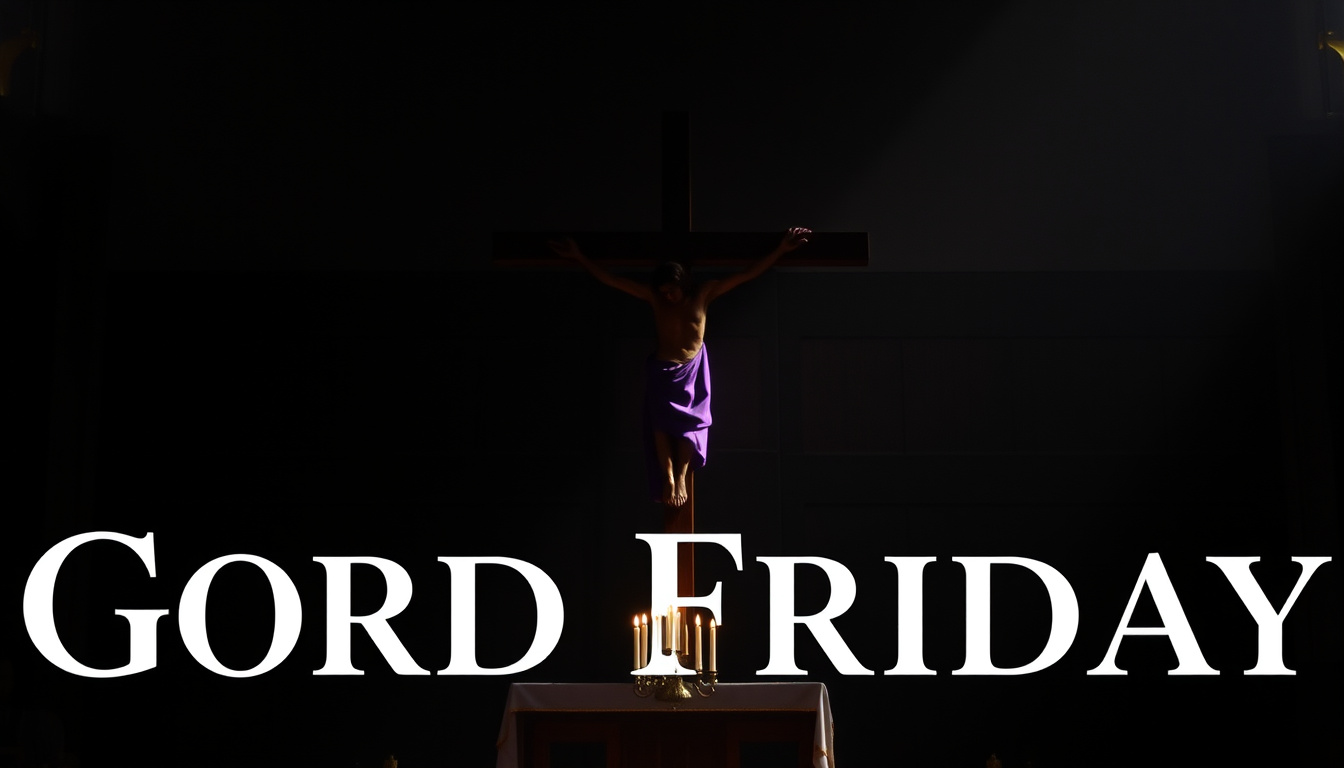
There’s a jarring detail about the most solemn day on the Christian calendar: it’s called “Good” Friday. For centuries, Christians have marked the crucifixion and death of Jesus Christ on this day, yet the name seems to celebrate tragedy, and the reason lies in a theological paradox known as the “happy fault” (felix culpa) — the belief that this dark moment made salvation possible.
Observed by: Christians worldwide ·
Date: Friday before Easter (varies annually) ·
2026 date: April 3 (Western) ·
Also called: Holy Friday, Great Friday
Quick snapshot
- Commemorates the crucifixion of Jesus Christ (Britannica (established encyclopedia))
- Observed on the Friday before Easter Sunday (Britannica)
- Part of the Easter Triduum along with Holy Saturday and Easter (Britannica)
- Exact year of the crucifixion (commonly placed between 30–33 AD) (Britannica)
- Whether the Last Supper was a Passover meal remains debated by scholars (Wikipedia (open encyclopedia))
- Good Friday 2026 in Western Christianity falls on April 3 (Britannica)
- In Eastern Christianity, Good Friday 2026 reportedly falls on April 10 (Wikipedia)
- Good Friday leads into Holy Saturday and culminates in Easter Sunday, the celebration of the resurrection (Britannica)
- Many Christians attend evening services or processions on Good Friday, then prepare for Easter festivities (Remitly (financial services blog))
Five key facts about the observance reveal one pattern: the day is defined by its place in the Easter cycle.
| Label | Value |
|---|---|
| Date | Friday before Easter (varies) |
| 2026 Date (Western) | April 3 |
| 2026 Date (Eastern) | April 10 (reportedly) |
| Observance | Christian |
| Significance | Commemorates crucifixion and death of Jesus |
| Also known as | Holy Friday, Great Friday |
What is Good Friday celebrated for?
Good Friday is the day Christians set aside to remember Jesus Christ’s crucifixion and death — the act that, in Christian theology, atoned for humanity’s sins. The day is anything but festive; it’s observed with fasting, prayer, and somber reflection.
What is the meaning of Good Friday?
- Good Friday is the Christian holy day that commemorates the crucifixion of Jesus Christ, as recorded in the four Gospels (Britannica (established encyclopedia)).
- It is observed during Holy Week, the week leading up to Easter, and forms part of the Easter Triduum — the three-day period from Good Friday to Easter Sunday (Britannica).
- The day is marked by prayer, penance, fasting, and reflection (Britannica). Many Christians also participate in the Stations of the Cross, a devotional retracing of Jesus’ final journey.
What is the biblical basis for Good Friday?
- The biblical account of the crucifixion appears in all four Gospels: Matthew 27, Mark 15, Luke 23, and John 19 (Bible Gateway (online scripture resource)).
- The Gospels describe Jesus being arrested, tried before Pontius Pilate, scourged, and forced to carry his cross to Golgotha, where he was crucified alongside two criminals.
- According to the accounts, Jesus died around the ninth hour (3 PM), and his body was placed in a tomb by Joseph of Arimathea (Britannica).
The implication: For Christians, the crucifixion narrative is not just a historical record but the foundation of their faith — the event that, in their view, reconciled humanity to God.
Why is Good Friday called Good if Jesus died?
“We Christians call that day ‘Good’ Friday because we see revealed there the supreme goodness and extraordinary love of God…”
What is the origin of the name ‘Good Friday’?
- The name may derive from “God’s Friday” — an older English usage where “God” was sometimes replaced by “good” (Wikipedia (open encyclopedia)).
- The term “Good Friday” appears in English usage as early as the 13th century, originally in the sense of “holy” or “pious.”
- In many other languages, the day is called “Holy Friday” or “Great Friday” — for example, in Spanish (Viernes Santo) and Greek (Megali Paraskevi) (Wikipedia).
Does the term ‘Good’ refer to something else?
- Theologically, the “goodness” of Good Friday is tied to the outcome: Jesus’ death is seen as the sacrifice that made salvation possible, a concept known as the “happy fault” or felix culpa (Britannica).
- The phrase felix culpa originates from the Easter Exsultet, an ancient hymn sung during the Easter Vigil, which celebrates Adam’s sin as “necessary” because it led to Christ’s redemption.
- So, “Good Friday” is good not because of the event itself, but because of its redemptive consequences.
For non-Christians, calling a day of execution “good” sounds like tragic irony. But within Christian doctrine, the name captures a profound reversal: the worst day in history is also the best, because it opened the door to eternal life.
The pattern: The name “Good Friday” is a piece of theological shorthand. It doesn’t celebrate death; it celebrates the life that, according to Christian belief, came out of that death.
What did Jesus do on Good Friday?
What events led to the crucifixion?
- According to the Gospel accounts, after the Last Supper, Jesus was betrayed by Judas Iscariot and arrested in the Garden of Gethsemane (Britannica).
- He faced a series of trials: before the Jewish high priest Caiaphas, then before the Roman governor Pontius Pilate, and finally before Herod Antipas (Bible Gateway).
- Pilate, though reportedly finding no fault, sentenced Jesus to crucifixion to appease the crowd (Britannica).
Did Jesus die on Good Friday?
- Yes — Christians believe Jesus died on the cross on Good Friday, around 3 PM. The body was then taken down and buried in a tomb before sundown, the start of the Sabbath (Britannica).
- The resurrection is celebrated on Easter Sunday, three days later. The phrase “three days” is understood in Jewish inclusive reckoning (Friday afternoon to Sunday morning counts as three days) (Wikipedia).
The pattern: The sequence from arrest to burial is the core narrative of Good Friday. Every tradition — from the Stations of the Cross to the veneration of the cross — retraces these steps as a form of participatory remembrance.
Good Friday traditions around the world
Good Friday is observed with local variations across denominations and countries. Here’s how different Christian communities mark the day.
- Roman Catholic: The liturgy includes the reading of the Passion, the veneration of the cross, and Holy Communion from the reserved sacrament (Narayan Seva USA (charity organization)).
- Eastern Orthodox: Known as Great and Holy Friday, the day includes a procession with the epitaphios (a cloth icon of Christ’s burial) and a strict fast (Wikipedia).
- Protestant: Many denominations hold services with hymns, sermons on the seven last words of Christ, and a focus on meditation (Britannica).
- United Kingdom: Good Friday is a public bank holiday. Many people attend church, eat hot cross buns, and begin the Easter weekend with quiet reflection (Remitly (financial services blog)).
Good Friday practices vary by culture, but the unifying thread is solemnity. Even in countries where it’s a public holiday, the day retains its religious weight for millions. Visiting a parish like St. Thomas More Parish or attending services at Toronto Catholic District School Board schools — both Catholic institutions — you’d find a day of prayer, not celebration.
When is Good Friday 2026?
Good Friday’s date changes each year because Easter is a moveable feast calculated from the lunar calendar. For 2026, the dates differ between Western and Eastern Christianity.
- Western Christianity (Catholic, Protestant): April 3, 2026 (Britannica)
- Eastern Christianity (Orthodox): April 10, 2026 (reportedly) (Wikipedia)
The trade-off: Because Easter is tied to the Jewish Passover, Good Friday can fall anywhere between March 20 and April 23 in the Gregorian calendar (Britannica).
Summary
Good Friday remains a day of paradox: a death that Christians call “good” because they believe it brought life. For believers attending services at their local parish or following traditions like fasting and the Stations of the Cross, the day is a solemn pause before the joy of Easter. For skeptics, it’s a curious name that invites deeper inquiry into a faith that finds hope in tragedy. The implication for anyone trying to understand Christianity: you can’t grasp Easter without first sitting with Good Friday.
For a deeper look into the biblical and historical events of this day, readers may explore the meaning of Good Friday and its global observances.
Frequently asked questions
What is forbidden on Good Friday?
Many Christians observe Good Friday as a day of fasting and abstinence. Catholics aged 18–59 are required to abstain from meat and are encouraged to limit food intake to one full meal plus two small meals. Some also avoid work, entertainment, and shopping as a sign of respect.
How do you wish someone on Good Friday?
Because it is a solemn day, typical greetings are “Have a blessed Good Friday” or “Praying for you this Good Friday.” Avoid “Happy Good Friday” since it’s not a celebration.
What is the history of Good Friday?
Good Friday has been observed since the earliest centuries of Christianity. References to a pre-Easter fast and commemoration of the crucifixion appear in the writings of the early church fathers (e.g., Irenaeus and Tertullian). The modern name “Good Friday” became common in English by the 13th century.
What does the Bible say about Good Friday?
The crucifixion accounts in Matthew 27, Mark 15, Luke 23, and John 19 describe Jesus’ arrest, trial, crucifixion, death, and burial. These chapters form the biblical basis for Good Friday.
How do Catholics observe Good Friday?
Catholics attend a liturgy that includes the reading of the Passion, the veneration of the cross, and a solemn intercession for the world. The Eucharist is not consecrated that day; instead, previously consecrated hosts are distributed.
What is the relationship between Good Friday and Easter?
Good Friday and Easter form a single narrative: the death of Jesus (Good Friday) and his resurrection (Easter Sunday). Easter is the celebration of that resurrection, and Good Friday is the necessary prelude. In Christian theology, without Good Friday there is no Easter.
When is Good Friday 2026?
For Western Christianity, Good Friday 2026 is April 3. For Eastern Christianity, it is April 10, 2026.
Related stories





Kevin Sullivan covers culture, lifestyle and society across Canada for Canada Scope.