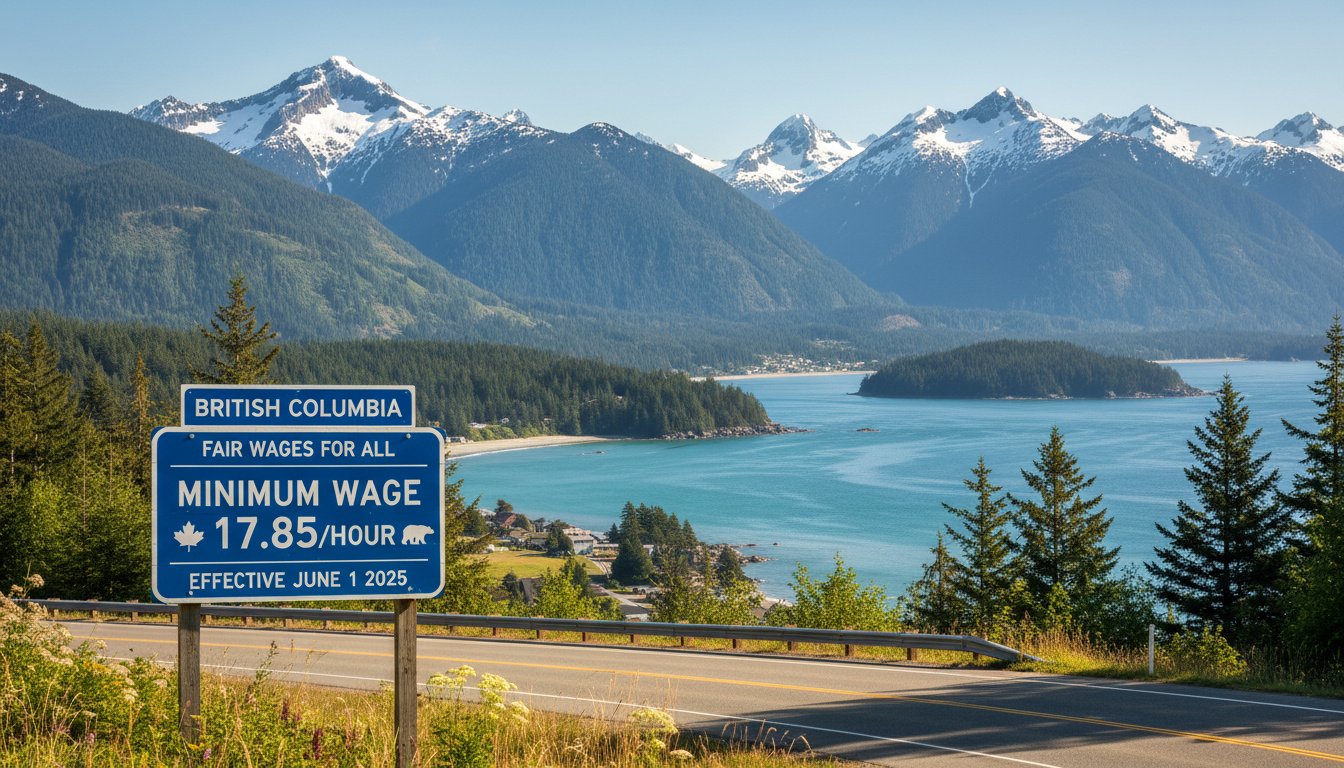
British Columbia’s minimum wage increased to $17.85 per hour on June 1, 2025, marking a 2.6% rise from the previous rate of $17.40. The adjustment aligns with amendments to the Employment Standards Act that automatically tie wage changes to the province’s All-Items Consumer Price Index.
The new rate applies to most employees across the province, including those in retail, hospitality, and administrative roles. Approximately 130,000 workers in British Columbia earned at or below the minimum wage threshold in 2024, according to Statistics Canada data cited by provincial officials.
This increase represents the second year of automatic annual adjustments based on inflation data, a departure from the previous system of government-announced discretionary increases. The mechanism aims to provide predictability for both employees and employers while addressing cost-of-living challenges.
What Is the BC Minimum Wage in 2025?
Key developments in the 2025 wage adjustment include:
- The $17.85 rate applies uniformly to general workers, liquor servers, and app-based gig workers
- Agricultural piece rates will increase December 31, 2025, to avoid mid-harvest disruption
- British Columbia maintains the highest minimum wage among Canadian provinces
- The 2.6% increase reflects average inflation data from the 2024 calendar year
- No separate tipped minimum wage exists; all servers receive the full statutory rate
- Resident caretakers and live-in support workers see proportional increases based on previous benchmarks
- The adjustment directly affects approximately 5% of the provincial workforce
| Category | 2024 Rate | 2025 Rate | Effective Date |
|---|---|---|---|
| General Minimum Wage | $17.40 | $17.85 | June 1, 2025 |
| Liquor Servers | $17.40 | $17.85 | June 1, 2025 |
| Farm Workers (Hourly) | $17.40 | $17.85 | June 1, 2025 |
| Farm Workers (Piece Rate) | Varies by crop | +2.6% adjustment | December 31, 2025 |
| Resident Caretakers | $1,002.53/month* | +2.6% adjustment | June 1, 2025 |
| Live-in Home Support | Previous rate +2.6% | +2.6% adjustment | June 1, 2025 |
| Camp Leaders | Previous rate +2.6% | +2.6% adjustment | June 1, 2025 |
| App-based Ride-hail/Delivery | $17.40 | $17.85 | June 1, 2025 |
*2024 baseline rate shown; actual caretaker rates include suite allowances and building size variables.
When Does the 2025 BC Minimum Wage Increase Take Effect?
The adjustment took effect on June 1, 2025, applying to all hours worked on or after that date. This timing follows the province’s established schedule of annual updates tied to the previous calendar year’s inflation metrics.
How Does the Annual CPI Adjustment Work?
British Columbia shifted to an automatic adjustment mechanism in 2024, eliminating the need for annual government announcements or legislative debates over specific dollar amounts. The system calculates the percentage change in the province’s All-Items Consumer Price Index and applies that percentage to the existing minimum wage.
The 2.6% increase reflects the average British Columbia inflation rate recorded during the 2024 calendar year, using Statistics Canada’s All-Items CPI data. The government finalizes the exact rate in early spring based on December 2024 CPI figures.
What Inflation Data Determines the Rate?
The Ministry of Labour utilizes the All-Items Consumer Price Index for British Columbia, which tracks price changes across housing, food, transportation, and other essential categories. This comprehensive measure differs from core inflation metrics that exclude volatile items like energy.
The automatic adjustment system provides employers with six months’ notice of exact rate changes, allowing payroll systems and budget forecasts to align with the June 1 implementation date. This predictability formed a central rationale for the 2024 legislative amendments.
Farm workers paid by piece rate see adjustments on December 31, 2025, rather than June 1. This timing avoids disrupting harvest seasons while still ensuring workers receive the inflation-adjusted equivalent of the minimum wage.
What Are the Specialized Minimum Wage Rates in BC for 2025?
While most employees fall under the general rate, specific occupations carry distinct provisions reflecting unique working arrangements or historical exemptions.
Liquor Servers and Tipped Workers
British Columbia eliminated the separate liquor server minimum wage in 2023. As of June 1, 2025, servers, bartenders, and other tipped employees receive the full $17.85 per hour. The province no longer permits employers to count tips toward minimum wage obligations. Employment Standards require direct payment of the statutory hourly rate regardless of gratuity income.
Agricultural and Farm Workers
Hourly agricultural workers qualify for the $17.85 minimum wage effective June 1, 2025. However, hand harvesters paid by piece rate operate under a different timeline. Their rates increase by 2.6% on December 31, 2025, preserving wage stability during critical harvest periods. The Employment Standards Branch publishes specific piece rates for crops like blueberries, mushrooms, and apples.
Residential Caretakers and Live-In Support
Resident caretakers of apartment buildings receive monthly salaries adjusted by the 2.6% CPI increase, with specific amounts varying by building size and suite provisions. Live-in home support workers and camp leaders similarly see their unique compensation structures rise by 2.6%, maintaining proportionality with general wage trends. Previous benchmarks established base rates that now carry forward with inflationary adjustments.
Gig Economy Provisions
App-based ride-hail and delivery drivers fall under the general minimum wage of $17.85 per hour as of June 1, 2025. This rate applies to engaged time—periods when workers actively fulfill requests. A separate $20.88 rate noted in September 2024 related to specific transitional provisions, though the standardized minimum now aligns with other sectors.
How Does BC’s 2025 Minimum Wage Compare Historically?
British Columbia’s $17.85 rate positions the province at the top of Canada’s minimum wage hierarchy, though the federal minimum wage for regulated industries exceeds it slightly.
| Province/Territory | Minimum Wage | Effective Date |
|---|---|---|
| British Columbia | $17.85 | June 1, 2025 |
| Alberta | $15.00 | October 1, 2018 |
| Manitoba | $16.00 | October 1, 2025 |
| Ontario (General) | $17.60 | October 1, 2025 |
| Nova Scotia | $16.75 | April 1, 2026 |
| Federal (Canada Labour Code) | $18.15 | April 1, 2026 |
Prior to 2024, British Columbia utilized discretionary increases announced by the government. The province targeted a $15 hourly minimum through gradual adjustments, reaching $16.75 by June 2023. The shift to automatic CPI linkage in 2024 marked a structural change intended to depoliticize wage adjustments.
Based on current CPI projections, British Columbia’s minimum wage will increase to $18.25 per hour on June 1, 2026, reflecting an anticipated 2.1% inflation rate. This forward guidance allows multi-year budget planning for businesses and workers.
Who Sets BC Minimum Wage and Are There Exemptions?
The provincial government establishes minimum wage standards through the Employment Standards Act and associated regulations. The Ministry of Labour administers compliance and enforcement.
Post-2024, no broad exemptions exist for liquor servers, farm workers, or other previously special categories regarding the CPI adjustment mechanism. All employers must comply with the June 1 rate changes, with limited exceptions for specific piece-rate agricultural work regarding timing rather than amount.
Employers who fail to implement the new rates face penalties under provincial employment law. Workers may file claims with the Employment Standards Branch for unpaid wages.
How Has BC Minimum Wage Changed Over Time?
- June 1, 2023: Minimum wage increased to $16.75 per hour, equalizing liquor server rates with the general standard.
- June 1, 2024: Rate rose to $17.40 per hour, the first automatic CPI-adjusted increase under new legislation.
- June 1, 2025: Wage reached $17.85 per hour based on 2.6% inflation adjustment.
- June 1, 2026 (Projected): Anticipated increase to $18.25 per hour based on 2.1% CPI projections.
What Is Certain and Uncertain About Future BC Wage Policy?
Established Information
- Annual CPI-based adjustments occur every June 1
- The 2.6% increase formula for 2025 is fixed
- No separate liquor server exemption remains
- Farm piece rate timing is set at December 31
- Automatic adjustments require no legislative votes
Remaining Uncertainties
- Exact CPI percentage for 2026 remains provisional (2.1% projected)
- Potential legislative amendments could modify the adjustment formula
- Specific employment impact data across sectors has not been released
- Federal minimum wage changes may influence provincial policy discussions
Why Did BC Link Wages to Inflation?
The automatic adjustment mechanism emerged from the province’s TogetherBC poverty reduction strategy. Government officials sought to provide worker certainty while allowing businesses to predict labor costs without annual political negotiations over specific dollar amounts.
By tying wages to the Consumer Price Index, British Columbia attempted to ensure that minimum wage purchasing power does not erode during inflationary periods. The policy specifically targets the approximately 130,000 workers who earn at or below the minimum threshold, many of whom work in sectors like Apartments for Rent Thunder Bay – Prices, Neighborhoods and Listings Guide and residential care.
For older workers supplementing retirement income, the wage adjustments provide modest protection against cost-of-living increases. Those researching Retirement Home Near Me – Guide to Types, Costs and Ratings may note that minimum wage positions sometimes support seniors seeking supplemental income.
What Do Officials Say About the 2025 Wage Increase?
The annual adjustment to the minimum wage helps ensure workers’ earnings keep pace with inflation, providing certainty for workers and predictability for businesses.
— British Columbia Ministry of Labour, June 2025 Announcement
Automatic indexing removes the political uncertainty that previously surrounded minimum wage decisions, allowing employers to plan payroll budgets with confidence.
— Employment Standards Policy Analysis, Harris & Company
What Should Workers and Employers Know About BC Minimum Wage?
British Columbia’s minimum wage stands at $17.85 per hour effective June 1, 2025, with automatic annual adjustments now entrenched in provincial law. Employers must update payroll systems immediately, while employees should verify pay stubs reflect the new rate. The 2026 adjustment will likely raise the standard to $18.25, continuing the pattern of inflation-linked increases.
Frequently Asked Questions
What are the impacts of the 2025 BC minimum wage increase?
The increase affects approximately 130,000 workers, boosting annual earnings for full-time minimum wage employees by roughly $936. The British Columbia government states the policy supports poverty reduction while providing business predictability.
Do all workers qualify for the $17.85 minimum wage?
Most employees qualify, including liquor servers, gig workers, and hourly farm laborers. Piece-rate farm workers receive equivalent adjustments effective December 31, 2025. Resident caretakers and live-in support workers see proportional increases.
How often does BC minimum wage increase?
Minimum wage increases automatically every June 1 based on the previous year’s average British Columbia inflation rate. This annual adjustment occurs without requiring new legislative votes.
What happens if my employer doesn’t pay the new rate?
Employees may file claims with the Employment Standards Branch for unpaid wages. Employers face penalties for non-compliance, including fines and orders to compensate workers for wage shortfalls.
Are there any exceptions to the June 1 effective date?
Agricultural workers paid by piece rate see adjustments on December 31 rather than June 1, preventing disruption during harvest seasons. All other workers receive the new rate June 1.
How does the BC minimum wage compare to the federal minimum wage?
British Columbia’s $17.85 exceeds most provincial rates but falls below the federal minimum wage of $18.15 effective April 1, 2026. Federal rates apply only to federally regulated industries like banking and transportation.
Will the minimum wage increase again in 2026?
Yes. Based on current CPI projections, the rate will increase to $18.25 per hour on June 1, 2026, reflecting an anticipated 2.1% inflation adjustment.
Related stories





Hannah Walsh covers federal and provincial politics and public policy for Canada Scope.