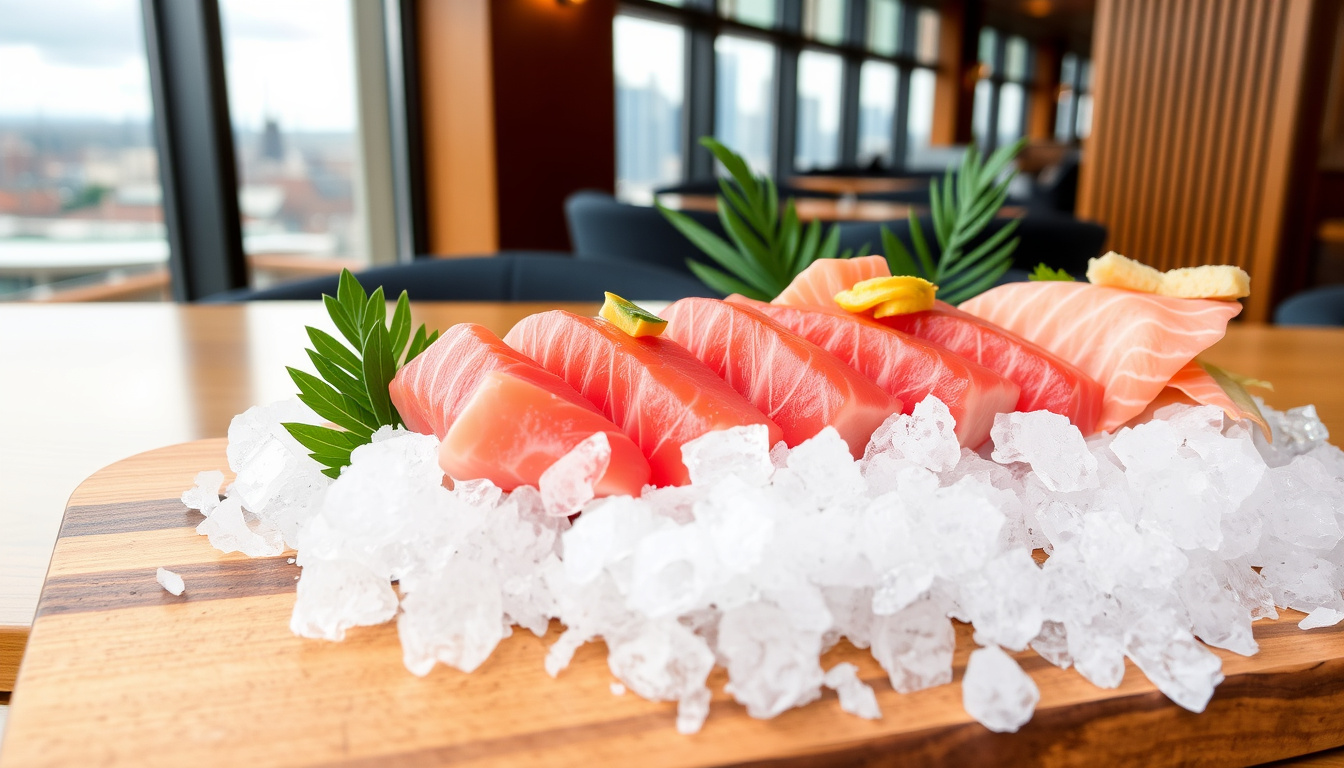

If you’ve ever stared at a sushi menu wondering why sashimi costs extra — or watched someone dip their fish straight into soy sauce — you’re not alone. This guide cuts through the menu confusion and covers what actually arrives on a sashimi platter, which Dublin spots earn their reputation, and the practical things no one tells you before your first order.
Common fish types: Ahi Tuna, Hamachi, Salmon · Sashimi portions: 5 slices per portion · Top Dublin spots: Yamamori, Musashi, Zakura · Supermarket options: Dunnes, Aldi
Quick snapshot
- Sashimi is raw fish sliced paper-thin — no rice, no seaweed (Yamamori)
- Dublin’s top-rated sashimi spot is Yamamori Izakaya with 4.6/5 on OpenTable (OpenTable)
- Musashi Noodles offers shared platters for two at reasonable prices (TheTaste.ie)
- Exact sashimi platter menus and prices vary by season and availability
- Quality consistency between locations of the same chain
- Banyi Japanese Dining established May 2013 in Temple Bar
- Matsukawa opened September 2025 — newest spot in Dublin 7
- More Dublin restaurants adding omakase-style sashimi courses
- Supermarket sushi quality improving with demand
| Label | Value |
|---|---|
| Definition | Platter of raw fish slices |
| Key locations | Dublin: Yamamori, Musashi, Zakura |
| Fish examples | Ahi Tuna, Hamachi, Sake Salmon |
| Portion size | 5 slices typical |
| Best-rated spot | Yamamori Izakaya (4.6/5, 408 reviews) |
| Value pick | Tokyo Kitchen platter at €11 |
| Budget range | €11–€23 depending on restaurant |
| Supermarket | Available at Dunnes Stores, Aldi |
What comes on a sashimi platter?
A sashimi platter typically features thin-cut slices of one or more raw fish varieties, arranged with attention to color, texture, and visual balance. Unlike sushi rolls or nigiri, there’s no rice, no seaweed wrap — just the fish itself, presented in a way that lets the quality speak.
Common fish varieties
Dublin restaurants serving sashimi generally offer a rotating selection based on freshness and season. Ahi Tuna (also called yellowfin) appears on most menus for its firm texture and clean flavor. Hamachi (amberjack) brings a richer, buttery quality that fans often prefer. Salmon — labeled as Sake on Japanese menus — is the entry point for many beginners due to its milder taste and higher fat content. Some higher-end spots feature scarcer options like sea bream (madai) or octopus (tako), but these rotate based on supply.
If you’re seeing the same fish names repeated across several Dublin menus, that’s not laziness — it’s a sign those varieties are reliably fresh and in demand.
Typical arrangement
The standard portion in Dublin runs about five slices per single-person serving, though many restaurants offer shared platters with two or three times that amount. At Musashi, for instance, their shared platter option covers two people comfortably. At pricier omakase counters, a single course might include eight to twelve pieces across multiple varieties, presented in a specific order from light to dark fish.
“If you fancy eating like a king sans the princely sum at the end, Musashi is always a solid bet.”
What’s the difference between sushi and sashimi?
The distinction comes down to one simple rule: sashimi is fish alone, while sushi involves rice. Sushi is an umbrella term covering nigiri (fish on rice), maki rolls (fish wrapped in seaweed and rice), and other preparations. Sashimi bypasses the starch entirely — you’re eating the fish in its purest form, which makes the quality of the cut and the freshness of the fish impossible to hide behind rice or seasoning.
Key ingredient differences
Sushi includes rice as its foundation, which means vinegared rice, wasabi mixed in, and the fish serving as a topping rather than the main event. Sashimi is just the protein — no carbohydrate, no filler. For people tracking carbs or preferring the clean taste of fish without accompaniments, sashimi is the obvious choice. At Sumaki, Dublin’s first sushi burrito bar, you can get salmon sashimi wrapped in rice for a hybrid experience, but technically that’s sashimi-style, not pure sashimi.
Preparation methods
Sushi requires shaping rice by hand and balancing the fish on top — a skill that takes years to master. Sashimi demands knife skills of a different kind: the blade must be razor-sharp, the cuts precise at specific angles to the muscle fibers. Tokyo Kitchen in Dublin employs senior chefs with over ten years of experience specifically for this reason. The difference is visible in how cleanly each slice separates and how it holds together when dipped.
When you order sashimi, you’re paying primarily for the chef’s knife work and the fish’s quality. That explains why a small plate of five slices at a premium spot can cost as much as a full sushi roll elsewhere.
What are the differences between nigiri and sashimi?
Nigiri and sashimi occupy opposite ends of the Japanese seafood presentation spectrum. Nigiri layers a small mound of rice under a slice of fish, sometimes secured with a thin band of nori. Sashimi presents those same fish slices alone, without the rice base. The experience of eating each differs substantially — nigiri offers the interplay between warm rice and cool fish, while sashimi focuses attention entirely on the fish’s flavor and texture.
Nigiri components
Nigiri consists of two elements: the rice and the fish. The rice is typically seasoned with rice vinegar, sugar, and salt, then shaped by hand to create a base that holds together but remains loose enough to eat in one bite. The fish sits on top, sometimes with a dot of wasabi between. At Ukiyo on Exchequer Street, their norimaki rolls — which are essentially multiple nigiri wrapped together in seaweed — run €15 to €23 for eight pieces. The pricing reflects the labor involved in shaping and assembly.
Sashimi style
Sashimi eliminates the rice entirely, which means every cut must be flawless because there’s nothing to compensate for sloppy work. The slices are typically thicker than those used in nigiri and cut at specific angles to the grain. Presentation matters more with sashimi — garnishes like radish, shiso leaf, and pickled ginger accompany the plate to cleanse the palate between varieties. Banyi Japanese Dining in Temple Bar emphasizes hand-crafted sashimi as their specialty, a claim backed by their long-standing presence in Dublin since May 2013.
“THE BEST JAPANESE RESTAURANT IN DUBLIN FOR HAND-CRAFTED SUSHI, FRESH SASHIMI.”
Is sashimi healthier than sushi?
Sashimi offers a clear advantage in carbohydrate reduction — eliminating rice from the equation removes roughly 40 grams of carbs per serving. For people watching their carbohydrate intake, this makes sashimi a go-to choice. However, health implications extend beyond carbs, and the picture gets more complicated when you factor in portions, dipping habits, and individual health conditions.
Nutritional comparison
Fish used in sashimi — particularly salmon, tuna, and mackerel — provides high-quality protein and omega-3 fatty acids that support heart and brain health. Sashimi portions tend to be smaller than full sushi rolls, which can naturally limit overall calorie intake. The trade-off comes when people overcompensate by ordering extra sides, appetizers, or larger share platters to make up for the missing rice. Ahi Tuna sashimi contains about 130 calories per 100 grams with minimal fat, while salmon runs higher due to its fat content but delivers more omega-3s per slice.
Health risks
The primary concern with any raw fish is parasites and bacterial contamination. The FDA recommends flash-freezing fish intended for raw consumption at -20°C for at least 7 days or -35°C for 15+ hours to kill parasites. Reputable Dublin restaurants follow these protocols, but the risk isn’t zero — people with compromised immune systems, pregnant women, and the elderly should exercise particular caution. Fish allergies also pose a risk, and cross-contamination during preparation can affect people with mild shellfish allergies.
If you feel nauseous, dizzy, or experience tingling in your mouth after eating sashimi, stop immediately and seek medical attention. These symptoms could indicate scombroid poisoning from improperly stored fish or a developing allergic reaction.
How to eat sashimi for beginners?
First-timers often feel uncertain about chopstick etiquette, dipping technique, and the pace of a sashimi meal. There’s no strict protocol, but understanding a few conventions helps you enjoy the experience without embarrassment. Dublin’s Japanese restaurants are accustomed to diners at all experience levels.
Proper tools
Chopsticks are the standard serving tool for sashimi, but using your fingers is perfectly acceptable if chopstick skills are limited. The key rule is not to touch the fish directly with chopsticks if it’s being shared — use the serving end of your chopsticks to move fish from the communal plate to your own dish. At casual spots like Sumaki or Tokyo Kitchen, the atmosphere tends to be relaxed about etiquette. At higher-end places like Yamamori, a bit more care with serving practices shows respect without being mandatory.
Dipping etiquette
Soy sauce should be poured into the small dish provided — never directly over the sashimi on the main plate. Lightly dip the fish flesh-side down, careful not to saturate it. Heavy dipping washes away the fish’s natural flavor and can overwhelm delicate varieties. Wasabi is traditionally stirred directly into soy sauce at many casual establishments, though traditional Japanese practice suggests placing a small amount directly on the fish instead. Dublin restaurants generally accommodate either approach.
Newcomers often over-dip because they’re used to strong-flavored cooked food. Start with one light dip and taste before adding more. The fish is the point — let it speak.
Where to get the best sashimi platter near me in Dublin?
Dublin’s Japanese food scene has grown substantially, with several spots consistently earning high marks across multiple platforms. Rather than relying on a single review site, the most reliable approach combines Tripadvisor ratings, OpenTable bookings, and editorial reviews from local food publications.
| Restaurant | Rating | Platform | Specialty |
|---|---|---|---|
| Yamamori Izakaya Japas & Sake | 4.6/5 (408 reviews) | OpenTable | #1 sushi North City Centre |
| Musashi Noodles & Sushi Bar | 4.5/5 (738 reviews) | Tripadvisor | Shared platters for two |
| Zakura Noodle & Sushi | 4.5/5 | Tripadvisor | #3 in Dublin, #1 by Irish Road Trip |
| Ukiyo | Premium tier | LovinDublin | Norimaki rolls €15–23 |
| Sumaki | €12.95 daily platter | LovinDublin | Dublin’s first sushi burrito bar |
| Tokyo Kitchen | €11 platter | TheTaste.ie | Budget option, Bow’s Street |
| Banyi Japanese Dining | Established May 2013 | Direct | Hand-crafted sashimi specialist |
| Matsukawa | Newest (opened Sept 2025) | LovinDublin | Queen Street, Dublin 7 |
The pattern across these eight Dublin restaurants reveals a clear stratification: booking platforms reward Yamamori’s consistency, review volume favors Musashi’s value positioning, and newer entrants like Matsukawa signal ongoing evolution in the scene.
Can I get sashimi platter delivery in Dublin?
Delivery options exist but come with a quality trade-off. Sashimi freshness deteriorates rapidly within 30–45 minutes of preparation, and most delivery services add travel time on top of kitchen prep. Platforms like Deliveroo and Just Eat list several Japanese restaurants with sashimi options, but the results vary significantly based on distance and packing quality.
Restaurant delivery options
Musashi Noodles explicitly lists delivery as part of their service alongside dine-in and takeaway. Their Capel Street location covers the north city center reasonably well. Yamamori accepts reservations but delivery availability depends on the location and time of day. For premium omakase experiences, in-person dining remains the only reliable option — the chef’s timing matters too much to risk with a courier.
Supermarket availability
Pre-made sashimi has become increasingly accessible at Dublin supermarkets. Dunnes Stores offers sushi through their Sushi Gourmet line, typically stocked in larger stores with dedicated sushi counters. Aldi has trialed sushi offerings periodically but availability fluctuates. These supermarket options are useful for a quick fix but generally fall short of restaurant quality in terms of cut precision, variety, and freshness guarantees.
If supermarket sushi is your only option, check the use-by date carefully and consume within two hours of purchase. Pre-packaged sashimi from grocery stores is typically made earlier in the day and has spent time in refrigerated display cases.
How fresh is sashimi at supermarkets versus restaurants?
Restaurant sashimi and supermarket sashimi occupy different tiers in terms of freshness assurance. The gap isn’t necessarily about safety — reputable supermarkets follow food safety protocols — but about quality perception and the eating experience. Understanding this helps set realistic expectations.
Restaurant sourcing advantages
Dedicated Japanese restaurants typically receive fish deliveries two to three times per week, with high-end spots sometimes accepting daily shipments. The fish are often flash-frozen immediately upon catch at source, then thawed under controlled conditions before service. This maintains quality while meeting safety standards. At Tokyo Kitchen on Bow’s Street, senior chefs with over ten years of experience oversee the preparation process — a level of oversight that supermarket sushi counters typically can’t match.
Supermarket limitations
Supermarket sushi is usually prepared in-store or delivered fresh each morning, which means it may have already been sitting for several hours before you purchase it. The cut quality often lags behind restaurant work — faster production means less precise knife work. Variety is limited compared to dedicated restaurants, typically offering salmon and tuna at most locations. However, for a quick lunch or casual snack, supermarket sashimi provides a serviceable option at a lower price point.
What this means: restaurant sashimi justifies its premium through more frequent deliveries, skilled preparation, and wider variety — while supermarket alternatives serve a practical convenience function at the cost of precision.
What to pair with sashimi platter?
A sashimi platter can stand alone as a meal, but thoughtful accompaniments enhance the experience without overshadowing the fish. The key principle is balance — you’re aiming to cleanse the palate, introduce complementary flavors, and create contrast with the fish’s natural taste.
Traditional accompaniments
Pickled ginger (gari) appears on nearly every sashimi plate for good reason: its mild sweet-sour flavor resets the palate between different fish varieties. Wasabi adds heat and a subtle green spice note. Soy sauce provides salt and umami. Edamame or miso soup work well as starter courses that won’t compete with the fish. At Yamamori’s izakaya-style setup, you can order small plates of edamame, gyoza, or yakitori to share alongside your sashimi.
Drink pairings
Sake is the natural partner for sashimi, particularly drier varieties that don’t overwhelm delicate fish flavors. Sapporo or Asahi beer work well, especially with richer fish like salmon. For non-alcoholic options, green tea provides a clean, astringent counterpoint. Avoid heavily flavored drinks or cocktails that will clash with the subtle fish notes.
Upsides
- High-quality protein with minimal carbs
- Rich in omega-3 fatty acids
- Strong ratings across Dublin restaurants
- Clear menu descriptions at established spots
- Wide price range from €11 to premium tier
Downsides
- Parasite risk for immunocompromised individuals
- Delivery quality drops off significantly
- Supermarket alternatives lack restaurant cut quality
- Portion sizes vary between establishments
- Allergen cross-contamination possible
Related reading: Beauty Supply Near Me Ireland · Retirement Home Near Me
lovindublin.com, j2sushidublin.ie, theirishroadtrip.com, tripadvisor.com
While Yamamori and Musashi top local lists, the German sashimi guide highlights additional Dublin favorites with fresh perspectives on platters and menus.
Frequently asked questions
What is sashimi?
Sashimi is a Japanese dish consisting of very thin, carefully cut slices of raw fish or meat, served without rice or other accompaniments. The quality of the fish and the knife work of the chef are the defining elements of a good sashimi plate.
Why choose sashimi platter near me in Dublin?
Dublin has developed a strong Japanese food scene with multiple restaurants ranked highly on Tripadvisor, OpenTable, and reviewed favorably by local food publications. Whether you want premium omakase at Yamamori or a quick supermarket option at Dunnes, the city offers access across several quality tiers.
What are the risks of eating raw sashimi?
The main risks involve parasites (particularly anisakis), bacterial contamination, and fish allergies. Reputable restaurants follow FDA-recommended freezing protocols to eliminate parasites. People with compromised immune systems, pregnant women, or those with fish allergies should consult their doctor before eating sashimi.
Can I get sashimi platter delivery?
Yes, through Deliveroo, Just Eat, and restaurant-direct delivery services. However, sashimi quality degrades after 30–45 minutes, so delivery works best for nearby restaurants like Musashi Capel Street. Premium sashimi experiences are best enjoyed in-person.
What stores sell pre-made sashimi in Dublin?
Dunnes Stores offers sushi through their Sushi Gourmet line at selected locations. Aldi periodically stocks sushi items but availability varies. These options are functional for casual consumption but typically fall short of restaurant quality in cut precision and freshness.
How fresh is supermarket sashimi compared to restaurant?
Restaurant sashimi typically comes from more frequent deliveries and is prepared by skilled chefs. Supermarket sashimi may have spent hours in display cases and is produced with speed rather than precision in mind. Safety isn’t necessarily compromised, but the eating experience differs substantially.
What should I pair with a sashimi platter?
Traditional accompaniments include pickled ginger (gari), wasabi, and soy sauce as a dipping base. Drink pairings work well with sake, light beer, or green tea. Avoid heavily flavored beverages that will compete with the delicate fish flavors.
How much does a sashimi platter cost in Dublin?
Prices range from around €11 at budget-friendly spots like Tokyo Kitchen up to €23 for premium norimaki at venues like Ukiyo. Shared platters at Musashi offer good value for two people. High-end omakase courses at specialty restaurants can run considerably higher.
For Dublin residents seeking a sashimi platter near me, the city’s restaurant landscape offers genuine choices across quality tiers. The top performers — Yamamori with its 4.6/5 OpenTable rating, Musashi with review volume and shared-platter value, Zakura with consistent Tripadvisor standing — have earned their positions across multiple independent sources. Supermarket options fill a convenience gap for casual, unplanned occasions. The key decision points are simple: if quality and experience matter most, book at an established restaurant; if convenience wins, check your nearest Dunnes Sushi Gourmet counter.
Related stories





Marc Tremblay is Managing Editor at Canada Scope, running the daily news list and publishing schedule.