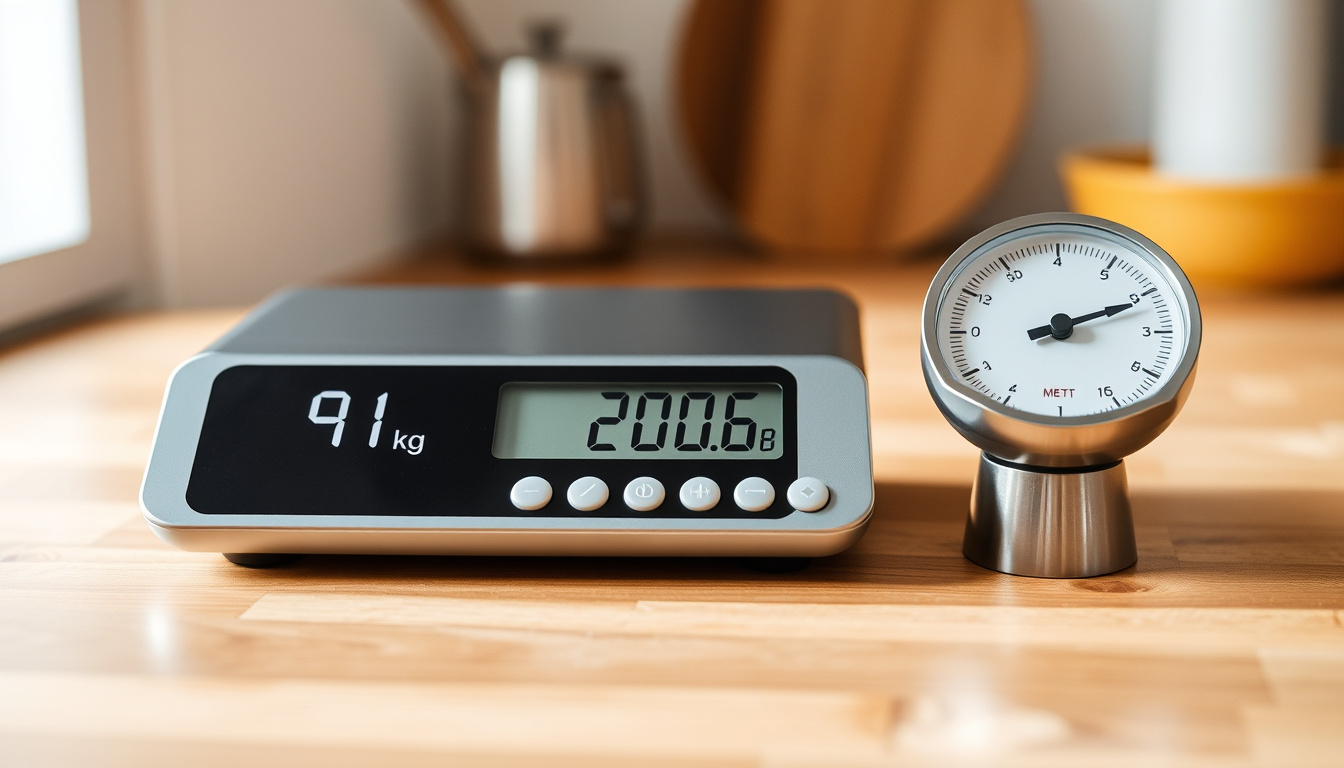
You’ve got a number in kilograms and want to know what it looks like in pounds. For 91 kg, the answer is 200.62 lb, based on the conversion factor defined by the international avoirdupois pound (Wikipedia).
91 kg in pounds: 200.62 lb ·
91 kg in stones: 14 st 4.62 lb ·
91 kg in ounces: 3209.7 oz
Quick snapshot
- 91 kg = 200.62 lb (Symbolab converter)
- 91 kg = 14 st 4.62 lb (CoolConversion)
- NHS BMI categories: healthy weight 18.5–24.9 (NHS)
- Whether 91 kg is healthy depends on height, muscle mass, and body fat distribution (NHS guidance on BMI limitations)
- Individual health assessment requires medical evaluation beyond BMI (Mayo Clinic notes)
- Health implications of 91 kg vary with bone density and fat distribution — BMI alone cannot capture this (NHS guidance on BMI limitations)
- NHS uses metric (kg) for BMI calculation, reflecting national health guidance (NHS BMI calculator)
- Consult a doctor for personalised weight assessment (NHS healthy weight advice)
- Use NHS or WHO BMI tools for initial screening (WHO classification)
These key facts summarise the conversion results and their source references.
| Measurement | Value | Source |
|---|---|---|
| 91 kg in pounds | 200.62 lb | DollarTimes |
| 91 kg in stones | 14 st 4.62 lb | CoolConversion (see snapshot) |
| 91 kg in ounces | 3209.7 oz | WeCapable |
| 91 kg in grams | 91,000 g | Base unit definition |
What is 91 kg in pounds?
Conversion formula
- The standard conversion factor is 1 kilogram = 2.20462 pounds, as established by the international avoirdupois pound (Wikipedia).
- Multiply kilograms by 2.20462: 91 × 2.20462 = 200.6206585838 pounds.
- Rounding to two decimals gives 200.62 lb, as shown by Symbolab’s converter.
91 kg to pounds and ounces
- Take the decimal part of 200.62 lb (0.62) and multiply by 16 (ounces per pound): 0.62 × 16 = 9.92 ounces.
- Therefore, 91 kg equals 200 lb and approximately 9.9 oz (WeCapable conversion table).
Precise conversion matters for medication dosing and scientific work, but rounding to 200.6 lb is acceptable for everyday use.
The implication: a quick mental math of 91 × 2.2 gives 200.2 lb — off by only 0.4 lb, close enough for casual tracking.
What is 91 kg in stones?
Stones and pounds conversion
- One stone equals 14 pounds. Divide 200.62 by 14: 200.62 ÷ 14 = 14.33 (approximately).
- This means 91 kg is 14 stone and 4.62 pounds (CoolConversion).
91 kg in stones and pounds
- Exact: 14 st 4.62 lb — commonly written as “14 st 4½ lb”.
- For those using imperial measurements in the UK, this is the representation you’ll see on bathroom scales.
Why this matters: stones remain the default unit for body weight in everyday UK conversation; knowing your weight in stones helps when discussing with NHS professionals.
Is 91 kg a healthy weight?
Ideal body weight chart (NHS Scotland)
- The NHS healthy weight calculator uses BMI (Body Mass Index) to classify weight categories.
- For adults, a BMI between 18.5 and 24.9 is considered a healthy weight (NHS adult BMI chart).
- WHO uses the same thresholds: underweight <18.5, normal 18.5–24.9, overweight 25–29.9, obese ≥30 (WHO classification).
BMI calculation for 91 kg
- BMI = weight (kg) ÷ height (m)². For a person 1.71 m tall (5′7″): 91 ÷ (1.71 × 1.71) ≈ 31.1 — classified as obese.
- For a person 1.79 m tall (5′10″): 91 ÷ (1.79 × 1.79) ≈ 28.4 — classified as overweight.
- Source: CDC BMI categories (adult).
Factors affecting healthy weight
- Mayo Clinic notes that BMI does not directly measure body fat and can overestimate in muscular individuals.
- Pregnancy, muscle mass, and age affect BMI interpretation (NHS guidance).
A person weighing 91 kg could be healthy if muscle-dense, or unhealthy if high in body fat — BMI alone cannot distinguish.
The pattern: 91 kg lands in the overweight-to-obese range for average heights, but individual body composition can shift the picture significantly.
Is 200 lbs 90 kg?
Conversion accuracy: 200 lb to kg
- 200 lb ÷ 2.20462 = 90.7185 kg — not exactly 90 kg.
- Conversely, 90 kg × 2.20462 = 198.416 lb.
- So 200 lb is about 90.7 kg, not 90 kg — a common misconception.
Common weight misconceptions
- Rounding 91 kg to 200 lb introduces an error of 0.62 lb (281 g) — negligible for casual use but significant in clinical settings.
- For accurate conversion, always use precise factors: Metric Conversions explains the exact factor.
The trade-off: quick mental rounding is fine for daily conversation, but when tracking health data, precise values prevent cumulative errors.
What is 90 kg in stones and pounds?
90 kg to stones
- 90 kg = 198.416 lb. Divide by 14: 198.416 ÷ 14 ≈ 14.17 = 14 st 2.416 lb.
- Source: IndexTap weight converter.
90 kg to pounds
- 90 × 2.20462 = 198.416 lb.
- Useful for comparison: 90 kg is about 14.2 stones, while 91 kg is 14.3 stones.
Why this matters: knowing both values helps you benchmark your weight against common fitness targets and medical thresholds.
This comparison table shows how a small weight change can shift BMI categories.
| Weight (kg) | Pounds (lb) | Stones (st) | BMI (1.75 m height) |
|---|---|---|---|
| 90 kg | 198.416 | 14 st 2.4 lb | 29.4 (overweight) |
| 91 kg | 200.621 | 14 st 4.6 lb | 29.7 (overweight) |
| 92 kg | 202.825 | 14 st 6.8 lb | 30.0 (obese) |
The pattern: a single kilogram shift can cross the threshold from overweight to obese at certain heights — small changes matter.
How to Convert Kilograms to Pounds
- Memorise the factor: 1 kg = 2.20462 lb.
- Multiply your weight in kg by 2.20462.
- Round to two decimal places for practical use.
- For stones, divide the result in pounds by 14.
- Use online converters (Symbolab) to double-check.
Confirmed facts
- 91 kg = 200.62 lb (multiple converters)
- 91 kg = 14 st 4.62 lb
- NHS healthy weight BMI range: 18.5–24.9
- WHO obesity threshold: BMI ≥30
What’s unclear
- Whether 91 kg is fat for a woman depends on height, muscle, and bone density
- Individual health risk requires blood tests, waist circumference, and medical history
- BMI may not apply to athletes, pregnant women, or elderly individuals
- The exact obesity cutoff varies by ethnicity — WHO uses a single threshold but some populations may have lower risk at lower BMIs
Expert perspectives
BMI is a measure that uses your height and weight to work out whether your weight is healthy.
NHS
BMI is a screening tool, not a diagnostic of body fat or health.
Obesity increases risk for many chronic diseases including heart disease, diabetes, and certain cancers.
The consensus: BMI is a starting point, not a final verdict — medical evaluation remains essential.
All three organisations agree: BMI is a starting point, not a final verdict. For a complete guide to NHS BMI thresholds, see our dedicated resource. To master the math, check out our kilograms to pounds conversion guide.
kg-to-lbs.appspot.com, youtube.com, redeot.mte.gov.br, youtube.com
For a detailed breakdown of the same conversion, see our 91 kg to pounds conversion guide.
Frequently asked questions
How many pounds is 0.91 kg?
0.91 kg × 2.20462 = 2.006 lb.
How many pounds is 92 kg?
92 kg × 2.20462 = 202.825 lb.
Is 90 kg fat for a woman?
It depends on height. For a woman 1.65 m tall, 90 kg gives a BMI of 33.1 (obese). For a woman 1.80 m tall, BMI is 27.8 (overweight). Muscle mass also matters.
What is 12 stone in kg?
12 stones × 14 lb = 168 lb. 168 ÷ 2.20462 ≈ 76.2 kg.
What is the BMI for a person weighing 91 kg?
BMI depends on height. Using NHS formula: 91 kg ÷ (height in m)². For a 1.71 m person: BMI ≈ 31.1 (obese). For 1.79 m: BMI ≈ 28.4 (overweight).
How do I convert kilograms to pounds manually?
Multiply the number of kilograms by 2.20462. Example: 91 × 2.20462 = 200.62. For quick estimates, multiply by 2.2 (91 × 2.2 = 200.2).
Related stories





Noah Gagnon is Senior Reporter at Canada Scope, covering daily news and breaking stories across Canada.