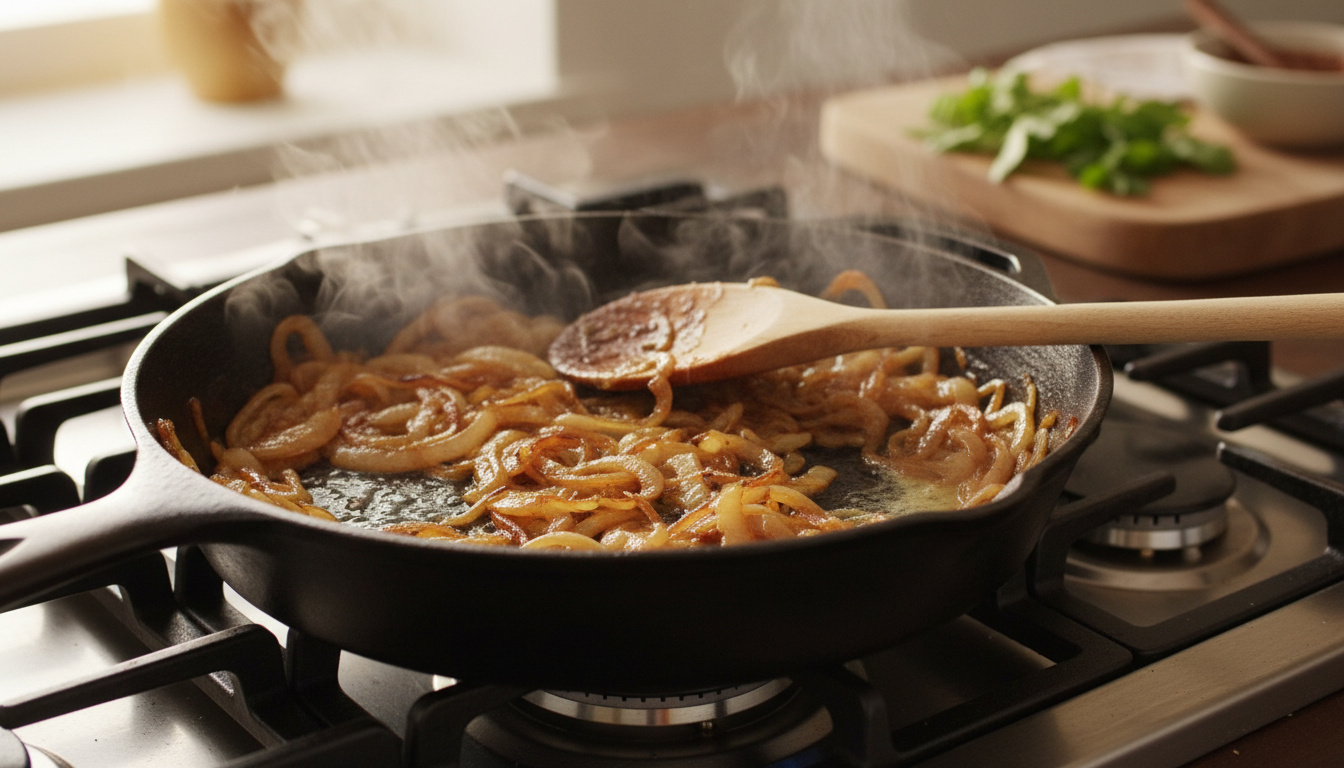

Transforming sharp raw onions into sweet, jam-like condiments requires patience and controlled low heat. The process breaks down natural sugars through the Maillard reaction and sugar caramelization, creating a versatile topping that enhances burgers, tarts, and soups with complex savory-sweet depth.
Unlike quick sautéing, proper caramelization demands between 40 and 60 minutes of gentle cooking to evaporate moisture and develop golden-brown pigmentation. This technique relies on minimal ingredients—fresh onions, cooking fat, and occasional stirring—yet produces results distinct from the bulbs’ original pungent state.
Understanding the chemical processes and avoiding common temperature errors separates amateur attempts from restaurant-quality results. The method rewards patience with concentrated flavor unavailable through faster cooking techniques.
What Is the Best Way to Caramelize Onions?
The classic stovetop method remains the most reliable technique for achieving consistent results. Culinary sources emphasize using a wide, heavy-bottomed skillet—preferably cast iron or stainless steel—over low-to-medium-low heat for the duration of the process.
- Low and slow heat is non-negotiable: Rushing with high temperatures causes steaming rather than browning, as moisture must evaporate before caramelization begins.
- Combine butter and oil: This prevents scorching while adding rich flavor depth that oil alone cannot provide.
- Delay salting: Adding salt early draws out moisture and significantly delays the browning process.
- Deglaze regularly: Scraping the browned bits (fond) from the pan bottom incorporates deep savory flavors into the onions.
- Use uniform slices: Consistent 1/8 to 1/4-inch half-moons ensure even cooking without some pieces burning while others remain raw.
- Avoid overcrowding: A wide pan maximizes surface contact; too many onions steam each other rather than caramelize.
- Patience yields texture: The goal is thick and spreadable, never crispy or soupy.
| Parameter | Specification |
|---|---|
| Ideal Heat Setting | Low to medium-low (starting medium for softening) |
| Onion Preparation | Slice 1/8 to 1/4 inch thick, remove root end |
| Initial Cooking Phase | 5-10 minutes over medium heat to soften |
| Slow Cooking Phase | 30-50 minutes over low heat, stirring occasionally |
| Yield Ratio | 2 pounds onions produces approximately 1.5 cups |
| Fat Recommendation | Mixture of butter and oil (e.g., olive or vegetable) |
| Optional Enhancement | 1/2 to 1 teaspoon sugar per 2 onions |
| Target Texture | Thick, jam-like, deeply golden-brown |
| Stirring Frequency | Every 5-8 minutes after initial softening |
| Refrigerated Storage | Up to 1 week in airtight container |
| Freezer Storage | Up to 3 months in flattened bags |
| Pan Material | Cast iron or stainless steel preferred |
Butter or Oil for Caramelized Onions?
Recipe developers consistently recommend using both butter and oil for optimal results. Butter contributes irreplaceable rich flavor and dairy depth, while oil raises the smoke point to prevent burning during the extended cooking time. Pure butter risks scorching; oil alone produces flat flavor.
Do You Add Sugar When Caramelizing Onions?
Adding sugar remains optional according to experienced home cooks. While onions contain sufficient natural sugars, incorporating 1/2 to 1 teaspoon of brown or white sugar per two onions can accelerate the process and enhance sweetness without creating a dessert-like quality. Purists often skip this addition, relying solely on the bulbs’ inherent fructose and glucose.
Which Onion Varieties Work Best?
Yellow onions provide the ideal balance of sugar content and savory flavor for caramelization. Culinary professionals note that sweet varieties like Vidalia work exceptionally well, as do combinations incorporating red onions for subtle complexity. The specific variety matters less than freshness and proper technique.
Combining butter with a neutral oil or olive oil creates the optimal cooking medium. The dairy solids in butter provide irreplaceable richness, while the oil’s higher smoke point prevents burning during the 40-60 minute process.
How Do You Know When Onions Are Caramelized?
Visual and textural cues indicate proper doneness. Finished onions display a deep golden-brown to mahogany color without burned black spots. They reduce significantly in volume, becoming very soft and yielding under gentle pressure. The texture should resemble thick jam—spreadable and concentrated rather than watery or crispy.
What Are the Most Common Caramelizing Mistakes?
High heat ranks as the primary error, causing onions to steam in their own juices rather than develop sugars. Cooking guides identify overcrowding as another frequent issue, trapping moisture and preventing the Maillard reaction. Adding salt prematurely draws out water and stalls browning, while uneven slicing creates inconsistent textures with some pieces burning while others remain crunchy.
Professional Tips for Consistent Results
Employ a wide skillet to maximize surface contact and evaporation. Deglaze the pan every few minutes by scraping the fond—the browned bits that stick to the bottom—back into the onions. This builds complex flavor layers. If the onions appear dry or begin sticking excessively, splash in small amounts of water to loosen them without adding steam.
Beginning with high heat traps moisture inside the onion cells, causing them to boil in their own juices rather than undergo proper caramelization. This produces watery, pale results instead of the desired sweet, concentrated flavor.
What Are Caramelized Onions?
Caramelized onions constitute thinly sliced bulbs cooked slowly over low heat until their natural sugars undergo chemical transformation. The process involves both caramelization—sugar breakdown at approximately 230-320°F—and the Maillard reaction, where amino acids and reducing sugars create browning and savory complexity. This dual process converts sharp, pungent raw alliums into sweet, tender condiments with spreadable consistency.
How Do Sautéed and Caramelized Onions Differ?
Sautéed onions undergo high-heat cooking for 5 to 10 minutes until translucent and crisp-tender, maintaining sharp flavor and structural integrity. Caramelized onions require 40 to 60 minutes of low-heat cooking to develop deep sweetness, golden-brown color, and jam-like texture. The former serves as an aromatic base; the latter functions as a concentrated condiment.
The Maillard reaction requires dry heat and amino acids to create browning, distinct from simple sugar caramelization. Onions contain both elements, allowing them to develop complex savory-sweet flavors unavailable through high-heat sautéing.
How Long Does It Take to Caramelize Onions?
Traditional pan caramelization requires between 40 and 60 minutes from slicing to completion. This timeline varies based on onion moisture content, pan material, and exact heat settings.
- Preparation and Initial Softening (0-10 minutes): Slice onions into uniform 1/8 to 1/4-inch half-moons, removing root ends to prevent steaming. Cook over medium heat, stirring frequently, until translucent and beginning to soften.
- Moisture Evaporation (10-30 minutes): Reduce heat to low. Liquid begins evaporating, onions shrink significantly, and light golden edges appear. Stir every 5-8 minutes to prevent burning.
- Deep Caramelization (30-45 minutes): Natural sugars concentrate visibly. Color shifts from pale gold to deep amber as the Maillard reaction intensifies. The mass continues reducing.
- Final Concentration (45-60 minutes): Texture becomes thick and jam-like. Deep brown color develops without blackening. At this stage, optional deglazing with water or vinegar captures the fond for maximum flavor.
Is There a Guaranteed Method for Perfect Caramelized Onions Every Time?
While established techniques produce reliable results, certain variables introduce uncertainty into timing and outcomes.
| Established Facts | Uncertain Variables |
|---|---|
| Low, slow heat always produces better results than high heat | Exact timing varies based on individual onion moisture content |
| Combining butter and oil prevents scorching | Specific stovetop heat output differs between gas, electric, and induction |
| Yellow onions provide optimal sugar-to-acidity balance | Pan thickness and material affect heat distribution speed |
| Stirring every 5-8 minutes prevents burning | Ambient kitchen humidity affects evaporation rates |
| Uniform slicing ensures even cooking | Exact final texture preference varies by individual taste |
What Creates the Sweet Flavor and Brown Color in Caramelized Onions?
The transformation involves two simultaneous chemical processes. Caramelization proper breaks down sucrose, fructose, and glucose within the onion cells at temperatures between 230-320°F, creating sweet, nutty flavor compounds. Simultaneously, the Maillard reaction occurs when amino acids react with reducing sugars under dry heat, producing hundreds of complex savory flavor molecules and the characteristic brown pigmentation.
High initial moisture content must evaporate before these reactions occur effectively. This explains why the process demands patience—water boils at 212°F, so onions must gradually dry before reaching the temperature threshold required for browning. Rushing with high heat simply boils the vegetables in their own juices.
What Do Experienced Cooks Recommend for Caramelizing Onions?
Professional techniques documented across multiple culinary platforms emphasize consistent principles. Sources confirm that low heat, proper fat selection, and patience outweigh speed. Video tutorials demonstrate the importance of scraping fond and maintaining consistent low temperatures throughout the process, while textual guides stress the irreversible damage caused by excessive early heat.
What Is the Essential Technique for Perfect Caramelized Onions?
Success requires patience above all else—maintaining low heat for 40 to 60 minutes while allowing natural sugars to develop complexity through the Maillard reaction. The combination of butter and oil in a wide skillet prevents burning while building flavor, and resisting the urge to rush separates amateur attempts from restaurant-quality results. What Is a Node in Networking – Definition, Types, Examples illustrates how complex systems require specific protocols, similar to how caramelization demands strict adherence to temperature control.
Frequently Asked Questions
Can you caramelize onions quickly?
Yes, a 30-minute method exists involving covered low-heat cooking followed by uncovered medium-high heat, though results may lack the depth of traditional slow cooking.
What are the best onions for caramelizing?
Yellow onions work best due to balanced sugar content. Sweet varieties like Vidalia or red onions also produce excellent results with slightly different flavor profiles.
Should you add sugar when caramelizing onions?
Optional. One-half to one teaspoon per two onions speeds browning and enhances sweetness, though onions contain sufficient natural sugars for caramelization without additives.
How do you store caramelized onions?
Cool completely, then refrigerate in airtight containers for up to one week or freeze flattened in bags for three months. Reheat gently to preserve texture. Retirement Home Near Me – Guide to Types, Costs and Ratings provides additional information on food storage safety in community settings.
Can you make caramelized onions without wine or vinegar?
Absolutely. Many recipes omit acidic liquids entirely. If desired, apple cider vinegar added at the end deglazes the pan without overpowering the sweet flavor.
What causes onions to burn during caramelization?
Excessive heat or insufficient stirring causes burning. Maintain low temperatures after initial softening and scrape the pan bottom every 5-8 minutes to prevent sticking.
Related stories




Catherine Roy is Editor-in-Chief at Canada Scope, overseeing editorial policy, corrections, standards and publication decisions.