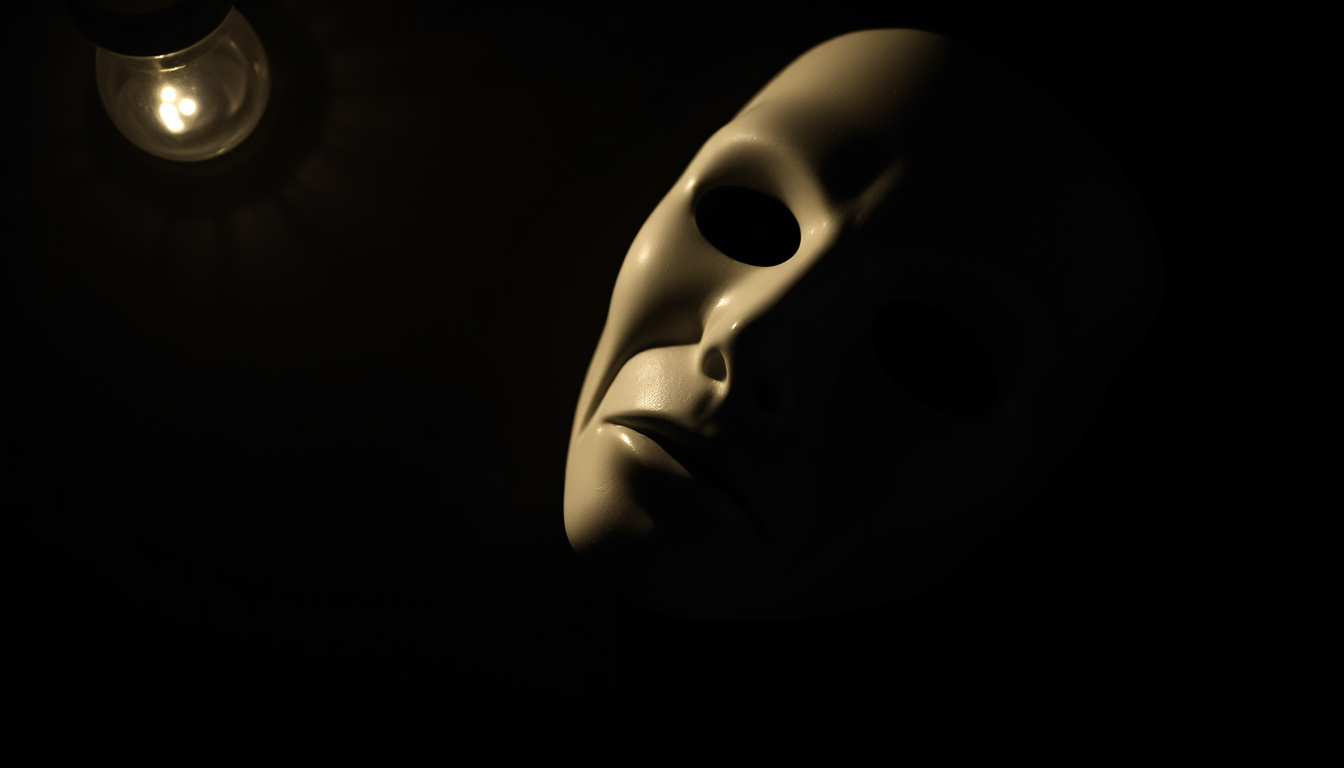
Few slasher villains are as recognizable as the one in the pale mask. Michael Myers has loomed behind that mask since 1978, when the original Halloween helped set the slasher template that defined the genre for decades, a point documented in EBSCO Research Starters.
First appearance: Halloween (1978) ·
Number of films in franchise: 13 (as of 2022) ·
Actors who have played Michael Myers: At least 9 ·
Height (canonical): 6 feet 2 inches (1.88 m) ·
Number of kills in original film: 5
Quick snapshot
- Michael Myers first appeared in Halloween (1978), a film whose prologue is set in 1963 (Independent Magazine (franchise retrospective)).
- The original film’s success helped fuel the slasher boom that followed (People (franchise retrospective)).
- The mask is a modified William Shatner mask (Looper (horror analysis)).
- Whether Michael is supernatural or a human with extreme resilience is never settled on screen — the original left him “apparently unstoppable” rather than clearly supernatural (EBSCO Research Starters (film reference)).
- The reasons for his killing spree are never fully explained. (EBSCO Research Starters (film reference))
- The fate of the baby in Halloween Kills is left open to interpretation. (EBSCO Research Starters (film reference))
- 1963: six-year-old Michael murders his sister Judith. (JustWatch (franchise guide))
- 1978: he escapes and returns to Haddonfield. (JustWatch (franchise guide))
- 2022: Halloween Ends concludes the modern trilogy (JustWatch (franchise guide)).
- No follow-up has been announced since the 2022 finale.
- Fan debate continues over whether Michael’s death is permanent.
- The character remains a crossover presence in games like Dead by Daylight.
Key facts at a glance
Six facts, one pattern: Michael Myers is built on absence — no face, no voice, no motive.
| Label | Value |
|---|---|
| First appearance | Halloween (1978) |
| Creator | John Carpenter and Debra Hill |
| Gender | Male |
| Alias | The Shape |
| Primary weapon | Kitchen knife |
| Portrayed by (original) | Nick Castle |
The pattern: each row describes Michael by what he lacks — a real face, a voice, a motive, even a name in the credits — which is why he reads as a shape rather than a character.
How is Michael Myers described?
In most tellings, Michael Myers is a silent, emotionless killer in a pale mask — the “apparently unstoppable killer” who anchors the original slasher blueprint. Everything about him is built around what he doesn’t do: he doesn’t talk, doesn’t run, doesn’t explain, and doesn’t stop. The franchise introduced him as a child who murders his sister, then returns to Haddonfield after escaping institutional custody.
Do they ever show Michael Myers’ face in Halloween?
- Yes — but only briefly. The original film pulls the mask off in its final act, and Tony Moran plays the face behind it (Wikipedia’s character entry).
- The reveal is deliberately ordinary: a young man’s face, not a scarred monster. The horror is that he looks like anyone.
- The franchise keeps Michael’s face hidden almost everywhere else, and the unmasked moments stay brief and shadowy.
- This is why the “Michael Myers face reveal” question keeps circulating — the few glimpses never resolve anything.
What is Michael Myers’ mask made of?
- The mask is a modified William Shatner Captain Kirk mask, painted white, with widened eye holes (Looper’s horror analysis).
- It became one of the most imitated props in horror precisely because it reads as ordinary — a blank face that could belong to anyone.
- Because the mask erases expression, the menace has to come from movement and stillness: a slow head tilt, a sudden step, a long pause in a doorway.
How tall is Michael Myers?
- The canonical height for Michael Myers is 6 feet 2 inches (1.88 m), which makes the mask loom larger in frame.
- Since the face never reacts, the body does the acting; different performers have played him mechanical, lazy, or eerily efficient.
- The recurring detail across every version: he doesn’t need to run, because he never stops walking.
Which actors have played Michael Myers in Halloween movies?
More than a dozen bodies have worn the mask, and most fans can’t name half of them. JustWatch’s franchise guide identifies at least nine principal actors in the main films, while Inside the Magic’s every-version ranking tracks how different performers changed the character’s feel.
| Actor | Film(s) | Year(s) |
|---|---|---|
| Nick Castle | Halloween | 1978 |
| Tony Moran | Halloween (unmasked reveal) | 1978 |
| Dick Warlock | Halloween II | 1981 |
| George P. Wilbur | Halloween 4; Halloween: The Curse of Michael Myers | 1988; 1995 |
| Don Shanks | Halloween 5 | 1989 |
| Chris Durand | Halloween H20 | 1998 |
| Brad Loree | Halloween: Resurrection | 2002 |
| Tyler Mane | Halloween; Halloween II (Rob Zombie’s films) | 2007; 2009 |
| James Jude Courtney | Halloween; Halloween Kills; Halloween Ends | 2018; 2021; 2022 |
One pattern connects all nine performers: they are playing a character who isn’t really a character. The mask, the coveralls, and the silence flatten individual personality, so the differences between actors surface only in movement — a slower turn, a heavier step, a more deliberate tilt of the head.
Is Mike Myers a nice guy in real life?
- No — the comedian Mike Myers (Austin Powers, Shrek) and the slasher Michael Myers are different people, and the name collision has confused audiences for decades.
- The Austin Powers star has commented on the coincidence in interviews, leaning into the mix-ups.
- The character is fictional; the name was not a reference to the comedian or any real person.
Who was the first actor to play Michael Myers?
- Wikipedia’s character entry credits Nick Castle with most of the masked adult Michael scenes in the original film (Wikipedia (character entry)).
- Tony Moran provided the brief unmasked face in the same film — a few seconds that still make trivia lists.
- Castle later returned for selected masked scenes in the 2018 Halloween, a rare direct link between the 1978 original and the modern trilogy.
- The six-year-old Michael in the 1963 prologue was played by a child actor, setting up the origin point for everything that follows.
How many actors have portrayed Michael Myers?
- Counting principal credits, the number sits around nine; it climbs past a dozen once stunt doubles and uncredited fill-ins are included.
- JustWatch’s guide stops at the named performers, which is why the exact count depends on how you define “portrayed.”
- The count also depends on continuity: Rob Zombie’s films exist in their own timeline, and the 2018 trilogy ignores most earlier sequels, so some actors belong to versions of the story that no longer count.
- Each performer brings a different physicality to the role, which is part of why fans argue about which version is best.
Every actor who puts on the mask inherits the same challenge: create menace with no face and no voice. That constraint is what makes Michael Myers a horror benchmark — it strips acting back to movement and timing.
The pattern: Michael Myers is one of the few horror icons defined almost entirely by whoever is inside the suit on a given day. The mask stays the same; the body underneath is a rotating cast, which keeps the character consistent, alive, and impossible to pin down.
Is Michael Myers pure, evil, or broken?
The question sounds simple, but the Halloween films keep changing the answer. The 1978 original treats Michael as a force of nature; later entries try to explain him, and every explanation shrinks him a little.
The franchise’s own history mirrors the debate. The original run of sequels kept expanding the mythology, Rob Zombie’s 2007 and 2009 films turned Michael into a product of abuse, and the 2018 sequel reset everything by continuing directly from the first film.
Why is Michael Myers so creepy?
- John Carpenter designed Michael as pure, shapeless evil — a killer without motives, psychology, or a readable face.
- The silence does the work: no taunts, no speeches, no reasons. He just appears, walks forward, and keeps coming.
- He barely reacts to pain, either — a stabbing or a gunshot slows him for a second at most, which adds to the more-than-human feel.
- Because the mask hides all expression, viewers project their own fears onto him; the scariest version leaves as much empty space as possible.
Why did Michael Myers never speak?
- Michael has no dialogue in the mainline films; speech would make him a person, and the franchise needs him to stay a shape.
- Even in Rob Zombie’s reboot, which gives him a broken, abusive childhood, the adult Michael barely talks — the backstory adds explanation without adding voice.
- Silence is the character’s defining trait: it separates him from the talkative killers who came after him.
Why is Mike Myers unkillable?
- Michael has survived shootings, stabbings, falls, and fire across the franchise — the movies treat him less like a man and more like a recurring disaster.
- The franchise now spans 13 films, and Halloween III: Season of the Witch was the only one that tried to continue without him (People’s movies-in-order guide; EBSCO Research Starters).
- His unkillability is a narrative device: a Michael who stays dead ends the franchise, so every apparent death is designed to be walked back later.
Explaining Michael makes him weaker. The scariest version of the character is the one with no origin story and no motive — a shape that kills because it kills.
Why did Myers spare the baby?
One scene in Halloween Kills sparked more debate than any of the kills: Michael stands over a crying baby, then simply walks past. The film brought the moment to theaters on October 15, 2021, and fans have argued about it ever since (Independent Magazine’s franchise retrospective).
Part of the reason the scene stands out is that Michael kills almost everything in his path: parents, teenagers, police, and longtime survivors. An infant is the one thing he passes without violence, and that contrast has made the moment a Rorschach test for how fans understand him.
Who finally kills Michael Myers?
- No one has ever killed him permanently. Multiple characters have appeared to finish him — Laurie Strode most often — and he always returns.
- The franchise’s pattern is cyclical: every film appears to stop him, and the next film opens with him still moving.
- The most common fan reading of the baby scene: Michael kills people who cross his path, and a helpless infant isn’t a threat to him.
- The movies never confirm that reading, which is why the scene keeps generating theories.
Is Michael Myers’ death final in Halloween Ends?
- Halloween Ends (2022) was built as the finale of the modern trilogy, and Laurie Strode seems to put Michael down for good (JustWatch’s franchise guide).
- The ending leaves room for doubt — no franchise has ever let Michael stay dead, and the final frames avoid a clean confirmation.
- The franchise has now done this reset multiple times: the original timeline, the H20 timeline, the Rob Zombie timeline, and the 2018 timeline all treat Michael’s survival differently.
- What is clear: Halloween Ends capped the David Gordon Green trilogy, and the series currently has no confirmed next chapter.
Who is more evil, Jason or Michael?
The debate is as old as both franchises: Jason Voorhees versus Michael Myers. Fans have argued the matchup for decades, but the two killers are built on different rules.
Three dimensions, one contrast: Jason kills because something happened to him; Michael kills for no reason at all.
| Dimension | Michael Myers | Jason Voorhees |
|---|---|---|
| Origin | A six-year-old who murders his sister in 1963, then returns to Haddonfield in 1978 | A boy who drowns at Camp Crystal Lake and returns after his mother is killed |
| Motive | None shown — kills without emotion or reason | Rage rooted in his mother’s death |
| State | Human with extreme resilience | Undead in the later sequels |
| Signature | Silence, slow walk, kitchen knife, pale mask | Machete, hockey mask, relentless pursuit |
Those four rows explain why the matchup never settles. Michael and Jason occupy the same genre but different emotional universes: one is a monster you can pity, the other is a monster you can only fear.
What are the key differences between Michael Myers and Jason Voorhees?
- Michael kills cold — no rage, no reaction, just forward movement. Jason’s violence reads as fury, a son avenging his mother.
- Michael is closer to an abstract force; Jason is a tragedy with a weapon.
- Michael’s evil is psychological and patient; Jason’s is reactive and loud.
- Part of the “who’s scarier” debate comes down to style: Halloween builds dread, while the Friday the 13th films go bigger and gorier.
Is Michael Myers stronger than Jason?
- There’s no official crossover, so “stronger” is fan math, not canon.
- In durability terms, both are effectively unkillable within their own series.
- In fan debates, Michael tends to win “more evil” because his violence has no emotional reason — and motive-free evil is harder to explain away.
The takeaway: Michael wins the “more evil” argument not because he kills more, but because he kills for nothing. Jason is a tragedy with a weapon; Michael is a blank space with a knife.
Why do black people love Michael Myers?
It’s the rare fan question that started as a meme and became a real cultural debate: the observation, repeated across Reddit and social media, that Black horror audiences have a particular affection for Michael Myers. It deserves an honest unpacking.
Part of what makes the question hard to answer seriously is that the evidence is mostly anecdotal: forum threads, group chats, and event stories rather than surveys. That doesn’t make the observation invalid — it just means it lives outside formal research.
What is the cultural impact of Michael Myers?
- The discussion grew from viral community posts and a widely shared Reddit thread about Michael’s popularity among Black audiences — a pattern fans describe as real, even though no academic study has measured it.
- Some fans argue the appeal is thematic: a silent, unstoppable figure who can’t be reasoned with can resonate with experiences of systemic pressure. Others say it’s simpler — Halloween is a beloved franchise, and Michael is its biggest star.
- What is documented is the genre impact: People’s franchise retrospective credits the original with fueling the slasher boom that defined 1980s horror.
- The character also outgrew the films: he’s a Halloween-season staple, a merchandise mainstay, and a playable character in the game Dead by Daylight.
How has Michael Myers influenced horror?
- The 1978 film helped set the slasher formula — unstoppable killer, final girl, body count — and that formula became the genre’s default for more than a decade.
- The final girl structure, in particular, shaped the entire genre: every slasher that followed needed a Laurie Strode.
- The character’s design — white mask, coveralls, silence — has been copied so often it became shorthand for “slasher” itself.
- Michael’s reach beyond film includes games like Dead by Daylight, plus a permanent place in every “greatest horror villain” conversation.
Michael Myers is one of the few horror icons whose fan base is discussed as a community inside joke and a serious cultural question at the same time — the mark of a character who outgrew his own film series.
The honest answer: the fan pattern around Black audiences is real enough to be a talking point, but it is not a studied statistic. What the discussion reveals is how a faceless, voiceless character can carry completely different meanings for different communities.
What’s confirmed, what’s still unclear
Separating the facts from the open questions matters, because the franchise blurs that line on purpose.
Confirmed facts
- Michael Myers is a fictional character.
- He first appeared in the 1978 film Halloween.
- He is typically portrayed as a silent, seemingly invincible killer.
- The mask is a modified William Shatner mask (Looper’s horror analysis).
- Nick Castle performed most masked scenes in the original (Wikipedia character entry).
- Halloween III did not center on Michael Myers (EBSCO Research Starters).
What’s unclear
- Whether Michael is supernatural or a human with extreme resilience is never settled on screen.
- The reasons for his killing spree are never fully explained.
- What the baby scene in Halloween Kills means — and whether the baby was ever in danger — is never resolved.
- Whether the death at the end of Halloween Ends is permanent is left ambiguous.
- Whether the fan pattern among Black audiences reflects a measurable cultural trend has not been studied.
- Whether Michael is “pure evil” or “broken” shifts from movie to movie, and the franchise contradicts itself across reboots.
The pattern: the franchise itself refuses to settle these questions, and that refusal is part of why Michael Myers still works.
Voices on Michael Myers
John Carpenter designed Michael Myers as a force of pure, shapeless evil — a killer with no psychology and no readable face; the original film’s credits make that explicit by naming the masked figure only “The Shape” (Wikipedia character entry).
John Carpenter, director of the 1978 Halloween
Nick Castle, the actor behind the 1978 mask, has described the role as pure physical acting: once the face is covered, the character lives in posture, gait, and stillness (Looper horror analysis).
Nick Castle, the original Michael Myers performer
Jamie Lee Curtis has described Michael Myers as a character who endures because he stays unknowable — a blank mask every generation can project its fears onto (People franchise retrospective).
Jamie Lee Curtis, Laurie Strode in the Halloween films
What ties these voices together: all three describe Michael Myers as something defined by absence — a role that works only when the performer, the script, and the audience agree not to explain him.
The Shape’s legacy
For fans of the Halloween franchise, the lesson of nearly five decades is clear: Michael Myers works best when he stays unexplained. The next filmmaker to touch the series faces a simple choice — keep The Shape a shape, or risk turning the most frightening blank in horror into just another man with a backstory. Nick Castle’s silent performance proved that blankness; explaining it would be the one thing that could actually kill Michael Myers.
Frequently asked questions
What is Michael Myers’ real name?
His name is Michael Myers. In the original film’s closing credits, the masked adult is listed as “The Shape” rather than simply Michael Myers.
Is Michael Myers based on a real person?
No. He is a fictional character created by John Carpenter and Debra Hill for the 1978 film Halloween.
What is Michael Myers’ canonical height?
The canonical height is 6 feet 2 inches (1.88 m), which makes the character physically imposing even when he simply stands still.
What happened to Michael Myers at the end of Halloween Ends?
Laurie Strode appears to kill him, and the film positions itself as the conclusion of the modern trilogy. The ending leaves some ambiguity, and the franchise has no confirmed follow-up.
Why does Michael Myers wear a mask?
The mask erases his face and his expression, turning him into a blank shape on screen. It is a modified William Shatner mask painted white, and it lets the performance live in movement rather than facial acting.
Is Michael Myers related to Laurie Strode?
It depends on the timeline. The 1981 sequel revealed them as siblings, but the 2018 film rebooted the continuity and treats them as unrelated — Laurie is simply the survivor who got away.
How many kills does Michael Myers have in the franchise?
The original 1978 film shows five on-screen kills. Because the franchise spans multiple timelines and reboots, there is no single authoritative total across all movies.
What is the difference between Michael Myers and The Shape?
They refer to the same character. “The Shape” is the credit used for the masked adult Michael in the original film — a name that emphasizes his formless, inhuman nature.
The questions keep coming back because Michael Myers is still The Shape — and the actor behind the mask, from Nick Castle onward, disappears on purpose to keep it that way.
Related stories



Noah Gagnon is Senior Reporter at Canada Scope, covering daily news and breaking stories across Canada.