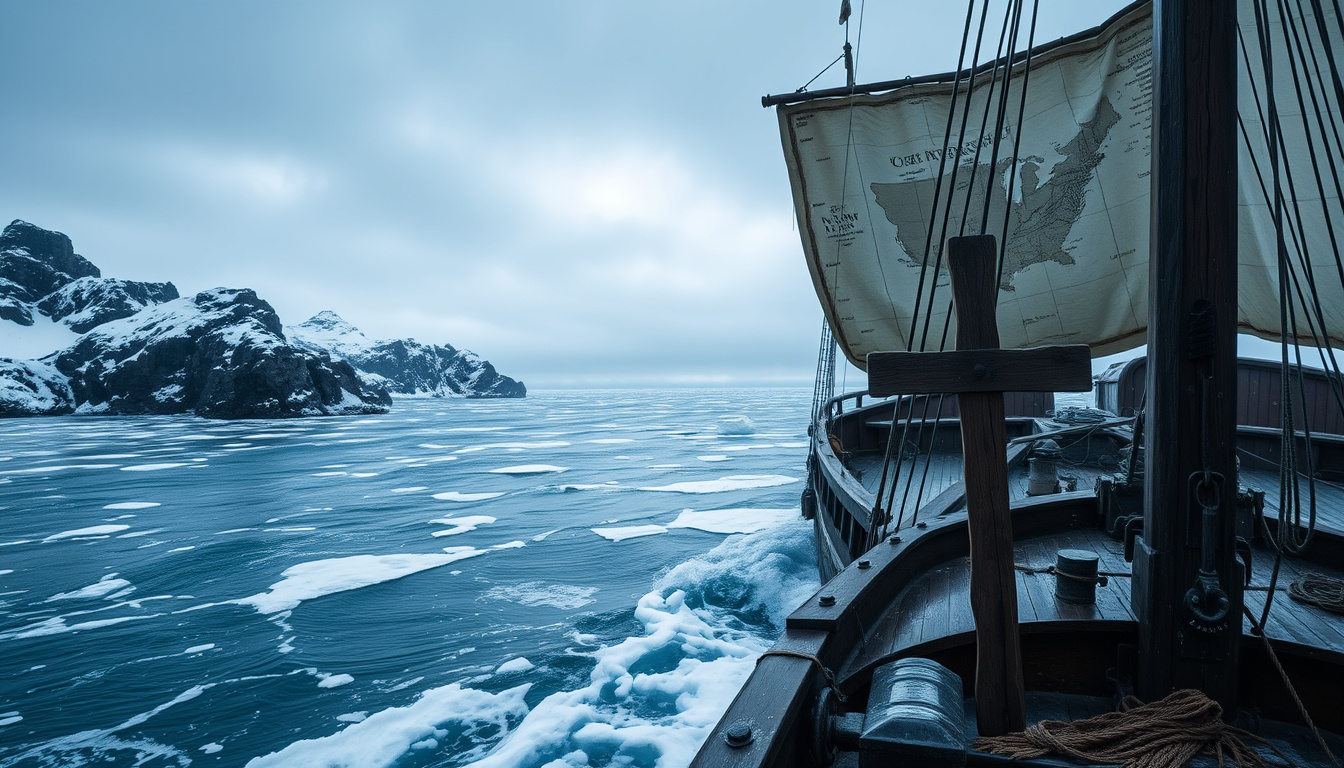
Few names in Canadian history carry as much weight as Jacques Cartier, yet the man behind the name remains a tangle of triumph and tragedy — the Breton navigator who gave Canada its name also kidnapped the people who taught him how to survive its winters. Here is a look at his three voyages, his complicated dealings with the St. Lawrence Iroquoians, and why his legacy still stirs debate today.
Born: 1491, Saint-Malo, France ·
Died: 1557, Saint-Malo, France ·
Number of Voyages: 3 ·
Known For: Exploring the St. Lawrence River and naming Canada
Quick snapshot
- Born in Saint-Malo, France, in 1491 (The Canadian Encyclopedia)
- Led three expeditions to the St. Lawrence region between 1534 and 1542 (The Canadian Encyclopedia)
- Exact birth date and early education remain undocumented (The Canadian Encyclopedia)
- Precise nature of some Indigenous interactions is debated by historians (The Canadian Encyclopedia)
- First voyage departed 20 April 1534 with two ships and 61 men (The Canadian Encyclopedia)
- Third expedition authorized by the French king in October 1540 (Dictionary of Canadian Biography)
- Historians continue to reassess Cartier’s legacy amid broader reckoning with colonial history
- His voyages remain foundation for French claims to Canada
Seven facts, one pattern: Cartier’s life was shorter on documented detail than on consequential action.
| Full Name | Jacques Cartier |
|---|---|
| Born | 1491, Saint-Malo, France |
| Died | 1557, Saint-Malo, France |
| Nationality | French |
| Known For | Exploring Canada, naming Canada, three voyages to St. Lawrence River |
| Spouse | Mary Catherine des Granches (m. 1520) |
| Number of Voyages | 3 |
Why is Jacques Cartier important to Canadian history?
Cartier is the reason France can claim a stake in North America. His voyages between 1534 and 1542 mapped the Gulf and St. Lawrence River, and his cross at Gaspé in July 1534 was an act of asserting French sovereignty, according to the Library of Congress (US national library).
What did Jacques Cartier call Canada?
- The term “Canada” derives from the Iroquoian word kanata, meaning village or settlement (The Canadian Encyclopedia).
- Cartier recorded it during his second voyage in connection with Stadacona.
- He is considered the first European to use the name “Canada” to refer to the region.
What is a fun fact about Jacques Cartier?
Cartier mistook the St. Lawrence River for the Northwest Passage on his second voyage, hoping it would lead to Asia. He made it as far as the Lachine Rapids near Hochelaga, where the river’s flow stopped his ships (Bibliothèque nationale de France (French national library)).
Cartier’s navigational achievement — mapping a river that opened a continent — was powered by a geographic error. He was looking for China and found Canada instead.
What this means: Cartier’s importance is not just about naming. His routes and maps gave later French explorers, including Samuel de Champlain, a working knowledge of the St. Lawrence corridor, and his sovereign claims became the legal foundation for New France. The implication is that modern Canada’s francophone roots trace directly to a navigator who thought he was heading to Asia.
What was Jacques Cartier’s early life like?
- Born in Saint-Malo, Brittany, France, in 1491 (The Canadian Encyclopedia).
- Little is documented about his youth, though he likely studied navigation and seamanship in the port city of Saint-Malo.
- He married Mary Catherine des Granches in 1520.
- His full name was simply Jacques Cartier, though he is sometimes referred to as Jacques Cartier de Saint-Malo.
Did Jacques Cartier get married?
Yes. He married Mary Catherine des Granches in 1520, and the couple had no known children. The marriage connected him to a prominent Saint-Malo family, which likely helped fund his early navigational ambitions.
What is Jacques Cartier’s full name?
His full name was Jacques Cartier. He used no middle name or noble title, but the connection to his home town is so strong that he is often called Jacques Cartier de Saint-Malo in historical accounts.
The pattern: a moderately well-off mariner from a busy port, with the right connections and the right timing to attract royal attention. France’s King Francis I wanted a piece of the New World, and Cartier had the skill to offer it. The trade-off was that a man with no documented experience leading expeditions would be trusted with the fate of a kingdom’s colonial ambitions.
How did Jacques Cartier treat the natives?
Cartier’s relations with Indigenous peoples followed a familiar arc: friendly cooperation, then betrayal. On his first voyage, he traded with the Mi’kmaq and the St. Lawrence Iroquoians. But the relationship soured when he kidnapped the sons of the Stadacona chief Donnacona, Taignoagny and Domagaya, and took them to France.
Who did Jacques Cartier kidnap?
- He kidnapped Taignoagny and Domagaya, sons of Iroquoian chief Donnacona, and brought them to France after his first voyage (The Canadian Encyclopedia).
- On his second voyage, he returned to Canada with the men, but later kidnapped Donnacona himself and took him to France, where Donnacona died (The Canadian Encyclopedia timeline).
- In total, Cartier returned to France with 12 Indigenous captives after his second voyage (Britannica Kids).
Is Jacques Cartier a good person?
Historians do not offer a simple verdict. Cartier twice used deceit to take Indigenous leaders hostage, including Donnacona and his sons, and those captives — including Donnacona himself — died in France. That pattern undermines any claim that he was a fair or benevolent actor. At the same time, his crew survived a brutal scurvy winter largely because the St. Lawrence Iroquoians showed them a remedy — spruce tea, according to accounts of the expedition (Britannica Kids).
The catch: Cartier’s cruelty was not uniform, but it was strategic. He cooperated when he needed information and kidnapped when he needed leverage. The dictum “a product of his time” explains the context but not the choice — other explorers of his era, such as Verrazzano, did not systematically take hostages. For modern Canadians, the question is less about judging a dead navigator than about how to teach his legacy.
The Indigenous people Cartier kidnapped were not passive tools. Taignoagny and Domagaya helped communicate information about the St. Lawrence region and the reported Kingdom of Saguenay, which fed French ambitions — and then became pawns in a diplomatic game they never chose to play (Dictionary of Canadian Biography).
Did Jacques Cartier find gold?
Cartier thought he had struck it rich, but his treasure was a mirage. He returned to France with samples of what he believed were gold and diamonds from Cap Diamant, near present-day Quebec City. They turned out to be iron pyrite — fool’s gold — and quartz. The French expression still survives: “false as Canadian diamonds.”
What did Cartier eat?
His crew lived on preserved foods such as salted meat and ship’s biscuit, fish, and game. During the winter at Stadacona in 1535–1536, scurvy killed approximately 25 of his 110 men (Britannica Kids). The surviving crew was saved by a remedy from the Iroquoian people — a type of spruce tea that provided vitamin C. The irony is hard to miss: the people he would later betray were the ones who saved his expedition.
Why this matters: the gold failure shaped French colonial strategy for decades. After Cartier’s third voyage (1541–1542) also ended with no precious metals, the French court lost interest in the St. Lawrence for more than half a century. Cartier’s search for riches did not just fail — it delayed the colonization of Canada.
Who is the most famous French explorer?
Ask most Canadians, and the answer comes down to two names: Jacques Cartier and Samuel de Champlain. Cartier named Canada and mapped the St. Lawrence; Champlain founded Quebec City in 1608 and built the colony that survived. Cartier led the way, but Champlain made it stick.
What is a fun fact about Jacques Cartier?
He was the first European to use the word “Canada” on a map. He also erected a large cross at Gaspé in July 1534, claiming the land for France — an act that did not impress the local Iroquoians, who told him the land belonged to them, according to the Library of Congress (US national library).
| Explorer | Key Achievement | Downside |
|---|---|---|
| Jacques Cartier | Named Canada, mapped St. Lawrence River, claimed land for France | Kidnapped Indigenous leaders, found no gold |
| Samuel de Champlain | Founded Quebec City (1608), established lasting French colony, allied with Huron-Wendat | Arrived later; built on Cartier’s prior routes |
Two explorers, one pattern: Cartier opened the door, and Champlain walked through it. The comparison favors Champlain on outcomes, but Cartier on originality — he was the first to prove that the St. Lawrence could carry ships deep into the continent. For francophone identity in Canada, Cartier remains the symbolic founder; for practical colonial history, Champlain is the better builder.
Timeline of Jacques Cartier’s life
A decade of voyages, summarized in six dates.
| Year | Event |
|---|---|
| 1491 | Jacques Cartier born in Saint-Malo, France |
| 1520 | Marries Mary Catherine des Granches |
| 1534 | First voyage: explores Gulf of St. Lawrence, claims land for France at Gaspé |
| 1535–1536 | Second voyage: sails up St. Lawrence River to Hochelaga (Montreal), winters at Stadacona |
| 1541–1542 | Third voyage: attempts to establish a colony, fails, returns to France |
| 1557 | Dies in Saint-Malo |
The timeline reveals the whole arc in six lines: a navigator’s career lasts barely a decade, but its consequences stretch across half a millennium. The contrast is stark — Cartier’s colonial settlement failed, yet the name he gave the land became a country.
Confirmed facts and what remains unclear
Confirmed facts
- Birth year 1491 in Saint-Malo, France (The Canadian Encyclopedia)
- Death in 1557 in Saint-Malo (The Canadian Encyclopedia)
- Three voyages to the St. Lawrence region (1534, 1535–1536, 1541–1542) (The Canadian Encyclopedia)
- Named Canada from the Iroquoian word kanata (The Canadian Encyclopedia timeline)
- Married to Mary Catherine des Granches in 1520 (The Canadian Encyclopedia)
What’s unclear
- Exact birth date and details of early life and education
- Exact number of crew members on each voyage
- Precise nature of interactions with Indigenous peoples, beyond the documented record of kidnapping and trade
- Full story of the 12 Indigenous captives taken to France after the second voyage
- Early life details beyond birth year and marriage remain undocumented
The balance is honest: what we know about Cartier’s facts is solid, but what we know about his relationships is incomplete. The confirmed record shows a capable navigator who repeatedly used Indigenous people as tools. The unclear record leaves room for nuance — but not for excusing his documented actions.
Quotes and interpretations
“The fairest land that may possibly be seen” — Jacques Cartier, describing the St. Lawrence region in his journal.
From Cartier’s account of his voyages, as reported by The Canadian Encyclopedia
“Cartier’s kidnapping of Donnacona damaged relations with the St. Lawrence Iroquois beyond repair.”
Historical assessment noted by ThoughtCo (history education resource)
The two quotes sit deliberately side by side. One celebrates beauty; the other documents betrayal. Neither cancels the other — the fairest land was also the site of a deep injustice. For modern readers, the honest takeaway is that Cartier’s gaze was both appreciative and appropriative.
Summary
Jacques Cartier gave Canada its name, opened the St. Lawrence to European navigation, and claimed a continent for France. He also kidnapped Indigenous leaders, broke trust with the people who saved his crew from scurvy, and died believing he had found diamonds that were only quartz. For Canadians today, his legacy is not a monument but a mirror: the explorer’s ambition and the betrayal it justified are both part of the national story. For Canadian educators and students, the choice is clear: teach Cartier honestly as both founder and kidnapper, or hand them a myth that history cannot support.
britannica.com, thecanadianencyclopedia.ca, epe.lac-bac.gc.ca
Frequently asked questions
Was Jacques Cartier the first European to reach Canada?
No. Norse explorers led by Leif Erikson reached Newfoundland around the year 1000, and Basque and Breton fishers likely visited the Atlantic coast before Cartier. Cartier was, however, the first European to penetrate the St. Lawrence River and map the interior up to Hochelaga (present-day Montreal).
What did Cartier do after his voyages?
After his third voyage ended in 1542, Cartier retired to his estate near Saint-Malo, where he served as a translator and a local advisor on navigation. He died in 1557 without ever returning to Canada.
How many ships did Cartier use on his first voyage?
He used two ships with 61 men, departing Saint-Malo on 20 April 1534 (The Canadian Encyclopedia).
What was the impact of Cartier’s exploration on Indigenous peoples?
The impact was destructive. Cartier’s kidnapping of Donnacona and his sons destabilized the Iroquoian communities at Stadacona, and the Indigenous people he took to France never returned. His voyages also introduced European diseases and rivalries that Indigenous communities had not previously faced at that scale.
Did Cartier discover the St. Lawrence River?
Cartier is credited as the first European to explore and chart the St. Lawrence River in 1535, reaching as far as Hochelaga. He did not discover its full length — the Lachine Rapids stopped his progress — but he mapped enough to change European understanding of North America’s geography.
What happened to the Indigenous people Cartier kidnapped?
The first two captives, Taignoagny and Domagaya, were taken to France in 1534 and returned with Cartier in 1535. On the second voyage, Cartier kidnapped 12 more Indigenous people, including Donnacona, and took them to France. Donnacona and most of the captives died in France, likely from disease.
Why did Cartier’s third voyage fail?
The third voyage (1541–1542) failed due to a combination of harsh winter conditions, scurvy, hostile relations with the Indigenous peoples who were understandably distrustful after his kidnapping, and the discovery that the “gold” and “diamonds” he sent back to France were pyrite and quartz. The planned colony was abandoned, and Cartier returned to France in disgrace.
Related reading
Related stories




Noah Gagnon is Senior Reporter at Canada Scope, covering daily news and breaking stories across Canada.