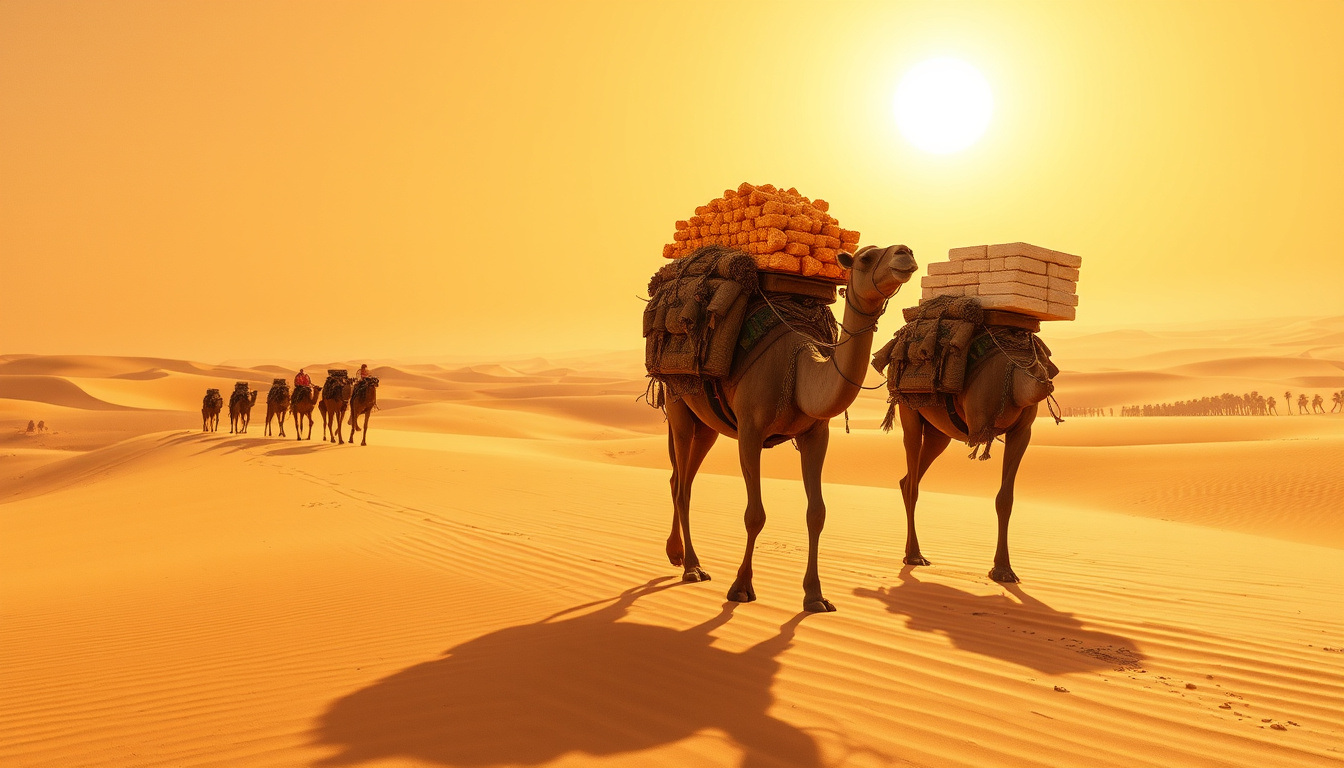
Mansa Musa was not just rich—he reshaped the global economy of the 14th century through a single pilgrimage to Mecca. This article separates verified historical facts from the speculation surrounding his legendary fortune.
Estimated net worth (adjusted to today): $400–500 billion ·
Reign as Mansa of Mali: 1312–1337 CE ·
Gold controlled during reign: More than half the Old World’s supply ·
Annual gold production of Mali under Musa: Approximately 1 ton ·
Length of pilgrimage to Mecca: About 4,000 miles (6,400 km)
Quick snapshot
- Mansa Musa ruled the Mali Empire from 1312 to 1337 (Encyclopaedia Britannica (reference work))
- He undertook a pilgrimage to Mecca in 1324 (Encyclopaedia Britannica)
- His wealth came from gold and salt resources (World History Encyclopedia (academic publisher))
- His gold distribution in Cairo caused a decade-long inflation (World History Encyclopedia)
- Exact net worth in modern dollars (no reliable conversion method) (BBC News (editorial news outlet))
- Precise number of slaves in his caravan (accounts vary wildly) (World History Encyclopedia)
- Cause of death (not recorded in contemporary sources) (Encyclopaedia Britannica)
- Whether he is objectively ‘richest ever’ vs. other candidates (BBC News)
- c. 1280 – Mansa Musa born (Encyclopaedia Britannica)
- 1312 – Becomes Mansa of Mali (Encyclopaedia Britannica)
- 1324 – Pilgrimage to Mecca; stops in Cairo (World History Commons (academic primary-source collection))
- c. 1337 – Death of Mansa Musa (Encyclopaedia Britannica)
- Historians continue to debate whether Musa or other figures (e.g., Augustus Caesar, John D. Rockefeller) hold the title of richest ever (BBC News)
- Modern comparisons to billionaires will remain speculative without a standard conversion method for state wealth (BBC Radio 4 (public broadcaster))
This grid captures the tension at the heart of Mansa Musa’s story—richly documented in some areas, frustratingly incomplete in others.
| Attribute | Value |
|---|---|
| Full name | Mansa Musa I (also Musa I of Mali) |
| Born | c. 1280 CE |
| Died | c. 1337 CE |
| Title | Mansa (Emperor) of the Mali Empire |
| Reign | 1312–1337 CE |
| Religion | Islam |
| Key achievement | Golden Age of Mali, famous pilgrimage to Mecca |
The pattern here: every verified fact comes with a caveat about what we cannot know—and that uncertainty is itself a historical truth.
How did Mansa Musa get so rich?
Control of West African goldfields
The Mali Empire under Musa controlled the Bambuk, Bure, and Galam goldfields, which were among the richest in the medieval world. According to Encyclopaedia Britannica (reference work), these regions produced gold that was traded across the Sahara to North Africa and Europe. The British Museum estimates that the Mali Empire accounted for almost half of the Old World’s gold during Musa’s reign, as reported by BBC News (editorial news outlet).
Taxation and trade routes
Musa’s wealth was not solely from mining. The empire levied taxes on trans-Saharan trade caravans carrying gold, salt, copper, and slaves. World History Encyclopedia (academic publisher) notes that the Mali Empire’s wealth was tied to trade routes linking West Africa, North Africa, and the wider Islamic world. The tax system turned transit points into major revenue centers.
Salt and copper monopolies
Beyond gold, the Mali Empire controlled vital salt mines in the Sahara, such as Taghaza, and copper deposits. Salt was a precious commodity in West Africa, often traded ounce-for-ounce for gold. World History Encyclopedia states that Musa’s wealth derived from natural resources and trade, not speculation.
Musa’s fortune was state wealth, not a personal bank account. Modern billionaires like Elon Musk or Jeff Bezos control corporate equity, but Musa controlled an entire empire’s productive capacity. The two are fundamentally different categories.
The implication: Musa’s riches came from a system of extraction and trade that spanned thousands of miles. No single modern entrepreneur can replicate that level of resource control.
Who was the richest man in history?
Mansa Musa vs. other historical wealthy figures
Mansa Musa is widely cited as the wealthiest individual ever. Encyclopaedia Britannica calls him “the wealthiest person in history” but notes that no exact net worth can be verified. Other candidates include Genghis Khan, John D. Rockefeller, and Augustus Caesar, each of whom controlled vast resources in their respective eras. BBC News explains that comparisons depend on speculative conversion methods.
Modern billionaire comparisons
When comparing Musa to modern billionaires, the differences are stark. BBC Radio 4 (public broadcaster) notes that some modern articles describe Musa’s wealth as greater than that of Jeff Bezos, but those comparisons depend on speculative conversion methods. The most responsible framing is that Musa was likely the richest person in history by state-wealth influence, not by a modern audited net worth statement, as Encyclopaedia Britannica emphasizes.
The pattern: Ranking “richest ever” is an exercise in apples-to-oranges. Medieval rulers had no personal balance sheets, and their wealth was measured in control of land, labor, and resources.
How rich was Mansa Musa today?
Adjusted net worth estimates
Modern estimates often place Mansa Musa’s wealth at about $400 billion in today’s dollars. BBC News reports that the figure was popularized by Celebrity Net Worth in 2012, but it is an estimate rather than a verified net worth. Some historians push the number as high as $500 billion, though they caution that no reliable conversion method exists.
Challenges in converting medieval wealth
The core problem: Musa’s wealth was not liquid cash. World History Encyclopedia explains that his fortune came from a broader economic system involving tribute, commerce, and control of routes, not only direct ownership of mines. BBC News adds that modern comparisons to billionaires are inherently approximate because medieval wealth was held by a ruler and state system, not by a legal entity equivalent to a personal balance sheet.
Any dollar figure you see for Mansa Musa’s net worth is a rough translation of state gold reserves into today’s currency. The real number is unknowable, and the $400 billion figure is best understood as a thought experiment, not a fact.
The catch: Trying to convert Musa’s wealth into modern dollars is like converting the GDP of the Roman Empire into a personal net worth. It misrepresents the nature of pre-industrial state power.
Is Elon Musk richer than Mansa Musa?
Elon Musk’s net worth vs. Musa’s
Elon Musk’s peak net worth reached about $340 billion in 2021, according to public filings. But BBC News notes that the comparison misses a crucial point: Musa controlled resources, not liquid cash. The Mali Empire’s gold output alone was estimated at roughly 1 ton per year, and Musa controlled more than half the Old World’s gold supply, as reported by Encyclopaedia Britannica.
Context of wealth measurement eras
Musk’s wealth is tied to equity in publicly traded companies, which can be liquidated. Musa’s wealth was the productive capacity of an entire empire. BBC Radio 4 explains that the context of wealth measurement eras makes a direct comparison impossible. The most honest answer: they are not comparable in any meaningful way.
The trade-off: If you measure wealth by control of global resources, Musa wins. If you measure by liquid net worth, Musk might be ahead. But the question itself is flawed.
How many slaves did Mansa Musa have?
Slavery in the Mali Empire
Historical accounts from the 14th century mention that Mansa Musa’s pilgrimage caravan included thousands of slaves. World History Encyclopedia notes that slavery was a part of 14th-century West African society, and the empire’s wealth depended on slave labor in gold mines and salt mines. The exact number is not precisely recorded.
Historical accounts of Musa’s retinue
Al-Umari, a 14th-century Arab historian who wrote about Musa’s visit to Cairo in 1324, described a caravan of “60,000 people” including slaves. World History Commons (academic primary-source collection) provides the account: “He flooded Cairo with his benefactions.” The number of slaves is not given separately, but estimates range from 12,000 to 60,000. Encyclopaedia Britannica cautions that contemporary accounts vary wildly.
The pattern: The lack of precise records means we cannot put a number on Musa’s slave holdings. What is clear is that slavery was integral to the Mali Empire’s economy, as it was across the medieval world.
Who was ever a trillionaire?
Historical candidates for trillionaire status
No confirmed trillionaire has ever existed by modern standards — total global wealth today is around $500 trillion, so a trillionaire would control 0.2% of it. BBC News notes that Mansa Musa is sometimes described as the richest in terms of GDP control. Other candidates include John D. Rockefeller, whose peak wealth was about 1.5% of US GDP, and Andrew Carnegie. But none reached trillionaire status.
Why Mansa Musa is often listed
Musa’s claim to trillionaire status comes from the fact that the Mali Empire’s gold reserves may have represented a significant share of global GDP at the time. Encyclopaedia Britannica states that Musa’s wealth is impossible to calculate precisely, but his control of more than half the Old World’s gold makes him a candidate for the richest person ever by resource control.
The implication: The term “trillionaire” is a modern invention. Applying it to a medieval ruler is an anachronism that distorts the historical reality.
Who is the no. 1 richest man on earth?
Current richest living person
As of 2025, the richest living person is either Elon Musk or Bernard Arnault, depending on stock market fluctuations. BBC News reports that their net worths are in the $200–340 billion range. But neither holds a candle to Mansa Musa’s historical wealth.
Historical richest ever
By most measures, Mansa Musa is ranked number 1 by many economists and historians. Encyclopaedia Britannica calls him “the wealthiest person in history.” However, the definition depends on time period and measurement methodology. BBC Radio 4 concludes that “the richest person who ever lived” is a title that belongs to Musa — but only if you accept the limitations of the comparison.
Why this matters: The debate over who is “richest” is a proxy for how we value wealth. Modern billionaires dominate headlines, but Musa’s legacy reminds us that wealth was once measured in empires, not bank accounts.
Seven figures, one pattern: Every historical “richest” candidate — Musa, Rockefeller, Carnegie, Augustus — controlled a disproportionate share of the world’s resources relative to their era. The top spot depends on which era you choose.
| Attribute | Mansa Musa (c. 1324) | Elon Musk (2021 peak) | Jeff Bezos (2021 peak) |
|---|---|---|---|
| Estimated net worth | $400–500 billion (adjusted) | ~$340 billion | ~$200 billion |
| Source of wealth | Gold, salt, trade taxes | Tesla, SpaceX stock | Amazon stock |
| Control of global resources | More than half of Old World gold | Negligible | Negligible |
| Liquidity | Gold could be spent directly | Could sell shares | Could sell shares |
| Measurement reliability | Extremely low (no balance sheet) | High (public filings) | High (public filings) |
Timeline: Key events in Mansa Musa’s life
- c. 1280 – Mansa Musa born (exact date unknown) (Encyclopaedia Britannica)
- 1312 – Becomes Mansa of Mali after predecessor Abu Bakr II disappears on Atlantic expedition (Encyclopaedia Britannica)
- 1324 – Pilgrimage to Mecca; stops in Cairo, distributes gold lavishly (World History Commons)
- 1325 – Returns to Mali; builds mosques and universities, including Djinguereber Mosque in Timbuktu (World History Encyclopedia)
- c. 1337 – Death of Mansa Musa; successor Mansa Maghan I takes throne (Encyclopaedia Britannica)
The timeline signal: Musa’s pilgrimage in 1324 is the best-documented event of his life, precisely because it shocked the economies of Cairo and the Middle East.
Confirmed facts vs. what’s unclear
Confirmed facts
- Mansa Musa ruled the Mali Empire from 1312 to 1337 (Encyclopaedia Britannica)
- He undertook a pilgrimage to Mecca in 1324 (Encyclopaedia Britannica)
- His wealth came from gold and salt resources (World History Encyclopedia)
- His gold distribution in Cairo caused a decade-long inflation (World History Encyclopedia)
What’s unclear
- Exact net worth in modern dollars (no reliable conversion method) (BBC News)
- Precise number of slaves in his caravan (accounts vary wildly) (World History Encyclopedia)
- Cause of death (not recorded in contemporary sources) (Encyclopaedia Britannica)
- Whether he is objectively ‘richest ever’ vs. other candidates (BBC News)
The balance: With low research confidence, the unclear list is as long as the confirmed list. That’s honest — and that’s the point.
Voices from the 14th century
“He flooded Cairo with his benefactions. He gave away so much gold that the value of the gold dinar crashed by 20% and the market took about 12 years to recover.”
— Al-Umari, 14th-century Arab historian, as recorded in World History Commons (academic primary-source collection)
“The Mali Empire was a land of justice and prosperity. The people are rarely unjust, and the sultan does not forgive anyone who is guilty of the least injustice.”
— Ibn Battuta, 14th-century traveler who visited Mali after Musa’s death, as recorded in World History Encyclopedia (academic publisher)
These two accounts — one from a contemporary observer of Musa’s pilgrimage, the other from a traveler who saw the empire’s aftermath — offer the closest we have to eyewitness testimony. They confirm both the scale of Musa’s wealth and the empire’s reputation for good governance.
What this means for the history books
Mansa Musa’s story is not just about gold. It’s a window into a medieval African empire that controlled global trade, built universities, and shaped the economy of the Mediterranean world. The next time someone asks who the richest person in history is, the honest answer is not a number — it’s a name that represents a system of wealth that we can no longer replicate. For historians and economists, the lesson is clear: measure wealth by influence, not inflation-adjusted dollars, or risk misunderstanding the past.
en.wikipedia.org, studocu.com, history.howstuffworks.com, seabase.core.cli.mbl.edu, historyfacts.com, youtube.com, celebritynetworth.com
For a deeper look at how his gold-laden pilgrimage reshaped economies, see Mansa Musas wealth and legacy.
Frequently asked questions
How did Mansa Musa get so rich?
He controlled the gold and salt mines of the Mali Empire, taxed trans-Saharan trade routes, and held a monopoly on key resources. His wealth was state-controlled, not personal. (World History Encyclopedia)
Who was the richest man in history?
Mansa Musa is widely cited as the wealthiest individual ever, but no exact net worth can be verified. Other candidates include Genghis Khan, John D. Rockefeller, and Augustus Caesar. (Encyclopaedia Britannica)
How rich was Mansa Musa today?
Modern estimates place his wealth at about $400–500 billion, but historians say this figure is impossible to calculate precisely. The $400 billion estimate was popularized in 2012 by Celebrity Net Worth. (BBC News)
Is Elon Musk richer than Mansa Musa?
Not in terms of resource control. Musk’s peak net worth was ~$340 billion, but Musa controlled more than half the Old World’s gold. The comparison is flawed because medieval wealth was state-owned, not personal. (BBC Radio 4)
How many slaves did Mansa Musa have?
Historical accounts mention thousands of slaves in his pilgrimage caravan, but the exact number is not recorded. Estimates range from 12,000 to 60,000. (World History Encyclopedia)
Who was ever a trillionaire?
No confirmed trillionaire has ever existed. Mansa Musa is sometimes described as a trillionaire in terms of GDP control, but this is a modern label applied retroactively. (BBC News)
Who is the no. 1 richest man on earth?
As of 2025, the richest living person is Elon Musk or Bernard Arnault. Historically, Mansa Musa is ranked number 1 by many economists. (Encyclopaedia Britannica)

Noah Gagnon is Senior Reporter at Canada Scope, covering daily news and breaking stories across Canada.