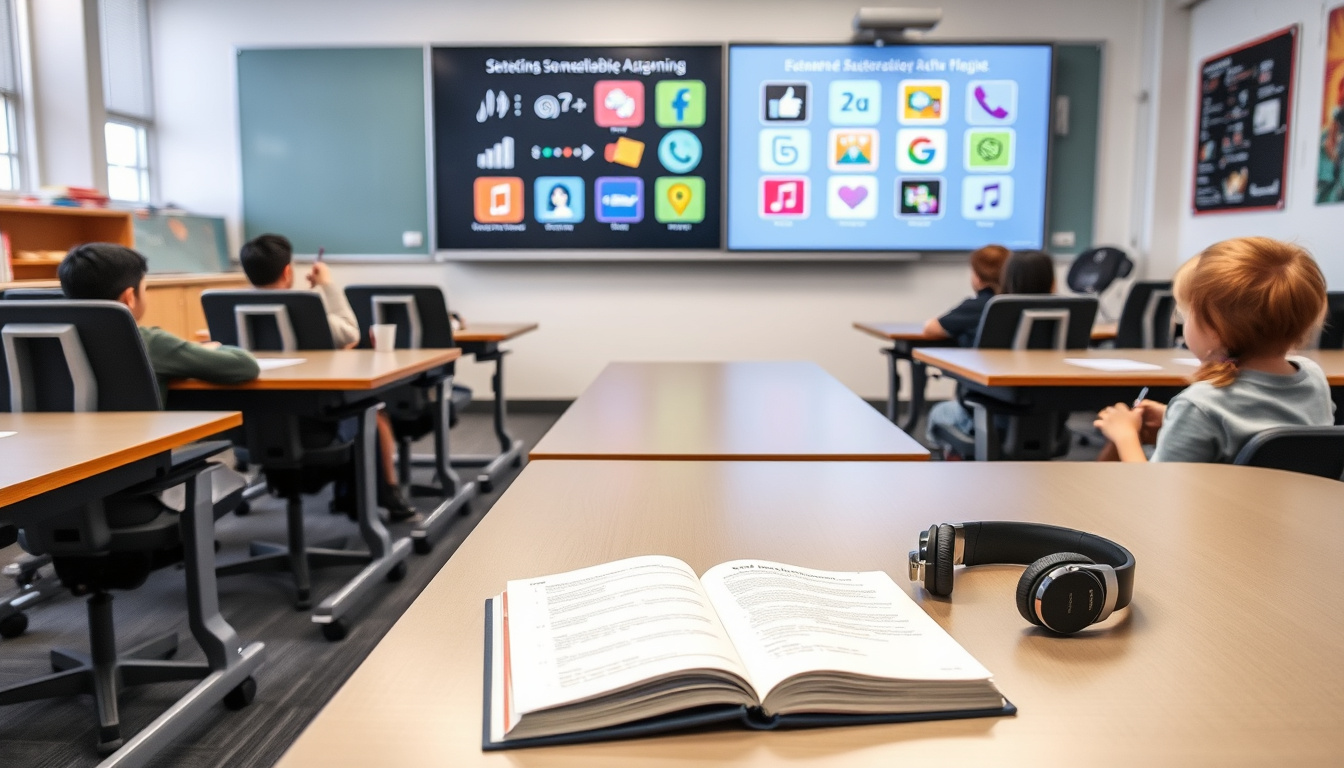
Few education frameworks promise to redesign the classroom from the ground up, but Universal Design for Learning (UDL) does exactly that—shifting from fixing students to fixing the environment. Developed by CAST in the 1990s and first formalized in 2011, UDL offers a proactive blueprint that aims to give every learner an equal shot at success.
Year UDL framework introduced: 2011 (CAST) ·
Number of core principles: 3 ·
Number of guidelines under principles: 9 ·
Founding year of CAST: 1984
Quick snapshot
- UDL is a research-based framework developed by CAST (Texas Education Agency guidance)
- Three well-defined principles: Engagement, Representation, Action & Expression (IRIS Center at Vanderbilt University)
- CAST publishes and periodically updates the UDL Guidelines (CAST official site)
- Strength of empirical evidence for UDL outcomes on achievement (Nearpod)
- Consistency of implementation across different school systems (Novak Education)
- Long-term impact on student achievement remains debated (Edutopia)
- UDL framework first published as official guidelines in 2011 by CAST (Understood.org)
- Foundations laid in the 1990s at CAST (Nearpod)
- Growing adoption in K-12 and higher education (Novak Education)
- Endorsed by U.S. federal policy (ESSA) (Novak Education)
- Technology tools continue to expand UDL implementation options (Nearpod)
The key facts about UDL’s structure fit into a compact reference—five essential data points, one pattern: the framework is built with nested layers from principles to checkpoints.
| Attribute | Value | Source |
|---|---|---|
| Full name | Universal Design for Learning | Texas Education Agency |
| Developer | CAST (Center for Applied Special Technology) | Nearpod |
| Year introduced | 2011 (first official guidelines) | Understood.org |
| Core principles | 3 (Engagement, Representation, Action & Expression) | IRIS Center at Vanderbilt University |
| Guidelines | 9 guidelines, 31 checkpoints | TEA |
What is the universal design approach to learning?
Defining Universal Design for Learning
- Universal Design for Learning is “a set of principles for curriculum development that give all individuals equal opportunities to learn,” according to AHEAD (Ireland’s nonprofit for inclusive education).
- The framework is based on neuroscience research about three brain networks: affective, recognition, and strategic (Nearpod).
- It aims to improve and optimize teaching and learning for all people by reducing barriers, not by accommodating deficits (CAST official site).
Origins of UDL at CAST
CAST, founded in 1984, began developing UDL in the 1990s. The first official UDL Guidelines appeared in 2011 and have been updated periodically since. The term “universal design” was borrowed from architecture—think curb cuts and automatic doors—and adapted to learning environments (Understood.org (expert editorial on learning differences)).
How UDL differs from accessibility
Accessibility typically modifies existing materials for specific needs after the fact. UDL designs the curriculum from the start to be usable by all. Nearpod frames it as “removing all barriers rather than asking the learner to adapt to the environment.”
UDL flips the script: instead of fixing the student, fix the lesson plan. For educators, this means more upfront design work but fewer last-minute retrofits.
What this means: UDL is not an accommodation strategy—it’s a design philosophy that assumes learner variability is the norm, not the exception.
What are the three main principles of UDL?
Principle 1: Multiple Means of Engagement
- Engagement addresses the why of learning—motivation and attitude. It includes three guidelines: Welcoming Interests & Identities, Sustaining Effort & Persistence, and Emotional Capacity (IRIS Center at Vanderbilt University).
- Examples: offering choices in topics, using real-world relevance, and providing self-assessment checklists.
Principle 2: Multiple Means of Representation
- Representation covers the what of learning—how information is presented. Guidelines: Perception, Language & Symbols, and Building Knowledge (IRIS Center).
- Examples: providing text, audio, and video versions of content; glossaries; graphic organizers.
Principle 3: Multiple Means of Action and Expression
- Action and Expression address the how of learning—how students navigate and demonstrate knowledge (Edutopia).
- Guidelines: Physical Action, Expression & Communication, and Executive Functions.
- Examples: allowing essays, presentations, or diagrams; providing checklists and tutorials for planning.
Three principles sounds simple, but each principle splits into three guidelines and multiple checkpoints—31 in total. Teachers face the challenge of applying all layers without overwhelming themselves.
The implication: Mastery of UDL requires phased learning; starting with one principle and gradually adding layers prevents burnout.
What are 5 examples of UDL in a classroom?
Flexible seating and choice
Allow students to choose where and how they work: standing desks, floor cushions, collaborative tables. Novak Education notes this reduces physical barriers and supports sustained attention.
Multiple media for content delivery
Provide the same lesson in text, audio, and video. Nearpod highlights that this aligns with the Representation principle.
Alternate assessment formats
Let students demonstrate learning through written reports, oral presentations, or visual projects. This removes the barrier of a single test format (Understood.org).
Clear goals and scaffolded support
Post learning objectives in student-friendly language and provide step-by-step checklists, rubrics, and organizers (Edutopia).
Student interest surveys
Regular surveys help teachers tailor content to student preferences, building engagement (IRIS Center).
The pattern: Every example replaces a single, fixed approach with a menu of options. The teacher becomes a facilitator of choices, not a gatekeeper of one method.
What is the controversy with Universal Design for Learning?
Criticism of UDL’s evidence base
Some researchers argue that UDL lacks strong empirical support for its claimed outcomes (Critiques of UDL in Remedial and Special Education (peer-reviewed journal)). Critics say the framework is based more on theoretical alignment with neuroscience than on controlled trials.
Implementation challenges and teacher training
Without adequate professional development, teachers may struggle to implement all 31 checkpoints. Novak Education points out that many educators receive only a single workshop on UDL.
Debate over UDL vs. differentiated instruction
Some educators argue UDL is “old wine in new bottles”—a repackaging of good teaching practices like differentiation. Proponents counter that UDL provides a systematic framework rather than a collection of isolated strategies (Understood.org).
The lack of large-scale longitudinal studies means that school districts investing heavily in UDL are betting on a framework whose long-term payoff remains unproven.
The trade-off: UDL’s popularity outpaces its evidence base. Teachers get a compelling philosophy, but researchers want harder data before calling it a proven model.
What are the 5 basic principles of learning?
How general learning principles relate to UDL
General learning principles from cognitive psychology include active engagement, spaced repetition, feedback, transfer, and motivation (Wikipedia (Learning)). UDL aligns with several—especially motivation and engagement—but adds a specific focus on reducing barriers.
Differences between UDL and general learning theory
Traditional learning principles assume a homogeneous learner. UDL starts from learner variability. CAST stresses that UDL is “not a one-size-fits-all” but a framework for designing multiple paths to the same goal.
Integrating learning principles with UDL framework
Teachers can combine the best of both: use feedback, spacing, and transfer principles while applying UDL’s three-pillar structure to ensure that every student actually receives those strategies.
The implication: UDL acts as a delivery system for evidence‑based learning strategies, making them accessible to a wider range of learners.
What we know and what remains uncertain
Confirmed facts
- UDL is a research-based framework developed by CAST (TEA)
- Three principles (Engagement, Representation, Action & Expression) are well-defined (IRIS Center)
- CAST publishes and updates the official UDL Guidelines (CAST)
What’s unclear
- Strength of empirical evidence linking UDL to student achievement gains (Remedial and Special Education)
- How consistently UDL is implemented across schools (Novak Education)
- Long-term impact on academic outcomes (Understood.org)
The catch: Until more rigorous research emerges, UDL remains an evidence‑informed framework rather than an evidence‑proven one, yet its adoption continues to grow.
Voices on UDL
“The UDL Guidelines are a tool used in the implementation of Universal Design for Learning.”
— CAST official guidelines site (CAST)
“UDL is a set of principles for curriculum development that give all individuals equal opportunities to learn.”
— AHEAD (Ireland’s nonprofit for inclusive education) (AHEAD)
“UDL is an approach to teaching and learning that gives all students equal opportunity to succeed.”
— Understood.org (Understood)
The consensus: Despite differences in wording, all three sources agree that UDL is a proactive framework for equity, not a reactive fix.
For the teacher in a typical classroom, the choice is clear: either invest time upfront to redesign lessons with UDL’s three principles, or keep patching accommodations onto a rigid curriculum. The first path demands more planning now; the second, more firefighting later. The research may not be settled, but the philosophy is already shaping how millions of students experience school.
Frequently asked questions
What is the difference between UDL and differentiated instruction?
Differentiated instruction tailors lessons to individual student needs after identifying those needs. UDL proactively designs the lesson with multiple options from the start, assuming variability rather than reacting to it (Understood.org).
How does UDL support students with disabilities?
UDL reduces barriers in the curriculum itself—such as inflexible materials or single-format assessments—so students with disabilities can access content without requiring individual accommodations for every lesson (CAST).
Is UDL mandatory in schools?
UDL is not federally mandated in the U.S., but it is endorsed by the Every Student Succeeds Act (ESSA) as a recommended practice for inclusive education (Novak Education).
What are the UDL guidelines from CAST?
The CAST UDL Guidelines are organized into three principles, nine guidelines, and 31 checkpoints. They are available for free on CAST’s website and are periodically updated (TEA).
How can teachers start using UDL?
Start small: pick one principle (e.g., Representation) and add one new format to your next lesson. Then gradually expand to more checkpoints using CAST’s free professional development resources (Nearpod).
Does UDL replace existing teaching methods?
No. UDL is a framework that can overlay any teaching method. It asks teachers to offer choices within whatever pedagogy they use—lectures, project-based learning, or direct instruction (Edutopia).
What is the role of technology in UDL?
Technology enables many UDL practices—text-to-speech, video captions, digital organizers—but UDL is not about technology itself. It’s about offering flexible pathways, which can be achieved with low-tech options like choice boards or graphic organizers (Understood.org).
Related stories





Kevin Sullivan covers culture, lifestyle and society across Canada for Canada Scope.