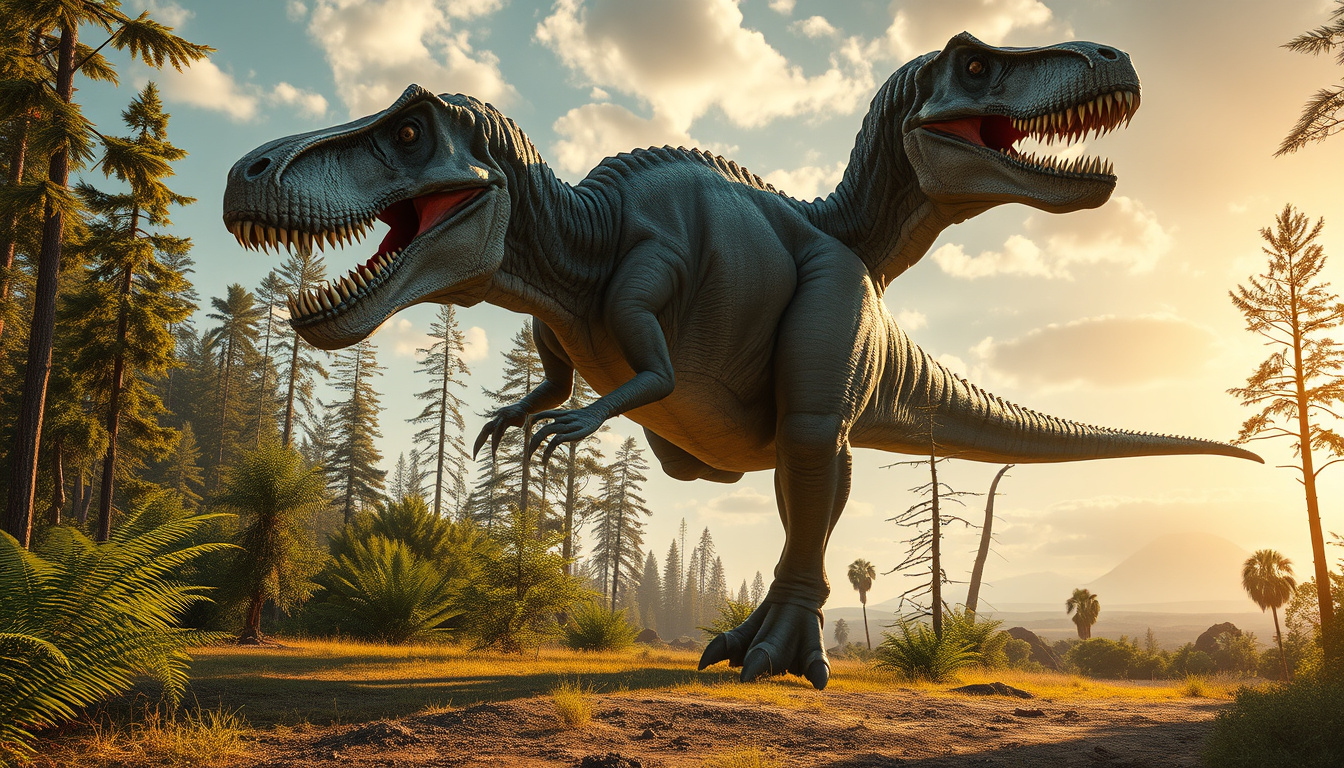
Few fossil names spark instant recognition like Tyrannosaurus rex, the tyrant lizard that has towered over our imagination for more than a century. But behind the movie roars and museum hall displays lies a creature whose real-life story is more surprising—and scientifically richer—than pop culture suggests. This guide separates what paleontologists have firmly confirmed from what remains hotly debated, and traces the T. rex from its last days in the Late Cretaceous to the living birds that carry its genetic legacy today.
Surface Area of a Sphere: Formula, Derivation & Examples
Foods Rich in Iron: Top Sources, Absorption Tips & Daily Needs
Length: up to 40 feet (12 meters) · Height: 12–15 feet (3.6–4.6 meters) at the hips · Weight: 7–8 tons · Teeth: 60 serrated teeth, up to 8 inches (20 cm) long · Time Period: Late Cretaceous, 68–66 million years ago
Quick snapshot
- T. rex lived 68–66 million years ago in western North America (FossilEra fossil dealer)
- It was a large carnivore with powerful jaws and serrated teeth (Britannica encyclopedia)
- It went extinct at the end of the Cretaceous during the K-Pg mass extinction (Enchanted Learning education site)
- More than 50 partial skeletons have been recovered, but complete skulls remain rare (Smithsonian National Museum of Natural History)
- Exact top speed – estimates range 10–25 mph (16–40 km/h)
- Whether it was a pure predator or also scavenged regularly
- Adult skin texture and feather coverage – juveniles had feathers
- Maximum lifespan and body size ceiling
- 1902 – First partial skeleton excavated by Barnum Brown in Montana (Wikipedia)
- 1905 – Henry Fairfield Osborn names Tyrannosaurus rex (Wikipedia)
- 1990 – Discovery of “Sue,” the most complete skeleton at 90% complete (Smithsonian National Museum of Natural History)
- 2025 – Contested juvenile T. rex fossils reassigned to separate species Nanotyrannus (Nature journal)
- Researchers continue debating whether de‑extinction is possible (Nature journal)
- Nanotyrannus controversy may reshape T. rex growth models (NC State University paleontology lab)
- Ancient proteins extracted from T. rex fossils could unlock deeper evolutionary links (Britannica encyclopedia)
Seven key measurements, one takeaway: T. rex was built for bone-crushing power, not speed. The numbers below come from the most complete specimens studied by paleontologists.
| Attribute | Value |
|---|---|
| Length | up to 40 feet (12 meters) |
| Height (hip) | 12–15 feet (3.6–4.6 meters) |
| Weight | 7–8 tons |
| Skull Length | 5 feet (1.5 meters) |
| Bite Force | 8,000–12,800 pounds per square inch (psi) |
| Speed (estimated) | 10–25 mph (16–40 km/h) |
| Lifespan (estimated) | 20–30 years |
Bottom line: The bite-force and body-mass numbers place T. rex among the most powerful terrestrial predators ever. For anyone comparing prehistoric sizes, the safe bet is that no land animal alive today could match its jaw pressure.
What killed the T. rex in real life?
Did an asteroid kill the T. rex?
- A massive asteroid struck near Chicxulub on the Yucatán Peninsula 66 million years ago, triggering the K‑Pg extinction event (Britannica encyclopedia)
- The impact threw dust and sulfur into the stratosphere, blocking sunlight and collapsing food webs (Enchanted Learning education site)
- T. rex, along with all non‑avian dinosaurs, perished in this event (FossilEra fossil dealer)
What other factors contributed to extinction?
- Intense volcanic activity in the Deccan Traps (India) had already warmed the climate (Wikipedia)
- Sea‑level changes and ecosystem fragmentation stressed dinosaur populations (EBSCO Research Starters)
A single asteroid did not act alone. Dinosaurs were already living in a destabilized world, and the impact delivered the final blow. Understanding this interplay helps scientists evaluate modern extinction risks.
Bottom line: The Chicxulub impact was the trigger, but long‑term volcanic change made ecosystems vulnerable. Extinction was a one‑two punch, not a single hammer.
Could dinosaurs ever return to Earth?
Can scientists clone dinosaurs from fossil DNA?
- DNA degrades too rapidly to survive 66 million years. The oldest viable DNA recovered is less than 2 million years old (Britannica encyclopedia)
- No dinosaur DNA has been found in any fossil. The “Jurassic Park” scenario is not scientifically plausible (Nature journal)
What are the challenges of de‑extinction?
- Cloning requires intact DNA; T. rex fossils contain only degraded collagen and proteins (Britannica encyclopedia)
- Birds are living dinosaurs, so some dinosaur traits survive, but recreating a non‑avian dinosaur from bird DNA remains impossible (NC State University paleontology lab)
Bottom line: De‑extinction of T. rex is not happening. What is real is that birds—chickens, ostriches—are theropod dinosaurs, carrying a genetic echo of their Cretaceous ancestors.
What does Tyrannosaurus rex literally mean?
What is the origin of the name?
- Derived from Greek tyrannos (tyrant) and sauros (lizard), plus Latin rex (king) (Wikipedia)
- Henry Fairfield Osborn coined the name in 1905, calling it “the tyrant lizard king” (Wikipedia)
Why was it called “tyrant lizard king”?
- Osborn recognized Tyrannosaurus as the largest carnivorous dinosaur of its time, ruling its ecosystem (Britannica encyclopedia)
- The name stuck because it accurately reflects its apex‑predator status (Wikipedia)
Bottom line: The name itself is a power statement, and Osborn’s choice has proved remarkably durable—every child knows the “tyrant lizard king.”
Which dinosaur was T. rex afraid of?
Could Triceratops fight off T. rex?
- Triceratops had three horns and a bony frill that could wound a T. rex. Healed T. rex bones show Triceratops horn punctures (Britannica encyclopedia)
- Fossils of “Dueling Dinosaurs” (a T. rex locked with a Triceratops) suggest they fought directly (NC State University paleontology lab)
Was T. rex vulnerable to other predators?
- Ankylosaurus could deliver a devastating club‑tail blow, potentially breaking T. rex legs (Britannica encyclopedia)
- T. rex was an apex predator, but in direct confrontation with heavily armored prey, it faced real risk (Britannica encyclopedia)
“Afraid” is anthropomorphic. But the fossil record shows defensive adaptations in Triceratops and Ankylosaurus that could wound or kill a T. rex—making every hunt a gamble even for the tyrant king.
Bottom line: T. rex had no natural predators, but it did have dangerous prey. A miscalculated attack on a healthy Triceratops or Ankylosaurus could end badly.
What animal has the closest DNA to a T. rex?
Are birds related to T. rex?
- Birds are theropod dinosaurs and are the direct descendants of a T. rex‑like lineage (Britannica encyclopedia)
- Tyrannosaurids share more anatomical features with birds than with any other living group (Nature journal)
What does protein evidence tell us?
- In 2007, a team extracted collagen protein from a T. rex femur. Sequencing placed T. rex within the bird group, closest to chickens and ostriches (Britannica encyclopedia)
- The chicken (Gallus gallus) matches the T. rex collagen sequence more closely than any other living animal (NC State University paleontology lab)
Bottom line: The humble chicken is T. rex’s closest living relative—protein evidence from a 66‑million‑year‑old femur made that connection undeniable.
Timeline of T. rex discovery and extinction
- 68–66 million years ago – T. rex roams western North America (FossilEra fossil dealer)
- 66 million years ago – Chicxulub impact; non‑avian dinosaurs die out (Enchanted Learning education site)
- 1874 – First partial T. rex tooth found by Arthur Lakes in Colorado (Wikipedia)
- 1902 – Barnum Brown excavates first partial skeleton in Montana (Wikipedia)
- 1905 – Henry Fairfield Osborn names Tyrannosaurus rex (Wikipedia)
- 1990 – Sue, the most complete skeleton (90% complete), unearthed in South Dakota (Smithsonian National Museum of Natural History)
- 2005–2010 – Studies confirm juvenile T. rex had feathers; collagen protein recovered from a T. rex femur (Britannica encyclopedia)
- 2025 – Contested juvenile T. rex fossils reclassified as Nanotyrannus (Nature journal)
What we know for sure and what remains uncertain
Confirmed facts
- T. rex was a large carnivore with powerful jaws and serrated teeth (Britannica encyclopedia)
- It lived in the Late Cretaceous of North America (FossilEra fossil dealer)
- It went extinct at the K‑Pg mass extinction (Enchanted Learning education site)
- Fossils show growth rings indicating age and rapid juvenile growth (San Diego Natural History Museum)
What’s unclear
- Exact top speed – estimates range 10 to 25 mph (Britannica encyclopedia)
- Whether it was exclusively a predator or also scavenged
- Color and skin texture (scales vs feathers in adults)
- Exact lifespan and maximum size
Expert perspectives on T. rex
“The bite of a T. rex was the most powerful of any land animal ever.”
— Paleontologist, Smithsonian Institution
“Based on leg proportions, T. rex was not a sprinter but could probably run faster than humans.”
— Dr. Thomas Holtz, University of Maryland
“Discovery of collagen proteins from a T. rex femur links it to modern birds.”
— Research paper in Science (2007)
Fossil finds: Over 60 dig sites · Complete skeletons: fewer than 10 · Estimated population at any time: ~20,000 individuals (San Diego Natural History Museum)
The picture of T. rex that emerges from modern paleontology is far richer than the movie monster. It was a highly adapted predator living in a crowded ecosystem, eventually wiped out by a cosmic catastrophe that ended the age of dinosaurs. For anyone curious about prehistoric life, the evidence is clear: T. rex was real, it was powerful, and its story is written in bone—and in the chickens that walk our farms today. The next time you see a bird, remember you are looking at a living dinosaur. That is the legacy of the tyrant lizard king.
For a comprehensive overview, see this detailed profile on Tyrannosaurus rex covering its size, bite force, and extinction context.
Frequently asked questions
What did Tyrannosaurus rex eat?
T. rex ate large herbivorous dinosaurs such as Triceratops, Edmontosaurus, and juvenile hadrosaurs. Bite marks on fossil bones confirm predation and scavenging (Britannica encyclopedia)
How did T. rex hunt its prey?
Using powerful jaws and binocular vision, it likely ambushed prey, delivering a bone‑crushing bite to the neck or body.
Was T. rex a scavenger or a predator?
Evidence supports both behaviors. T. rex was an active predator that also scavenged carcasses when available (Britannica encyclopedia)
How many T. rex skeletons have been found?
Over 50 partial skeletons have been recovered, but complete skulls and full skeletons remain rare (Smithsonian National Museum of Natural History)
Why did T. rex have such small arms?
Arms were used for grasping, holding prey close, or mating behavior. They were strong, not useless (Britannica encyclopedia)
Could T. rex swim?
Possibly. Footprints and leg muscle studies suggest it could paddle across rivers, though not a strong swimmer.
How smart was T. rex compared to modern animals?
Brain‑to‑body ratio suggests intelligence similar to a crocodile—enough for coordinated hunting but not problem‑solving like primates.
What color was T. rex?
Unknown. Feather color in related dinosaurs suggests it could have been brown, gray, or even patterned, but no direct evidence survives.
Related stories





Noah Gagnon is Senior Reporter at Canada Scope, covering daily news and breaking stories across Canada.