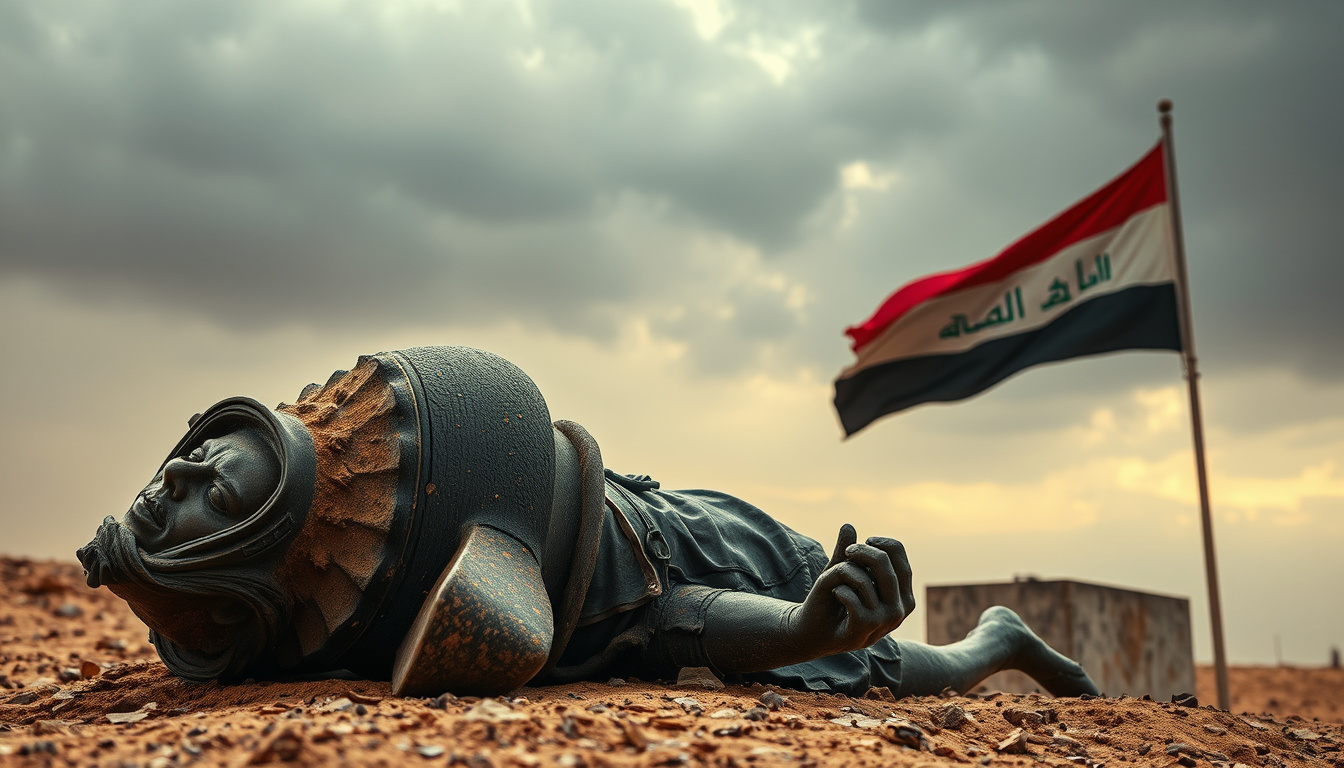
Few figures in modern history spark as much debate as Saddam Hussein. He was the iron-fisted ruler of Iraq for nearly a quarter-century, a man who led his country through devastating wars and crushing repression before ending his life at the end of a rope. His execution on December 30, 2006, didn’t settle the argument over his legacy — it only deepened it, especially as disputed accounts of his last words and murky allegations of ties to al-Qaeda continue to surface.
Born: 28 April 1937, Al-Awjah, Iraq ·
Died: 30 December 2006, Baghdad, Iraq (executed by hanging) ·
President of Iraq: 1979–2003 ·
Political Party: Ba’ath Party ·
Known For: Brutal dictatorship, Iran-Iraq War, Gulf War, WMD allegations
Quick snapshot
- Saddam Hussein was president of Iraq from 1979 to 2003 (CNN timeline)
- He was captured on 13 December 2003 near Tikrit (Encyclopaedia Britannica biography)
- Executed by hanging on 30 December 2006 after trial for Dujail massacre (Al Jazeera timeline)
- Exact wording of his last words (multiple conflicting witness accounts; The Independent report)
- Whether operational ties existed between Saddam’s regime and al-Qaeda (Wikipedia summary of investigations)
- Whether Iraq held active WMD stockpiles in 2003 (no stockpiles found after invasion) (The Independent report)
- Trial opened 19 October 2005; death sentence on 5 November 2006 (Wikipedia on trial)
- Appeal upheld 26 December 2006; executed 4 days later (Wikipedia biography)
- Execution fell on first day of Eid al-Adha, sparking controversy (Vanderbilt Law School analysis)
- Ongoing scholarly debate over trial fairness and execution timing (U.S. House press release)
- Continued political exploitation of the Saddam-al-Qaeda narrative in U.S. politics (U.S. House press release)
- Historical reassessment of Saddam’s rule among Iraqis and the region (U.S. House press release)
Eight key facts about the man at the center of two decades of Middle Eastern conflict:
| Attribute | Value |
|---|---|
| Full Name | Saddam Hussein Abd al-Majid al-Tikriti |
| Born | 28 April 1937, Al-Awjah, Iraq |
| Died | 30 December 2006, Baghdad, Iraq (executed by hanging) |
| Cause of Death | Execution by hanging |
| Presidency | 16 July 1979 – 9 April 2003 |
| Political Party | Ba’ath Party (Iraqi faction) |
| Spouse | Sajida Talfah |
| Children | Uday, Qusay, Rana, Raghad, Hala |
What is Saddam Hussein most famous for?
Saddam Hussein built his reputation on a paradox: he modernized parts of Iraq while running one of the most brutal regimes in the modern Middle East. The wars he started — the Iran-Iraq War and the invasion of Kuwait — reshaped the region and ultimately led to his downfall.
Rise to power and Ba’ath Party rule
- Saddam joined the Ba’ath Party in 1957 and played a role in the 1968 coup that brought the party to power (Encyclopaedia Britannica biography).
- He became president on 16 July 1979 and immediately consolidated power through purges of political rivals.
- By the 1980s, a cult of personality surrounded him, with portraits and statues across Iraq.
The pattern: Saddam turned a fragile coup-based regime into a personal dictatorship that lasted 24 years. For Iraqis, that meant both stability under a heavy hand and the systematic elimination of dissent.
Iran-Iraq War and invasion of Kuwait
- On 22 September 1980, Saddam launched a full-scale invasion of Iran, triggering an eight-year war that killed hundreds of thousands (Encyclopaedia Britannica on Iran-Iraq War).
- The war ended in a stalemate on 20 August 1988, with Iraq left deeply in debt to Gulf states.
- On 2 August 1990, Saddam ordered the invasion of Kuwait, claiming the country was historically part of Iraq (Encyclopaedia Britannica on Gulf War).
The trade-off: Saddam gained a reputation as a regional strongman willing to use any means, but the Kuwait invasion turned the international community against him and set the stage for two wars that would eventually destroy his regime.
WMD allegations and international isolation
- Throughout the 1990s, UN inspectors searched Iraq for weapons of mass destruction (WMDs) after the Gulf War ceasefire terms required disarmament.
- The regime obstructed inspections, leading to sanctions that devastated Iraq’s economy.
- In 2003, the U.S. and UK invaded Iraq, citing intelligence that Saddam possessed active WMD programs — claims that later proved false (CNN fast facts).
Why this matters: The WMD justification for the Iraq War remains one of the most consequential intelligence failures in modern history. Whether Iraq had active WMD stockpiles is still listed as “unclear” in major fact checks, though no stockpiles were found after the invasion.
What this means: Saddam Hussein’s modernization of Iraq was inseparable from his brutality. The wars he launched reshaped the region and ultimately led to his downfall, leaving Iraq in chaos after his removal.
Why did the US dislike Saddam Hussein?
The U.S. didn’t always oppose Saddam. In the 1980s, Washington propped him up as a bulwark against Iran. It was only after he invaded Kuwait — and especially after the 9/11 attacks — that the relationship flipped from strategic partnership to all-out war.
Support for Iraq during the Iran-Iraq War
- The U.S. removed Iraq from its list of state sponsors of terrorism in 1982 and provided intelligence and dual-use technology to Baghdad throughout the Iran-Iraq War (Encyclopaedia Britannica).
- Washington feared an Iranian victory more than it worried about Saddam’s human rights abuses.
The implication: For a decade, the U.S. treated Saddam as a useful ally in a dangerous neighborhood. That history complicates any simple narrative of Washington opposing him on principle.
Shift in US policy after the invasion of Kuwait
- Saddam’s 1990 invasion of Kuwait triggered a rapid U.S. policy reversal. President George H.W. Bush built a coalition that drove Iraqi forces out of Kuwait in the 1991 Gulf War.
- Post-war, the U.S. enforced no-fly zones and maintained economic sanctions against Iraq.
WMD concerns and the 2003 invasion
- After the 9/11 attacks, the administration of George W. Bush argued that Saddam posed a direct threat to U.S. security due to alleged WMD programs and purported ties to terrorism (Encyclopaedia Britannica on Iraq War).
- In his 2003 State of the Union address, President Bush said: “Saddam Hussein is a threat to the peace” (Wikipedia text of address).
- The 2003 invasion toppled Saddam’s government in three weeks, but no WMD stockpiles were ever found.
The pattern: Washington’s initial support for Saddam in the 1980s gave way to a complete reversal after Kuwait. The 2003 invasion removed him from power, but the failure to find WMDs left the intervention’s justification in ruins.
What this means: The U.S. shift from supporting Saddam to removing him shows how geopolitical interests can override moral concerns. The 2003 invasion’s WMD justification collapsed when no stockpiles were found.
What did Saddam Hussein say before he died?
The exact words Saddam spoke in his final seconds are disputed. Multiple witnesses and a leaked mobile-phone video captured different versions — one of the most contested deathbed statements in modern history.
Witness accounts of his last moments
- Saddam was executed at approximately 06:05 local time on 30 December 2006 in Baghdad (Wikipedia on trial).
- According to The Independent, guards taunted Saddam with references to Muqtada al-Sadr in his final seconds (The Independent report).
- Witnesses reported he recited the Islamic creed and shouted “Allahu Akbar” before the trapdoor opened.
Controversy over the exact wording
- An unofficial mobile-phone video of the execution was recorded and widely circulated (Wikipedia).
- The leaked video sparked global controversy over the manner of the hanging and the taunting by onlookers.
- Multiple sources report that the guards or crowd taunted Saddam with references to Muqtada al-Sadr during the execution (The Independent).
Saddam’s final statement and his last wish
- Saddam’s last wish was reportedly to have a copy of the Quran (The Independent).
- His final audible statements, as reported by The Independent, included a rebuke of his tormentors and religious phrases.
- The execution fell on the first day of Eid al-Adha, a major Islamic holiday, which critics said violated Iraqi law prohibiting executions on religious festivals (Vanderbilt Law School scholarship).
Why this matters: The dispute over Saddam’s last words is more than trivia — it reflects the chaotic, contested nature of his execution. A legal process that was supposed to deliver justice instead produced a deeply controversial event that continues to fuel debate over the legitimacy of the entire trial.
What this means: Saddam’s disputed last words and the controversy over his execution on Eid al-Adha continue to cast doubt on the legitimacy of the trial that condemned him.
Was Saddam Hussein bad or good?
Human rights record under his rule
- The Dujail case, which led to Saddam’s conviction, concerned the killing of 148 Shiite residents after an assassination attempt in 1982 (Al Jazeera timeline).
- His regime used chemical weapons against Kurdish civilians in Halabja in 1988, killing thousands.
- Tens of thousands of Iraqis were executed or disappeared during his rule, with torture widely documented by human rights groups.
Economic and infrastructure development
- Under Saddam, Iraq invested oil revenues in education, healthcare, and infrastructure, achieving high literacy rates and modernizing parts of the country.
- Women gained access to education and professional careers at rates unusual for the region at the time.
- These gains were largely destroyed by the sanctions of the 1990s and the 2003 war.
Legacy among Iraqis and the world
- Opinion on Saddam remains sharply divided. Some Iraqis remember the relative stability and economic benefits of his early rule; others remember torture, war, and the destruction of their families.
- The world largely views him as a brutal dictator, as reflected in his conviction for crimes against humanity. Other authoritarian rulers like Mao Zedong have similarly contested legacies.
The judgment: Saddam’s rule delivered tangible benefits to some Iraqis but at an unbearable cost in human lives. The international consensus against him is rooted in his conviction for crimes against humanity, not in the achievements of his early years.
What this means: Saddam’s legacy is a contradiction: he brought modernization and stability to parts of Iraq, but his brutal repression and wars left a deep scar that still shapes the region.
What did Bin Laden say about Saddam Hussein?
The claim that Saddam Hussein cooperated with al-Qaeda was a key justification for the 2003 Iraq War. Multiple official investigations — including the 9/11 Commission and the Senate Intelligence Committee — have since found no credible evidence of operational links. The relationship between the two was actually hostile.
Osama bin Laden’s view of Saddam as a secular ruler
- Osama bin Laden considered Saddam an apostate and opposed his secular Ba’athist regime (Wikipedia on Saddam-al-Qaeda allegations).
- Bin Laden’s statements from 2003 audio tapes called Saddam an “infidel” for his secular governance.
Allegations of cooperation between Saddam and al-Qaeda
- U.S. officials in the Bush administration repeatedly claimed that Saddam had ties to al-Qaeda, including a reported meeting in 2000 in Prague between an Iraqi intelligence officer and 9/11 hijacker Mohamed Atta.
- The 9/11 Commission investigated this claim and found no credible evidence that the meeting took place (Wikipedia).
The 9/11 Commission’s findings
- The 9/11 Commission, the Senate Intelligence Committee, and declassified Defense Department material all found no relationship that developed into operational cooperation between Saddam and al-Qaeda (Wikipedia).
- Colin Powell, then U.S. Secretary of State, later said he had never seen evidence suggesting a Saddam-al-Qaeda connection (Wikipedia).
- The U.S. Congress saw political criticism in 2004 over statements asserting a Saddam Hussein–al-Qaeda relationship (U.S. House press release).
The pattern: The Iraq War was built, in part, on a claim about Saddam-al-Qaeda ties that official investigations later dismantled. The gap between what was asserted and what was proven remains one of the most consequential misstatements in modern U.S. foreign policy.
What this means: The Saddam-al-Qaeda link that justified the Iraq War was dismantled by official investigations. The gap between the claims and the evidence stands as one of the most consequential misstatements in modern U.S. foreign policy.
When was Saddam Hussein captured?
Saddam Hussein was captured on 13 December 2003 near his hometown of Tikrit, Iraq, by U.S. forces.
How did Saddam Hussein die?
He was executed by hanging on 30 December 2006 in Baghdad after being convicted in the Dujail trial for crimes against humanity.
What was Saddam Hussein’s religion?
Saddam Hussein was a Sunni Muslim, though his rule was largely secular in practice.
How tall was Saddam Hussein?
Reports vary, but he is often listed as approximately 6 feet 2 inches (188 cm) tall.
Who were Saddam Hussein’s sons?
His sons were Uday Hussein and Qusay Hussein, both killed by U.S. forces in a firefight in July 2003. He also had three daughters: Rana, Raghad, and Hala.
What was the Iran-Iraq War?
The Iran-Iraq War (1980–1988) was a devastating eight-year conflict launched by Saddam’s Iraq against revolutionary Iran, resulting in hundreds of thousands of casualties and no clear territorial changes.
What was the outcome of the Gulf War?
The Gulf War (1991) ended with Iraq’s forces expelled from Kuwait by a U.S.-led coalition, but Saddam remained in power. The war imposed heavy sanctions and no-fly zones on Iraq, setting the stage for the 2003 invasion.
Related stories





Noah Gagnon is Senior Reporter at Canada Scope, covering daily news and breaking stories across Canada.