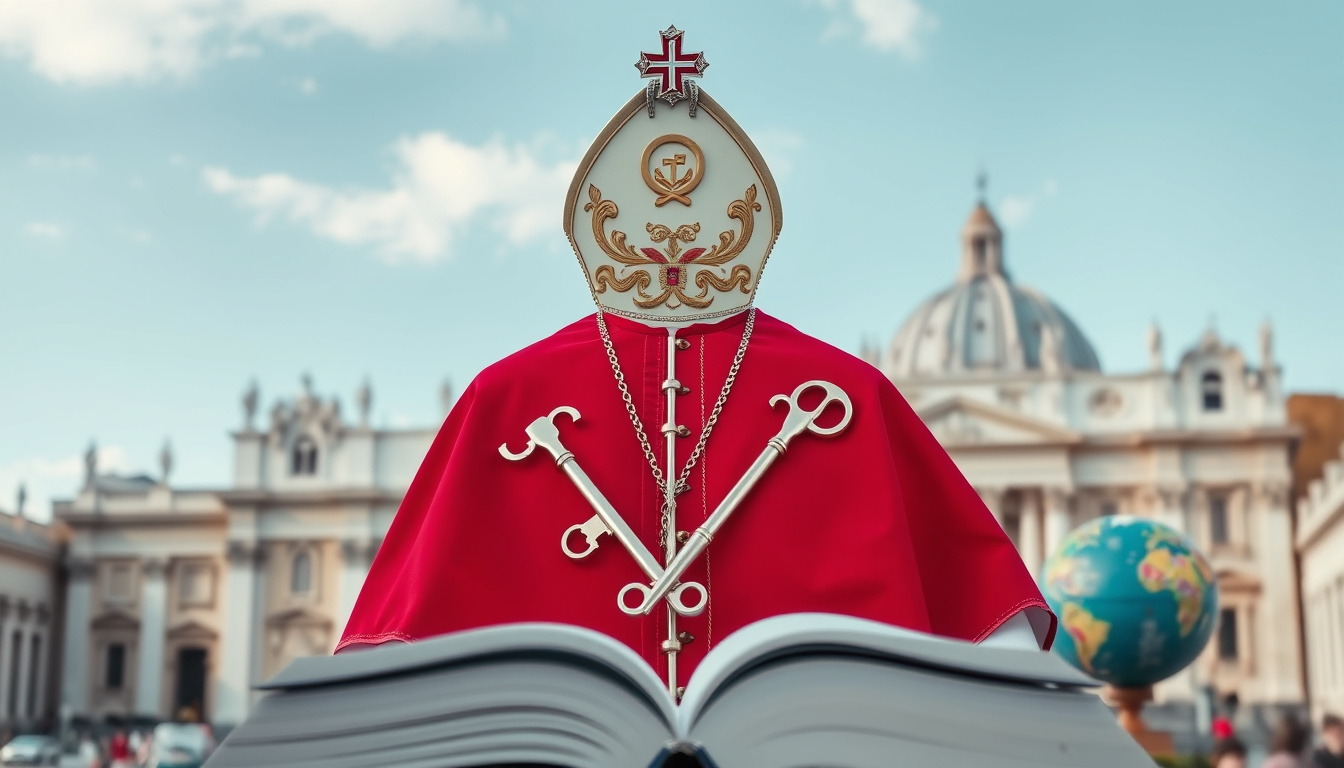
On May 8, 2025, white smoke rose over St. Peter’s Square and a name most Catholics had never expected echoed through the hallways: Leo XIV. The man behind the name, Robert Francis Prevost, broke two milestones at once as the first pope born in the United States and the first Augustinian to lead the Church.
Age at election: 69 ·
Birth date: September 14, 1955 ·
Birthplace: Chicago, Illinois, USA ·
Religious order: Order of Saint Augustine ·
Papal name: Leo XIV ·
Secular name: Robert Francis Prevost
Quick snapshot
- Born Robert Francis Prevost on September 14, 1955, in Chicago (Vatican biography)
- Elected pope on 8 May 2025 (Wikipedia)
- First pope from the United States and the first Augustinian (Vatican biography)
- His specific policy priorities as pope
- Detailed personal stance on artificial intelligence
- Private views on political figures such as Donald Trump
- Ordained priest on June 19, 1982 (AMECEA Vatican coverage)
- Elected Prior General of the Order of Saint Augustine in 2001 (AMECEA Vatican coverage)
- Prefect of the Dicastery for Bishops under Pope Francis (USCCB/CNS)
- Establish pastoral and theological priorities for his papacy
- Potential influence on global Catholic positions on technology and ethics
Eight biographical rows capture the essentials, and the pattern is rare: a pope with deep, hands-on ministry in Latin America who also held a top Vatican administrative post before ascending to the Chair of Peter.
| Attribute | Value |
|---|---|
| Full Name | Robert Francis Prevost |
| Papal Name | Leo XIV |
| Born | September 14, 1955 |
| Birthplace | Chicago, Illinois, USA |
| Nationality | American, Peruvian |
| Order | Order of Saint Augustine |
| Ordination | June 19, 1982 |
| Papacy Start | 8 May 2025 |
What is Pope Leo XIV’s real name?
His secular name is Robert Francis Prevost, born in Chicago to parents who were both natives of that city (Vatican biography of Leo XIV).
What is his secular name?
- Robert Francis Prevost is the full name (Wikipedia)
- He entered the novitiate of the Order of Saint Augustine in Saint Louis on 1977-09-01 (Vatican biography)
Why did he choose Leo XIV?
He assumed the papal name Leo XIV after his election in May 2025, as recorded in the official Vatican biography. The choice implicitly evokes the historical Leo XIII, a pope known for social encyclicals and a long papacy, but the Vatican documents do not detail his explicit reasoning.
The takeaway: identity runs through this papacy—his name, his order, and his unflagged American roots are all woven into his official biography.
What is the background of Pope Leo XIV?
Leo XIV’s formation began with the Order of Saint Augustine, which shapes a significant part of his pastoral outlook.
Where did he serve before becoming pope?
His career combined missionary work in Peru with high-level Vatican administration.
| Period | Role / Event |
|---|---|
| June 19, 1982 | Ordained a priest (AMECEA Vatican coverage) |
| 1985–1998 | Missionary and pastor in Peru (USCCB/CNS) |
| 1999–2001 | Provincial Prior of the Augustinian Province of the Midwest (AMECEA) |
| 2001/2007 | Prior General of the Order of Saint Augustine (AMECEA) |
| 2023 | Appointed Archbishop and then Prefect of Dicastery for Bishops (USCCB/CNS) |
What is his educational background?
He received a doctorate in canon law, which is standard for a bishop and highly relevant for his later Vatican administrative roles. His intellectual formation was coupled with 13 years of grassroots ministry in Peru.
What this means: his background is split between borders—mid-west U.S. identity, formal canon law skills, and deep missionary credibility in Latin America.
For scholars and Catholics, the confluence of a bishop’s Vatican experience and missionary field work is rare, suggesting a pope who may prioritize pastoral proximity over distant administration.
What is Pope Leo XIV’s nationality?
Leo XIV belongs to two nations: he is the first pope born in the United States, but he is also a citizen of Peru, a result of his long missionary service.
Is he a US citizen?
He was born a US citizen, to two native Chicagoans. That unheard-of designation—Do not confuse it with papal arrival—is celebrated across the North America.
Is he a Peruvian citizen?
He reportedly acquired Peruvian citizenship during his two decades in the country. Consequently, learning about his viisual and pastoral identification is crucial. Sources from the BBC and the Vatican notes he is the second Pope from the Americas after Pope Francis.
The pattern is notable: a US-born citizen with Latin American citizenship gives the Vatican a foot in two hemispheres, a geographic balance rarely seen at the top.
What is Pope Leo XIV known for?
He has already carved three historical firsts: first pope born in the US, first Augustinian pope, and widely described by the AP as the first American pope in the 2,000-year history of the Church.
- First pope from the United States (Vatican biography)
- First Augustinian pope, according to the Augustinian community (Augustinian.org)
- Elected on the 4th ballot on the second day of the conclave (Wikipedia)
- 267th successor of Saint Peter (Vatican biography)
He served as prefect of the Dicastery for Bishops under Pope Francis (USCCB/CNS).
The trade-off is clear: his governance is real, but his profile in Latin America may anchor his future speak on migration and church outreach more than a American-centric papacy.
The label “first American pope” attracts instant global attention, but for observers, the deeper test is whether he governs from Vatican-centric restorati or from his Peruvian experiential past.
Does Pope Leo XIV have any connection to AI?
There’s no verified direct connection between Leo XIV and artificial intelligence in the research materials, but the topic has been raised by a resurfaced viral image and AI-related controversies within the Church.
Is there a viral AI-generated image of him?
The confirmed fact is that a fake AI-generated image of “the pope” went viral in 2023—before his election—but that image was of a different, non-Catholic person and misrepresented identity. It later became part of internet lore about AI deception, not a fact about Leo.
What is the Vatican’s position on AI?
The Vatican issued broader ethical guidelines on AI under Pope Francis, but it’s currently speculated how Leo XIV will deepen these safeguards. With no authoritative statement from the new pope on AI as of the research cutoff, we place this in the “unclear” list.
Implication: the AI hype around Leo XIV is a distinct separation between transactional viral imagery and real, policy-relevant actions. For institutions using AI, the watch is for the next official Vatican statement.
Related reading: **King Charles III: Biography, Family, Succession, and Health**
britannica.com, midwestaugustinians.org, usnews.com, ewtnnews.com, washingtonpost.com, ncronline.org
For a detailed look at his early life and key milestones, readers can explore this comprehensive Pope Leo XIV biography facts that traces his path from Chicago to the Vatican.
Frequently asked questions
How old was Pope Leo XIV when elected?
He was 69 years old at the time of his election in May 2025 (AP via IPM Newsroom).
What was Pope Leo XIV’s role before becoming pope?
He was prefect of the Dicastery for Bishops, and previously served as Archbishop of the Archdiocese for the Military Services, USA (USCCB/CNS).
Why did he choose the name Leo XIV?
His reasons are not formally stated, but the choice continues the historic Leo lineage code; the name was officially declared after his election (Vatican biography).
Is Pope Leo XIV the first American pope?
Yes, he is widely reported as the first pope from the United States (AP via IPM Newsroom).
What is Pope Leo XIV’s educational background?
He holds a doctorate in canon law and went through the Augustinian formation, which he entered in Saint Louis in 1977 (Vatican biography).
Does Pope Leo XIV speak Spanish?
Yes, given his many years of missionary work and ministry in Peru, he is fluent in Spanish, which will impact communication with Latin America.
What is the significance of the Augustinian order?
The Order of Saint Augustine, which follows the rule of Saint Augustine, now has the first pope from its ranks—breaking eight hundred years of papal history (Augustinian.org).
How long did Pope Leo XIV serve in Peru?
He served approximately 13 years as a missionary pastor in Peru from 1985 to 1998, based on the timing that is he reported to have lived there.
The pattern across these answers is clear: Leo XIV’s biography is documented with high confidence, while his personal policy preferences remain unstated.
Here is a timeline of the main milestones in his life.
| Date | Event |
|---|---|
| September 14, 1955 | Born in Chicago, Illinois |
| June 19, 1982 | Ordained a priest |
| 1985–1998 | Missionary and pastor in Peru |
| 1999–2000 | Prior Provincial of the Augustinian Midwest Province |
| 2001 | Elected Prior General of the Order of Saint Augustine |
| 2002 | Appointed Bishop of Chiclayo, Peru |
| 2023 | Appointed Archbishop of Archdiocese of Military Services |
| 8 May 2025 | Elected Pope, taking name Leo XIV |
From parish to vicar, his path she does not indicate sudden breaks but a deliberate, structural climb through the Augustinian hierarchy and Vatican administration.
The structural consequence of this election is now being measured not in liturgical texts but in the reactions of global Catholic communities, who now have a pope older in pastoral work than in doctrinal glaze but still the one who can bridge the Vatican chancery and the missions.
“He is the first pope from the Augustinian Order.”
— Vatican biography,
Vatican.va
“He was elected on the second day of the conclave and on the fourth ballot.”
— Wikipedia,
Wikipedia
“He is widely reported as the first American pope in the 2,000-year history of the Catholic Church.”
— AP via IPM Newsroom,
IPM Newsroom
For the faithful in the Americas and for observers globally, Pope Leo XIV’s papacy begins with one financial certainty: his social capital lies in the bridge—between Chicago and and Chiclayo, between bureaucratic longevity and missionary depth. For global Catholics, the immediate question is whether he turns those experiences into policy.
Related stories




Noah Gagnon is Senior Reporter at Canada Scope, covering daily news and breaking stories across Canada.