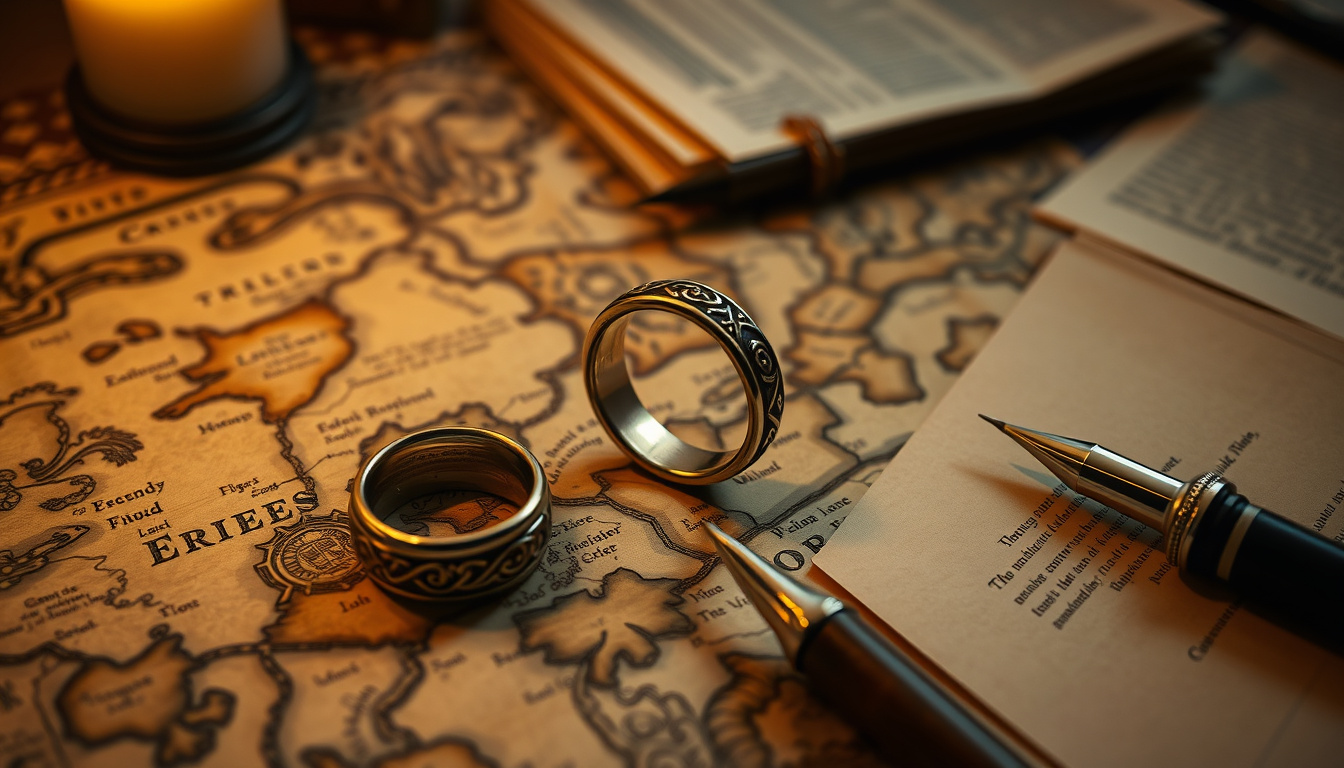

Few fantasy worlds still pull people in the way Middle-earth does. Whether you’re planning a marathon rewatch, wondering about the different races, or curious why Sean Connery never played Gandalf, there’s a surprisingly tangled set of facts behind the movies. This guide lays out the viewing order, the real mythological roots, and the casting decisions that nearly changed everything.
Total box office revenue: $2.991 billion · Academy Awards won: 17 · Combined runtime (theatrical): 558 minutes · Number of films: 3
Quick snapshot
- Sean Connery turned down the role of Gandalf (IMDb trivia)
- Total box office revenue exceeds $2.9 billion (Rotten Tomatoes viewing guide)
- All three films were shot simultaneously (Tourism New Zealand production notes)
- Whether Tolkien intentionally based the Shire on Ireland
- Exact origin of the name “Hobbit” – possibly invented or derived from Old English
- Specific reasons the Jamie Dornan rumor started
- 438 days of principal photography (1999-2000) (Box Office Mojo budget data)
- Post-production for Return of the King exceeded one year (Box Office Mojo budget data)
- Entire project spanned 1997 to 2003 (Box Office Mojo budget data)
- Stream The Lord of the Rings on Prime Video or Max
- Rings of Power explores Second Age events
- Extended editions add ~12 hours of footage
Five key facts give the backbone of this universe: release dates, budget, filming location, and source material.
| Fact | Value |
|---|---|
| Release dates | 2001, 2002, 2003 |
| Director | Peter Jackson |
| Budget | $93 million per film (approximate) |
| Filming location | New Zealand |
| Based on | The Lord of the Rings novel by J.R.R. Tolkien |
The pattern: every major creative decision came back to Tolkien’s original text and New Zealand’s landscapes.
How to watch Lord of the Rings in order?
The trilogy consists of The Fellowship of the Ring (2001), The Two Towers (2002), and The Return of the King (2003). The Hobbit films are prequels set roughly 60 years earlier. Two main viewing orders exist.
Should I watch The Hobbit or The Lord of the Rings first?
- Release order (most recommended): Fellowship → Two Towers → Return of the King → The Hobbit trilogy. This preserves the narrative reveals and visual evolution Jackson intended.
- Chronological order: The Hobbit trilogy first, then the original trilogy. The trade-off: you see the Younger cast of Bilbo and the Dwarves before the darker, more mature LOTR tone (Rotten Tomatoes viewing guide).
What is the chronological order of the films?
- The Hobbit: An Unexpected Journey (2012)
- The Hobbit: The Desolation of Smaug (2013)
- The Hobbit: The Battle of the Five Armies (2014)
- The Lord of the Rings: The Fellowship of the Ring (2001)
- The Lord of the Rings: The Two Towers (2002)
- The Lord of the Rings: The Return of the King (2003)
Where can I watch The Lord of the Rings?
Streaming availability shifts by region. In the U.S., the theatrical and extended editions are available on Max (formerly HBO Max) and Prime Video (with subscription). The Hobbit films are on Prime Video and Disney+ in some markets. Digital purchase/rental is also an option.
For first-timers, release order preserves the storytelling craft that earned 17 Oscars. For rewatchers, chronological order lets you trace the full arc of Middle-earth from the Second Age Hobbit-era through the War of the Ring.
The implication: your choice depends on whether you value narrative surprise or timeline completeness.
What races inhabit the Middle-earth?
Tolkien’s world is populated by distinct races, each with its own culture, language, and history. The free peoples — Elves, Men, Dwarves, Hobbits, and Ents — all resisted Morgoth and Sauron, while Orcs, Trolls, and other creatures served the dark powers (Wikipedia entry on Middle-earth peoples).
What are the main races in Middle-earth?
- Elves: Immortal, wise, and the oldest speaking race. They are divided into Eldar (who went to Valinor) and Avari (who refused). Key sub-groups: Vanyar, Noldor, Teleri (Nerdist race guide).
- Men: Mortal and diverse. Includes Dúnedain (descendants of Númenor), Rohirrim (horse-lords of Rohan), and Gondorians. Eastern and Southern Men mostly served Sauron.
- Dwarves: Stocky, proud, master miners and smiths. Created by the Vala Aulë.
- Hobbits: Related to Men, but smaller, preferring peace and comfort. The three breeds: Harfoots, Stoors, and Fallohides.
- Ents: Shepherds of the trees, slow to anger but powerful when roused.
- Orcs and Trolls: Twisted creatures bred by Morgoth and Sauron.
Are there Irish or Celtic influences on Middle-earth races?
Tolkien drew heavily on Celtic mythology — especially for the Elves. Their immortality and otherworldliness mirror the Tuatha Dé Danann of Irish legend (Tolkien Gateway on Celtic influences). However, he specifically denied that the Shire was based on Ireland, calling it “a sort of English countryside” (The Guardian analysis of Celtic influences in Tolkien). The Ents, too, echo tree-spirit motifs found in Irish mythology, but the overall inspiration is a blend of Norse, Anglo-Saxon, and Celtic strands.
The catch: Tolkien borrowed from Celtic structures while explicitly rejecting an Irish Shire, creating a deliberately pan-European mythology.
Was Lord of the Rings based on Ireland?
Many readers see the lush green hills of the Shire and think Ireland. But Tolkien’s own letters push back. The Shire was inspired by the English countryside of his childhood, especially the rural West Midlands (The Guardian on Tolkien’s Irish connections).
What Celtic influences are present in Tolkien’s work?
- The Elvish language Sindarin was fashioned after Welsh, a Celtic language.
- The legend of Lúthien and Beren echoes the Celtic tale of Oisín and Niamh.
- The concept of the Undying Lands parallels the Celtic Otherworld (Tír na nÓg).
- Tolkien himself wrote that he “regret[ted] in some ways not being a specialist in Celtic.”
Who are the Irish in LOTR?
No character or culture in the books is explicitly Irish. The closest visual parallels are the rustic farmers of the Shire, but Tolkien rooted them in England. Some fans speculate the Woses (wild men of the woods) have a Celtic feel, but there is no canonical Irish connection.
Why is Irish DNA so unique?
This is a tangential point: genetic studies have shown that Irish people have high frequencies of certain Y-chromosome haplotypes (R1b), suggesting a strong genetic continuity from the Bronze Age. While not directly related to LOTR, it underscores why some readers instinctively see a “Celtic” flavor in Tolkien’s rural idyll — the landscapes and culture that inspired him are part of a wider Atlantic Celtic tradition.
Tolkien borrowed Celtic structures for his languages and stories while denying the Shire’s Irish parallels. The result: a world that feels ancestrally European without belonging to any one nation.
The implication: readers project Irishness onto the Shire because the pastoral landscape resembles the Irish countryside, not because Tolkien intended it.
Who refused to play Gandalf?
Casting the wizard Gandalf was a famously near-miss story. Sean Connery was offered the role but turned it down. According to biography reports, Connery didn’t understand the script and was offered a guaranteed $10 million vs a profit-share deal — he took a flat $1 million to not appear (IMDb trivia on Connery’s refusal).
Is Jamie Dornan in The Lord of the Rings?
No. Despite persistent rumors, Jamie Dornan has never been cast as Aragorn. The rumor likely stems from fan casting and wishful thinking. There is no evidence in any official casting records.
Is Liam Neeson in The Lord of the Rings?
Liam Neeson was considered for a role — reportedly Gandalf or Aragorn — but scheduling conflicts prevented his involvement. He has stated he turned down a part because he didn’t want to commit to the multi-year shoot in New Zealand (ScreenRant on rejected castings).
Which other actors turned down roles in the films?
- Nicolas Cage turned down Aragorn because he didn’t want to leave his family for a long shoot.
- Jim Carrey was offered a role but refused without reading the book.
- Anthony Hopkins and Patrick Stewart were considered for Gandalf.
- David Bowie expressed interest in playing Elrond but was never officially offered the part.
“I didn’t understand the script. I turned it down because I didn’t want to be in a three-film series.”
Sean Connery (via biography), on declining Gandalf
The catch: Connery’s refusal arguably gave Ian McKellen the role, which became one of the most beloved performances in fantasy cinema.
Which film took the longest to make?
The entire trilogy was a massive simultaneous production. Principal photography ran 438 days from 1999 to 2000. But the bulk of post-production weight fell on The Return of the King.
How long did it take to film each Lord of the Rings movie?
- All three films were shot at once: 438 days of principal photography across New Zealand (Tourism New Zealand production notes).
- Post-production for Return of the King took over a year because of its 1,500+ visual effects shots.
What was the total production timeline?
Pre-production began in 1997. The first film released in 2001. The final film, Return of the King, came out in 2003. The total project spanned seven years. The budget for all three was $281 million — the most expensive film production at that time (Box Office Mojo budget data).
Which film had the most complex post-production?
The Return of the King holds that crown. At 201 minutes (theatrical) it is the longest, with the most miniature effects, digital matte paintings, and crowd-replication shots. Weta Workshop produced 48,000 pieces of armor and 15,000 prosthetics across the trilogy (Tourism New Zealand on Weta’s work).
“It was like making three feature films simultaneously — and then editing them as one massive puzzle.”
Peter Jackson, on the production schedule
The pattern: Jackson’s simultaneous shoot meant every creative decision had to be locked before a single frame was shot, forcing a level of pre-planning rare in Hollywood.
Related reading: **Best Movies of 2023** · **Attack on Titan Revolution Codes**
Frequently asked questions
What is the One Ring?
The One Ring is the central artifact forged by Sauron in the Second Age to control the other Rings of Power. It is destroyed at the end of The Return of the King.
How many Oscars did The Lord of the Rings win?
The trilogy won 17 Academy Awards. Return of the King alone won 11, including Best Picture.
Where was The Lord of the Rings filmed?
All three films were shot in New Zealand. Locations include Matamata (The Shire), Queenstown (Gondor), and Wellington (studio work).
Are the Lord of the Rings books better than the movies?
Opinions vary. Books offer deeper lore and character development; movies add visual spectacle and tighter pacing. Both are widely considered masterpieces in their medium.
What is the difference between theatrical and extended editions?
Extended editions add roughly 50 extra minutes per film, including deleted scenes and character moments. They are the preferred versions for fans who want completeness.
Who is the main villain in The Lord of the Rings?
The primary antagonist is Sauron, the Dark Lord. His power is concentrated in the One Ring and he commands the armies of Mordor.
The world of Middle-earth remains one of the most richly crafted in fantasy. For new viewers, the best first step is to start with the original trilogy in release order — and then explore the Celtic roots, the casting might-have-beens, and the sheer production effort that made those films possible. For anyone planning a marathon, the choice is clear: watch the theatrical cuts first, then upgrade to extended editions on rewatch — or commit to the full 12-hour journey in one sitting and discover why this story still matters two decades later.
Related stories





Kevin Sullivan covers culture, lifestyle and society across Canada for Canada Scope.