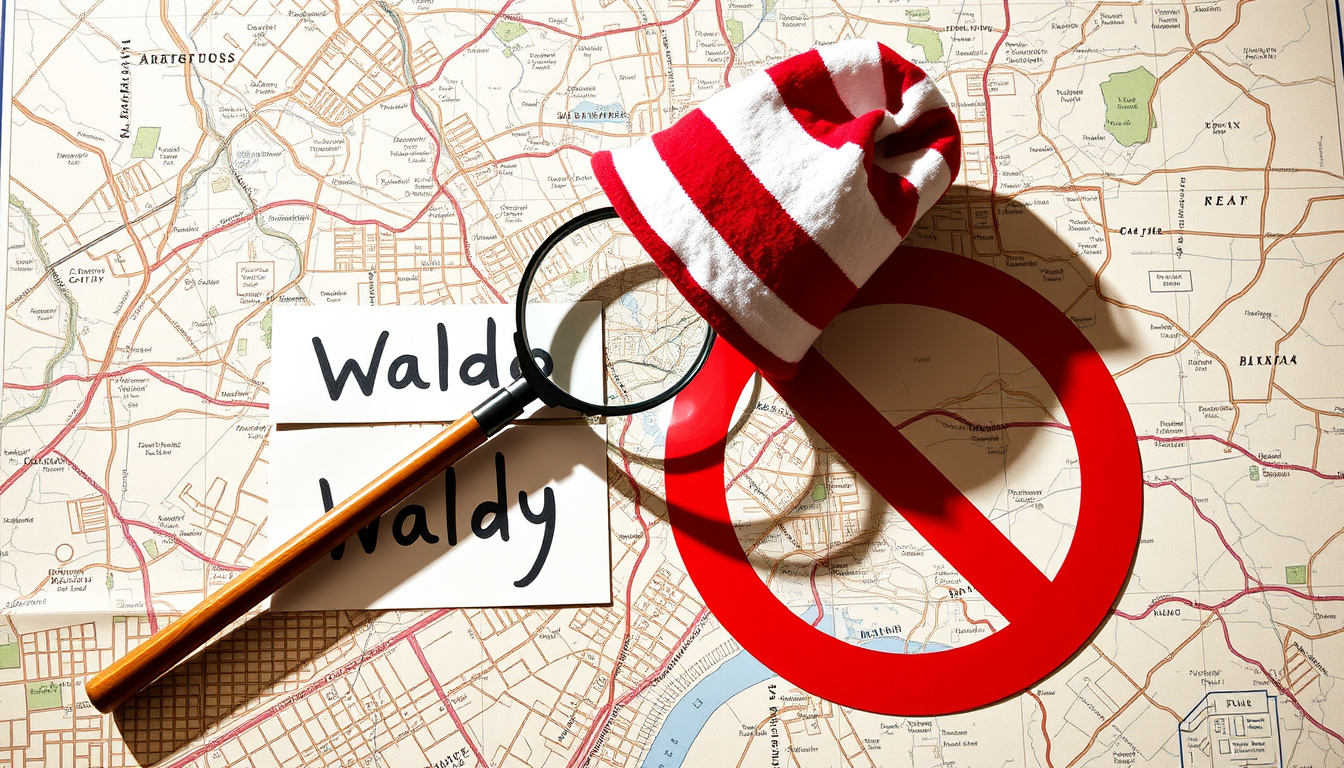
If you grew up in North America, the name “Waldo” is as familiar as the striped shirt itself, but if you’re from the UK or Australia, that same character has always been “Wally.” This 37-year-old naming split isn’t just a quirky trivia point — it’s a masterclass in how publishers adapt a single product for different English-speaking markets.
At a glance
- Wally is the original British name; Waldo is the North American adaptation. Wikipedia article on Where’s Wally
- Australia inherited the UK version, so it uses Wally. Wikipedia
- More than 30 regional names exist worldwide, including Walter, Charlie, and Ubaldo. Mental Floss
- A US publisher disliked the name Wally, associating it with Wallis Simpson. Wikipedia
- The change was a deliberate marketing decision, not a creative choice. Wikipedia
- The artwork stayed largely identical across versions. Waldo Wiki – Fandom
- Germany: Walter, France: Charlie, Italy: Ubaldo. Wikipedia
- Vietnam: Van Lang, Lithuania: Jonas. Wikipedia
- Scandinavian versions use Wally, not Waldo. Wikipedia
- The book was temporarily banned in some regions over political imagery, including swastikas in crowd scenes. Wikipedia
- Bans were book-specific, not franchise-wide. Wikipedia
- No ongoing censorship applies to the series. Wikipedia
The quick answer: Wally is the original name, and Waldo is the Americanized version. But understanding the split requires looking at the publishing history, regional differences, and a few surprising quirks.
Is it Where’s Waldo or Wally?
When British illustrator Martin Handford created the character in 1986, he named him Wally — a friendly, slightly old-fashioned British name. The first book, Where’s Wally?, was released on 25 June 1987 in the United Kingdom Wikipedia. When the book crossed the Atlantic, the American publisher decided Wally wouldn’t resonate with US readers. The reason, reportedly, was that an executive disliked the name because it reminded them of Wallis Simpson, the American woman for whom King Edward VIII abdicated the British throne Wikipedia.
The name Wally apparently didn’t sit right with American readers, partly because it reminded one executive of Wallis Simpson.
Wikipedia article on Where’s Wally
So Wally became Waldo, a name that felt more distinctly American. That single decision created a linguistic divide that persists today. The change was purely a publisher decision for the UK market’s American counterpart, not a creative one from Handford himself Wikipedia.
The artwork remained essentially identical across editions. According to a fan-maintained Waldo Wiki – Fandom, the main differences between versions are language and character name changes, not the illustrations themselves.
The main differences between versions are language and character name changes, not the illustrations themselves.
Waldo Wiki – Fandom
Bottom line: The Waldo name isn’t a creative evolution — it’s a straightforward marketing adaptation born from a publisher’s discomfort with the name Wally for American audiences.
The trade-off: One name change created a 37-year-long identity split. Loyal fans on each side grew up with different names for the same character, and the series gained a built-in trivia hook that arguably boosted its cultural footprint.
The implication: What began as a single executive’s aversion reshaped how millions of readers refer to the character, a reminder that small marketing decisions can have decades‑long cultural consequences.
Wally vs. Waldo: a quick comparison of the two names
The naming divide is best understood as a head-to-head comparison between the original UK branding and the American adaptation.
| Aspect | Wally (UK & Commonwealth) | Waldo (North America) |
|---|---|---|
| Original title | Where’s Wally? | Where’s Waldo? |
| First publication | 25 June 1987 (UK) | 1987 (US edition with new name) |
| Character name origin | Chosen by Martin Handford | Changed by American publisher |
| Reason for change | N/A — original name | Executive disliked “Wally” (Wallis Simpson association) |
| Markets using each name | UK, Australia, New Zealand, Scandinavia | United States, Canada |
| Other regional names | Germany (Walter), France (Charlie), Italy (Ubaldo) | Same regional names in non-English markets |
Australia uses Wally because it inherited the British version directly, while Sweden also retains the original name Wikipedia. The split isn’t just about North America vs. everyone else — it’s about which publishing market supplied the local edition.
The upshot: The Wally/Waldo divide reflects basic marketing adaptation: publishers tailor names to sound native in each market. Australia and Sweden kept the British name because they took British stock, while North America got a bespoke rebrand.
The pattern: a single naming decision, applied consistently for 37 years, has cemented parallel identities that are now as natural to each audience as their own accent.
Why is Waldo called Wally in Australia?
The franchise localized the character’s name for dozens of markets, which is a common practice for children’s media to make characters feel local.
| Country / Region | Localized character name | Notes |
|---|---|---|
| United Kingdom & Ireland | Wally | Original name |
| United States & Canada | Waldo | Changed by publisher for North American market |
| Germany | Walter | Localized German name |
| France | Charlie | Localized French name |
| Italy | Ubaldo | Localized Italian name |
| Vietnam | Van Lang | Localized Vietnamese name |
| Lithuania | Jonas | Localized Lithuanian name |
| Scandinavia (various) | Wally | Retained UK name |
The practice of localizing names isn’t unique to Wally — it’s standard in media franchise adaptation. But the sheer breadth here is notable: from Walter in Germany to Ubaldo in Italy, the character has been rechristened to fit local linguistic and cultural norms Wikipedia.
Why this matters: These regional name changes show that Wally isn’t just a British character — he’s an adaptable IP that publishers have molded to fit local audiences, from Germany’s Walter to Vietnam’s Van Lang.
The catch: Australia’s use of Wally is simply a distribution accident — it inherited the UK edition rather than the North American one, not because of any linguistic preference.
Who is Waldo’s girlfriend and who is his evil twin?
The supporting cast also carries different names across markets. The enemies Odlaw and Wenda, along with other characters, have localized names in several languages.
What is Wenda’s role?
- Wenda is a supporting character who appears in crowd scenes.
- Her name is an anagram of “Wally” with a letter swapped.
- She has localized names in some markets, but often retains a variation of Wenda.
Wenda is portrayed as Waldo’s friend, sometimes with a striped outfit of her own in different colors. Her exact role varies slightly between books, but she is consistently a recurring character in the hide-and-seek scenes Wikipedia.
Who is Odlaw?
- Odlaw is Wally’s antagonist, dressed in yellow and black stripes.
- His name is “Waldo” spelled backward.
- He appears in later books as a rival treasure hunter.
Odlaw’s design deliberately mirrors Wally’s but with reversed colors — yellow stripes on black instead of red on white — to visually signal his antagonistic role Wikipedia.
The catch: The names Wenda and Odlaw are themselves mini-linguistic puzzles — Wenda being a near-anagram of Wally and Odlaw being Waldo spelled backward. This shows the franchise’s long-standing fascination with wordplay.
The implication: Even the supporting characters are designed with name games, reinforcing the series’ playful identity beyond the search‑and‑find mechanics.
Why was Where’s Waldo banned?
While Wally is beloved worldwide, the series faced a few controversies that led to temporary bans in specific countries. These incidents were tied to political imagery in the illustrations, not the puzzles themselves.
The bans were temporary and book-specific
- Some versions included swastikas in crowd scenes, which caused localized bans.
- These bans applied to specific books, not the entire franchise.
- No ongoing censorship is in place today.
The political imagery in question was typically small background details in the dense crowd scenes — elements easy to miss but unacceptable in certain national contexts. The bans were temporary, book-specific, and driven by local sensitivities rather than a broad rejection of the franchise Wikipedia.
The paradox: A franchise built on innocent hide-and-seek puzzles found itself embroiled in political censorship debates — proof that even the most benign illustration can become controversial in the wrong context.
The pattern: The bans highlight how a global product must navigate local norms, even when the original intent is purely playful.
What is the hardest Where’s Waldo book?
Among fans, some books are considered harder than others, though no official difficulty ranking exists from the publisher. The community has developed an informal consensus.
- The Great Picture Hunt is often cited as the hardest book.
- Later books introduced denser illustrations and more characters to find.
- No official difficulty ranking exists from the publisher.
The general sentiment is that earlier books are simpler, while later additions feature more complex scenes and additional characters to track. The Great Picture Hunt (also known as The Ultimate Fun Book in some markets) is commonly flagged as the toughest challenge Wikipedia.
What to watch: The difficulty curve is a natural outcome of a franchise growing with its original audience — later books cater to older readers who need more challenge.
The catch: Without an official ranking, the “hardest” title is a fan consensus rather than a publisher‑endorsed fact, but it still reflects the increasing complexity of the series over time.
How to know if your copy is Wally or Waldo
Figuring out which version you own is straightforward if you know what to look for.
- Check the title page. If it says “Where’s Wally?” it’s likely a UK or Commonwealth edition.
- Look at the spine. North American editions say “Where’s Waldo?” clearly on the spine and cover.
- Check the publisher. UK editions are typically published by Walker Books; US editions by Little, Brown and Company.
- Notice the character’s name in dialogue. If the text calls him Wally, it’s a British-derived version; if Waldo, it’s a North American one.
- Examine the copyright page. The publishing location is listed there — UK addresses typically indicate Wally editions.
The takeaway: A quick check of the title page and publisher is enough to know whether you own a Wally or Waldo edition — the distinction has been consistent since 1987.
The implication: For collectors, this simple check immediately reveals which market a copy was intended for, making the naming split easy to verify.
Related reading: Where’s Waldo and Who’s Wally · Where’s Waldo or Wally difference
whereiswaldogame.com, en.wikipedia.org, brilliantmaps.com, horizonpulse.net, reddit.com, reddit.com, us.jimmylion.com, whereiswaldo.com, shop.wadeandwallow.com
Frequently asked questions
Why is it Wally in the UK but Waldo in America?
The change happened because the American publisher reportedly disliked the name Wally, associating it with Wallis Simpson. The decision was purely marketing-oriented to make the character feel more American.
Does Australia use Wally or Waldo?
Australia uses Wally because it inherited the British version of the books, not the American adaptation.
Are the illustrations different between Wally and Waldo books?
No, the artwork is generally identical. The main differences are the character name and the language of the text.
Was the book banned anywhere?
Yes, some versions were temporarily banned in specific countries over political imagery, such as swastikas in crowd scenes. These were book-specific bans, not franchise-wide, and no ongoing censorship exists.
What is the hardest Where’s Wally book?
Fans often consider The Great Picture Hunt the hardest, though there is no official publisher ranking. Later books generally have denser illustrations.
Who are Wenda and Odlaw?
Wenda is Wally’s friend who appears in crowd scenes; Odlaw is his yellow-and-black-striped adversary. Odlaw’s name is “Waldo” spelled backward.
This guide has shown how a single marketing decision split the franchise into two parallel identities, how regional adaptations multiplied globally, and how temporary bans added a layer of controversy to an otherwise innocent series. The naming split remains the most visible legacy of that choice.
Related stories





Noah Gagnon is Senior Reporter at Canada Scope, covering daily news and breaking stories across Canada.