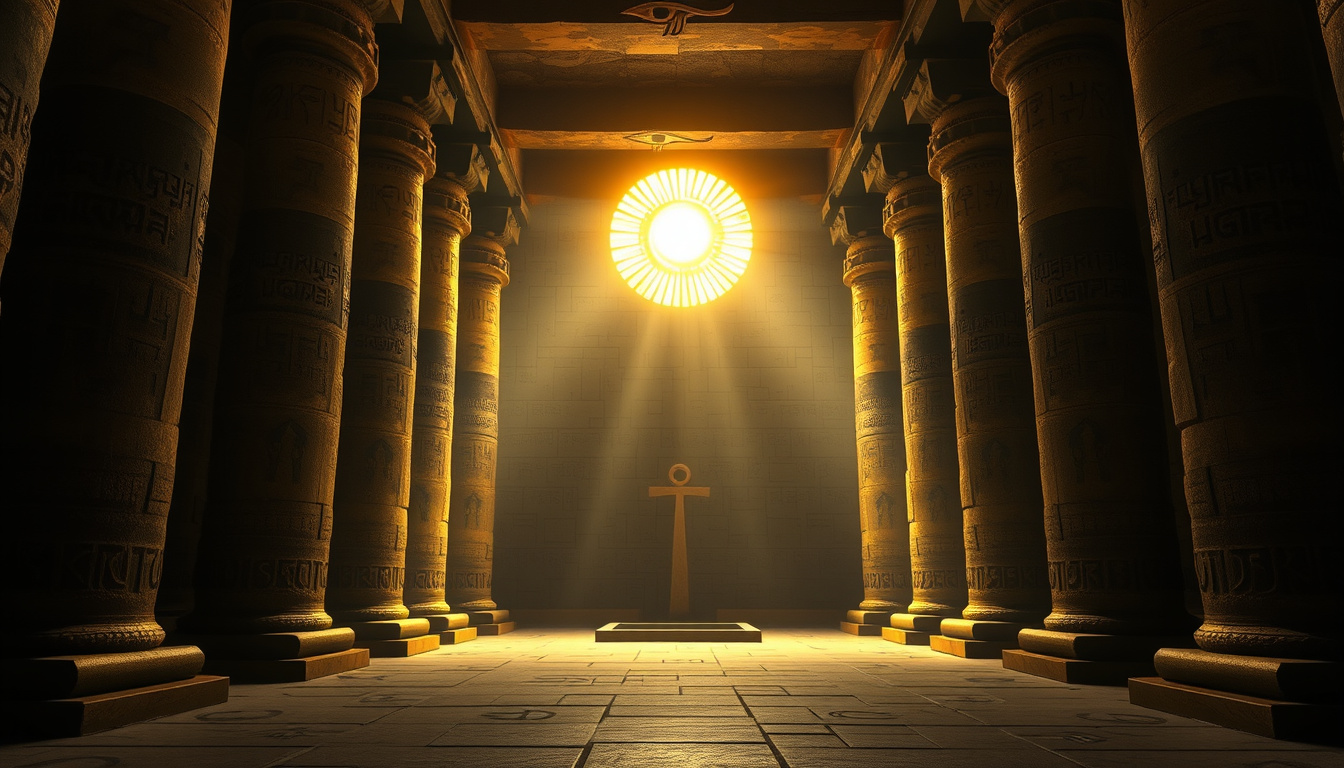
Anyone who has ever glimpsed the golden burial mask of Tutankhamun or stood before the towering pillars of Karnak knows that ancient Egypt was a world alive with gods. The Egyptian pantheon is vast, shifting, and deeply human in its drama — a family of creators, protectors, and destroyers whose stories shaped one of history’s longest civilizations.
Major gods in the Ennead: 9 ·
Chief god of the pantheon: Ra (later Amun-Ra) ·
God of the dead and mummification: Anubis ·
Creator god in Heliopolis: Atum
Quick snapshot
- The Ennead of Heliopolis includes nine specific gods: Atum, Shu, Tefnut, Geb, Nut, Osiris, Isis, Seth, and Nephthys (Wikipedia – Ancient Egyptian deities).
- Ra was the chief god during the Old Kingdom (Britannica – Major gods and goddesses of ancient Egypt).
- Anubis is associated with mummification and the afterlife (Britannica – Major gods and goddesses of ancient Egypt).
- The four sons of Horus protected the mummy’s organs (Wikipedia – Ancient Egyptian deities).
- Whether the “first god” was Atum, Ra, or Ptah depends on the creation myth — different regions had different origin stories (Britannica – Ancient Egyptian religion: The Gods).
- The exact identity of the “ghost god” – some sources point to Anubis, others to a lesser spirit deity like Aha or the “ghost of the dead” (Wikipedia – Ancient Egyptian deities).
- The pantheon evolved over 3,000 years: local gods like Amun rose to prominence during the New Kingdom and merged with Ra to become Amun-Ra (Fiveable – Local and Regional Deities).
- Ongoing archaeological discoveries continue to refine our understanding of how Egyptian gods were worshipped regionally (Britannica – Ancient Egyptian religion: The Gods).
Five key facts, one pattern: the Egyptian pantheon was organized around family lineages and cult centers, not a single rigid hierarchy.
| Fact | Value |
|---|---|
| Number of major gods (Ennead) | 9 |
| Period of worship | c. 3100 BCE – 4th century CE |
| Primary textual sources | Pyramid Texts, Coffin Texts, Book of the Dead |
| Most widely worshipped god | Ra (Sun god) |
| God of the dead | Osiris (ruler of the underworld); Anubis (embalming and guidance) |
What Is the Egyptian Pantheon?
Ancient Egyptian religion did not have one fixed, universal hierarchy of gods; divine status shifted by era, region, and cult center, according to Wikipedia (encyclopedic resource on Egyptian deities). At the apex of the divine society stood the king of the gods, usually identified with the creator deity.
How many Egyptian gods existed?
- The pantheon consisted of hundreds of deities, with major gods forming a hierarchy (Britannica – Ancient Egyptian religion: The Gods).
- Worship evolved over 3,000 years, with regional variations (Wikipedia – Ancient Egyptian deities).
What is the Ennead of Heliopolis?
- The Ennead is a group of nine primordial gods: Atum, Shu, Tefnut, Geb, Nut, Osiris, Isis, Seth, and Nephthys (Wikipedia – Ancient Egyptian deities).
- Atum created himself from the primordial waters of Nun, then produced Shu (air) and Tefnut (moisture) (Britannica – Ancient Egyptian religion: The Gods).
The pattern: the Ennead represents a creation myth that served as a template for divine family relationships throughout Egyptian religion.
A student researching Egyptian mythology must understand that no single “official” list exists — the pantheon is a network of overlapping cults, and the Ennead is just one of several creation frameworks.
Who Are the 9 Major Egyptian Gods?
The nine major gods of the Ennead are the most frequently cited grouping. However, some lists expand to ten by including Horus, or merge the Ennead with the Ogdoad of Hermopolis.
Who were the 10 gods of Egypt?
- Some lists include a tenth god, such as Horus, or combine the Ennead with the Ogdoad (Wikipedia – Ennead).
- Britannica’s list of major gods includes Isis, Horus, Seth, Ptah, Re, Hathor, Anubis, Thoth, and Bastet — a different selection of nine (Britannica – Major gods and goddesses of ancient Egypt).
Who are the most famous Egyptian gods?
- Among the most recognized are Ra, Osiris, Isis, Horus, Anubis, and Seth (Britannica – Major gods and goddesses of ancient Egypt).
- These gods appear in the most surviving myths and temple reliefs (Wikipedia – Ancient Egyptian deities).
The catch: “famous” varies by region and period — Amun was relatively obscure until the New Kingdom, when he merged with Ra to become the supreme state god.
What Are the Four Gods of Egypt?
This question refers to the four sons of Horus, each responsible for protecting a specific internal organ of the deceased during mummification.
What is the role of the four sons of Horus?
- Imsety protected the liver, Hapy the lungs, Duamutef the stomach, and Qebehsenuef the intestines (Wikipedia – Four sons of Horus).
- Each son was associated with a cardinal direction and a specific goddess protector (Wikipedia – Four sons of Horus).
The trade-off: while these four are the most famous “four gods,” other groupings like the Ogdoad (eight gods) or the Triple of Thebes (Amun, Mut, Khonsu) also appear in Egyptian texts.
Who Is Egypt’s Most Powerful God?
Ra (later Amun-Ra) is widely considered the most powerful god, king of the gods and god of the sun. But the title shifts with time and political geography.
Who is the most feared Egyptian god?
- The most feared god is often Seth, god of chaos, storms, and violence (Britannica – Major gods and goddesses of ancient Egypt).
- Seth murdered his brother Osiris and was associated with disorder, yet he was also a protector of Ra’s solar barque (Wikipedia – Seth).
Who is the Egyptian ghost god?
- The Egyptian ghost god is often Anubis, god of the dead and mummification, who guided souls to the afterlife (Britannica – Major gods and goddesses of ancient Egypt).
- Some sources point to a lesser spirit deity like Aha, but Anubis is the most commonly associated with ghosts and the psychopomp role (Wikipedia – Anubis).
The implication: power, fear, and ghostly attributes are not fixed labels — they depend on the myth and the period. Seth was feared but also necessary; Anubis was gentle guide, not a ghost himself.
A visitor to a modern museum might see Anubis as a “ghost god,” but ancient Egyptians saw him as a protector — the line between feared and revered was thin.
Who Was the First Egyptian God?
In the Heliopolitan creation myth, the first god was Atum, who created himself from the primordial waters of Nun. Other myths name Ra or Ptah as the first god.
How did the first god create the world?
- Atum created Shu (air) and Tefnut (moisture), who gave birth to Geb (earth) and Nut (sky) (Britannica – Ancient Egyptian religion: The Gods).
- In the Memphite theology, Ptah created the world through thought and speech (Wikipedia – Ptah).
The pattern: every major cult center had its own creation story, and the “first god” depended on where you lived. The Heliopolitan version is the most widely cited today.
Six major deities, one pattern: each god had a distinct domain, symbol, and cult center that shaped their regional importance.
| God | Domain | Symbol | Primary Cult Center |
|---|---|---|---|
| Ra (Amun-Ra) | Sun, creation, kingship | Falcon head, sun disk | Heliopolis, Thebes |
| Osiris | Afterlife, resurrection, judgment | Mummified king, crook and flail | Abydos, Busiris |
| Isis | Magic, motherhood, fertility | Throne headdress, wings | Philae, Behbeit el-Hagar |
| Horus | Sky, war, kingship | Falcon, eye of Horus | Edfu, Hierakonpolis |
| Anubis | Mummification, dead, guidance | Jackal or jackal head | Hardai (Cynopolis) |
| Seth | Chaos, storms, violence, protector of Ra | Mysterious “Seth animal” | Ombos (Naqada) |
The takeaway: geographical and political power often determined which god was supreme — when Thebes became the capital, Amun rose to the top of the pantheon.
Clarity check
Confirmed facts
- The Ennead of Heliopolis includes nine specific gods.
- Ra was the chief god during the Old Kingdom.
- Anubis is associated with mummification and the afterlife.
- The four sons of Horus protected the mummy’s organs.
What’s unclear
- Whether the “first god” was Atum, Ra, or Ptah depends on the creation myth.
- The exact identity of the “ghost god” – some sources point to Anubis, others to a lesser spirit deity.
Perspectives from the experts
Horus is described as ‘god of the sky, war and hunting’ and associated with pharaohs.
— British Museum educational resource
Osiris, Isis, Horus, Seth, Ptah, Re, Hathor, and Anubis are highlighted as the most significant.
— Britannica list of 11 Egyptian gods
Presents a child-friendly introduction to Anubis, Ra, Tefnut, and others.
— National Geographic Kids
The voices across these sources agree on the core cast, but their emphasis varies — reflecting the pantheon’s inherent flexibility.
For the modern reader, the Egyptian pantheon is not a rigid list but a living map of how a civilization understood the world. The most powerful god changed with the empire, the most feared god was also a protector, and the first god was different depending on where you prayed. For anyone diving into Egyptian mythology, the lesson is clear: look for the cult center and the era, and the hierarchy will start to make sense.
Related reading: Ancient Egyptian deities · Major gods and goddesses of ancient Egypt
fiveable.me, veritablehokum.com, ancientegyptianreadings.com, worldhistory.org, religion.fandom.com, etana.org, ancient-philosophia.org, ru.wikipedia.org
Frequently asked questions
What is the Egyptian god of the sun?
Ra (later Amun-Ra) is the primary sun god, often depicted with a falcon head and a sun disk. Atum, the creator god, was also associated with the sun in Heliopolitan theology.
How did ancient Egyptians worship their gods?
Worship included daily offerings, temple rituals, festivals, and personal devotion. Priests performed ceremonies at major cult centers like Karnak and Abydos.
What animals were sacred to Egyptian gods?
Many gods had animal associations: Horus (falcon), Anubis (jackal), Thoth (ibis), Bastet (cat), and Sobek (crocodile). Sacred animals were often mummified and buried.
What is the Book of the Dead?
A collection of spells and funerary texts meant to guide the deceased through the afterlife. It includes the “Weighing of the Heart” ceremony presided over by Osiris and Anubis.
Are there female Egyptian gods?
Yes, major goddesses include Isis (magic, motherhood), Hathor (love, music), Nut (sky), Tefnut (moisture), and Nephthys (funerary protection). Female deities were powerful and widely worshipped.
What is the role of Thoth?
Thoth is the god of wisdom, writing, and magic. He is often depicted as an ibis-headed man and served as the scribe of the gods in the judgment of the dead.
How were Egyptian gods depicted in art?
Gods were shown as humans, animals, or hybrids. A falcon head denoted Horus, a jackal head Anubis, and a sun disk Ra. Colors and symbols carried specific meanings.

Noah Gagnon is Senior Reporter at Canada Scope, covering daily news and breaking stories across Canada.