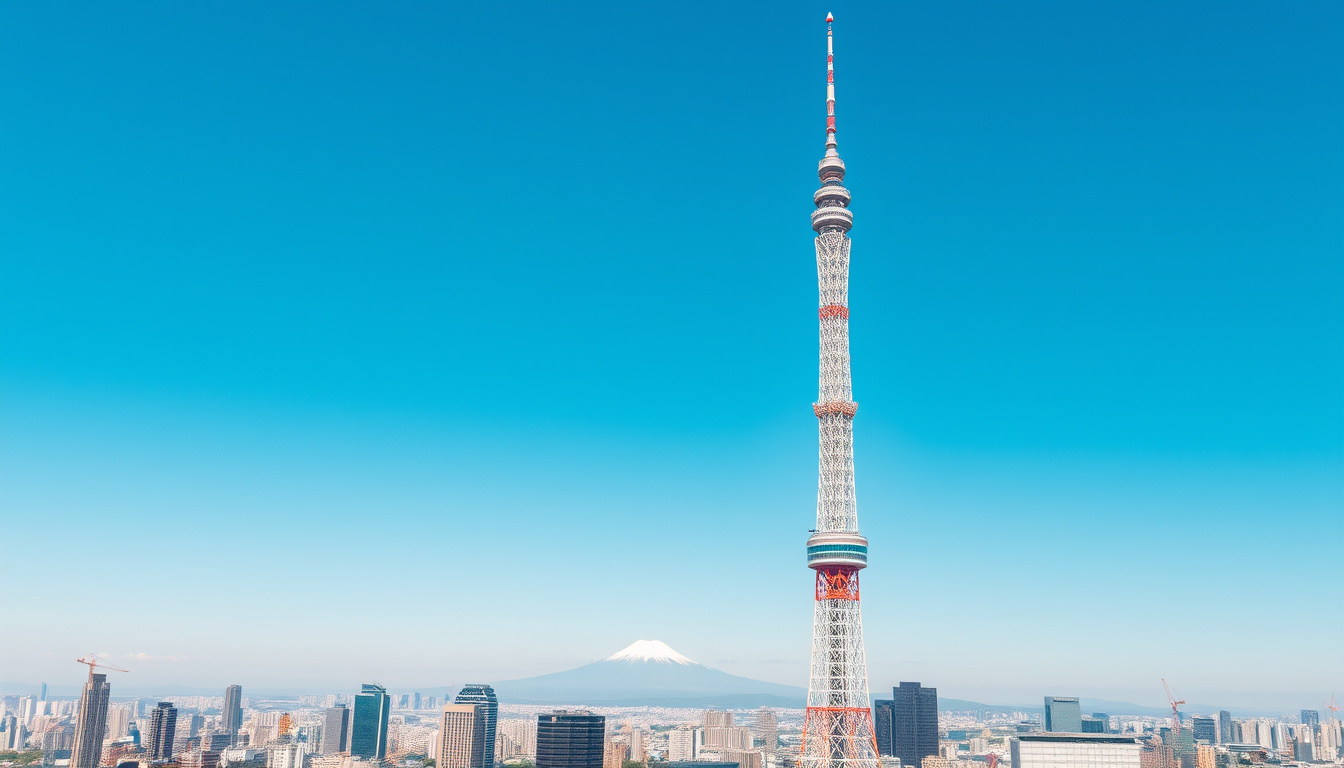
You’re standing in the middle of Tokyo, and two towers are vying for your attention. One is a nostalgic red-and-white icon, the other a futuristic silver spike that scrapes the sky. But which one gives you the view you’re actually after? Tokyo Skytree, at 634 meters, is the tallest tower in the world, but its extreme height changes the kind of cityscape you see — and that’s exactly what this guide unpacks.
Height: 634 meters (2,080 ft) ·
Year opened: 2012 ·
Observation decks: Tembo Deck (350m) and Tembo Galleria (450m) ·
Tallest tower in the world: Yes ·
Location: Sumida, Tokyo, Japan ·
Adult admission (basic): ¥2,100
Quick snapshot
- 634m tall – world’s tallest tower (Tokyo Skytree Official)
- Second tallest structure globally (Wikipedia)
- Opened 2012 (Tokyo Skytree Official)
- Tembo Deck at 350m (Tokyo Skytree Official)
- Tembo Galleria at 450m (Tokyo Skytree Official)
- Both offer 360° views (Japan Guide)
- Panoramic skyline photos (Klook)
- Clear-day Mt. Fuji views (Japan Guide)
- Families and tourists (Tokyo Cheapo)
- Expensive tickets (Tokyo Skytree Official Ticket Page)
- Crowds can be heavy (Japan Guide)
- Distant city views (Tokyo Cheapo)
Eight key facts about Tokyo Skytree, one pattern: the numbers highlight its engineering ambition and the scale of the visitor experience.
| Attribute | Value |
|---|---|
| Official name | Tokyo Skytree |
| Height | 634 m (2,080 ft) |
| Floors | 29 (observation decks on 350 and 450 m) |
| Construction started | 2008 |
| Opened | 22 May 2012 |
| Location | Sumida, Tokyo, Japan |
| Architect | Nikken Sekkei |
| Owner | Tobu Railway |
Is it worth going up the Tokyo Skytree?
The answer depends on what you want from a view. Pros of visiting Tokyo Skytree include the sheer height — at 634 meters it’s the tallest tower in the world (Wikipedia) — and the chance to see Mt. Fuji on a clear winter day (Japan Guide). The Tembo Deck at 350 meters and the Tembo Galleria at 450 meters give you two different perspectives.
- Pros: Unmatched height, two observation decks, Mt. Fuji views, modern facilities.
- Cons: Admission fee starts at ¥2,100 and can rise to ¥3,000+ for combo tickets (Tokyo Skytree Official Ticket Page). Crowds are common, especially weekends. Weather can ruin visibility — you won’t know until you’re up.
“Tokyo Skytree is the tallest tower in the world, and its height gives you a view that feels more like gazing at a map than a cityscape.”
— Japan Guide travel advice
When is it worth it? If you’re after a sweeping, distant panorama — especially on a clear day when Mt. Fuji is visible — Skytree delivers. If you want intimate city views or a budget-friendly option, consider alternatives.
Skytree’s height is its greatest asset and its biggest flaw: the city below looks like a map, not a street-level scene. For urban texture, Tokyo Tower’s 333m height gives you a closer, more human-scale view.
The implication: your choice comes down to what kind of perspective you value — the big-picture map or the street-level scene.
What’s so special about Tokyo Skytree?
Four things set it apart from every other tower in Japan.
World’s tallest tower
- Height 634m symbolizes the old Edo region (Musashi province) — 6-3-4 is a wordplay on the old province name.
- Opened in 2012.
- Broadcasting tower with earthquake-resistant design.
Unique design and lighting
- Illumination changes seasonally — blue in summer, red in autumn, etc.
- Architect Nikken Sekkei used a traditional Japanese “chōchō” (butterfly) truss structure.
Tembo Deck and Tembo Galleria
- Tembo Deck at 350m offers a standard observation floor with glass floor panels.
- Tembo Galleria at 450m is a spiral walkway with a glass ceiling — marketed as “the highest skywalk in Japan” (Live Japan).
Attractions at the base (Solamachi mall)
- Tokyo Solamachi is a large shopping complex with restaurants, a Sumida Aquarium, and a planetarium.
Skytree isn’t just a tower — it’s a destination. The combination of record-breaking height, cultural symbolism, and base attractions makes it a full half-day outing, not just a quick ride up and down.
The pattern: each feature reinforces Skytree’s role as both an engineering landmark and a full-day destination, not merely an observation point.
Is Tokyo Skytree the tallest tower in the world?
Yes — Tokyo Skytree is the tallest tower in the world, but it’s important to distinguish between “tower” and “structure.” The Burj Khalifa in Dubai is the tallest structure overall at 828m, but it’s a building, not a tower.
How does it compare to other towers?
- Tokyo Skytree: 634m (tallest tower) (Wikipedia – List of tallest towers)
- Canton Tower (Guangzhou): 600m
- CN Tower (Toronto): 553m
- Ostankino Tower (Moscow): 540m
Tallest structures vs tallest towers
- Burj Khalifa (828m) is a building, not a tower under the Council on Tall Buildings and Urban Habitat definition.
“Tokyo Skytree is the tallest tower in the world by standard definition, but it’s only the second tallest structure overall.”
— Wikipedia
Which one is better, Skytree or Tokyo Tower?
Three comparisons, one pattern: each option trades height for proximity, cost, and experience.
Tokyo Skytree vs Tokyo Tower: height and views
- Tokyo Tower is 333m tall — roughly half the height of Skytree (Tokyo Tower Official).
- Skytree views are more distant and panoramic; Tokyo Tower offers a closer cityscape.
Tokyo Skytree vs Shibuya Sky: location and experience
- Shibuya Sky is an open-air rooftop at 229m, offering an unobstructed, 360° view of Shibuya crossing and surrounding areas.
- Skytree is enclosed (except for small open sections) and higher, giving a more distant perspective.
Cost comparison
- Skytree adult ticket: from ¥2,100 (deck only) to ¥3,000+ (combo) (Tokyo Skytree Official Ticket Page).
- Tokyo Tower main deck: ¥1,200 for adults.
- Shibuya Sky: ¥2,000 for adults.
Which offers better city views?
If you want to see Tokyo’s urban grid and feel the city around you, Tokyo Tower or Shibuya Sky are better. If you want Mt. Fuji on the horizon and a sense of the entire Kanto plain, Skytree wins.
Three options, one pattern: each observation deck trades height for proximity and price.
| Feature | Tokyo Skytree | Tokyo Tower | Shibuya Sky |
|---|---|---|---|
| Height | 634m | 333m | 229m |
| Observation deck height | 350m / 450m | 150m / 250m | 229m |
| Adult ticket price | ¥2,100 – ¥3,000+ | ¥1,200 | ¥2,000 |
| Open-air experience | Limited (small sections) | No | Yes (rooftop) |
| Best for | Distant panoramas, Mt. Fuji | Classic Tokyo, budget | Shibuya crossing, urban vibe |
| Wait time (typical) | 30–60 min | 15–30 min | 10–20 min |
Skytree wins for biggest-picture views and Mt. Fuji. Tokyo Tower is the budget-friendly classic. Shibuya Sky is the trendy, open-air option for Instagram-worthy shots of Shibuya.
What this means: your ideal observation deck depends on whether you prioritize height, intimacy, or price — no single tower does all three.
How much time do I need at Tokyo Skytree?
Most visitors allocate 2–3 hours, including the ride up, both decks, and a walk through the base mall. Queues can add 30–60 minutes on busy days.
Can you see Mt. Fuji from Skytree?
- Mt. Fuji is visible on clear winter days, especially in the morning.
- Visibility not guaranteed — check weather forecasts before booking (Live Japan).
- The Tembo Galleria at 450m can see up to about 75km on a clear day.
Best time of day for clear views
- Sunset and night views are popular — the city lights up, but Mt. Fuji won’t be visible after dark.
- Early morning weekdays are least crowded and offer best visibility for distant landmarks.
Recommended itinerary
- Arrive 30 min before your booked time slot to collect tickets.
- Take the elevator to Tembo Deck (350m) — spend 30–45 min.
- If you have the combo ticket, proceed to Tembo Galleria (450m) — 20–30 min.
- Browse Solamachi mall for souvenirs or a meal — 1 hour.
- Total: 2–3 hours, not including queuing.
“On clear days the view from Tembo Galleria is spectacular, but you can’t guarantee it. Plan your visit for a morning with low humidity for the best chance.”
— Live Japan travel guide
Same-day tickets can sell out on busy days. Purchase advance tickets online to lock in your time slot and avoid disappointment.
The catch: even with careful planning, weather remains the wild card — no amount of advance booking guarantees a clear view of Mt. Fuji.
Confirmed facts and what’s unclear
Confirmed facts
- Tokyo Skytree is 634 meters tall (Tokyo Skytree Official)
- It is the tallest tower in the world (Wikipedia)
- It opened on 22 May 2012
- Two observation decks exist: Tembo Deck at 350m and Tembo Galleria at 450m
- Adult ticket starts at ¥2,100 (Tokyo Skytree Official Ticket Page)
What’s unclear
- Whether Mt. Fuji will be visible on a given day — depends on weather
- Exact waiting times — vary by season and time of day
- Which observation deck gives “better” views — subjective preference
Quotes from the experts
“Tokyo Skytree is a broadcasting tower and an observation tower that symbolizes the new face of Tokyo.”
— Tokyo Skytree Official Website
“At 634 meters, Tokyo Skytree is the tallest tower in the world, surpassing the Canton Tower in Guangzhou.”
— Wikipedia
“If you want to see Mt. Fuji, Tokyo Skytree is your best bet in Tokyo, but only on clear winter mornings.”
— Japan Guide travel advice
Summary
Tokyo Skytree’s extreme height makes it unmatched for distant panoramas — on a clear day, you can see the Boso Peninsula, the Tokyo Bay, and even the silhouette of Mt. Fuji. But if you’re hoping for a closer, more intimate view of Tokyo’s neon-lit streets, the tower’s height works against you. For the budget-conscious traveler seeking a classic Tokyo experience, Tokyo Tower remains the friendlier, cheaper option. The visitor who wants the biggest picture and the best chance of seeing Japan’s iconic mountain should book a morning slot at Skytree, check the weather, and hope for a cloudless sky.
tokyocheapo.com, jrpass.com, gotokyoskytree.com, skytreetickets.tokyo, skytreetickets.tokyo
Frequently asked questions
How do I get to Tokyo Skytree?
The nearest station is Oshiage on the Tokyo Metro Hanzomon Line, or Tokyo Skytree Station on the Tobu Skytree Line. From JR Tokyo Station, take the Marunouchi Line to Kanda, transfer to the Ginza Line to Asakusa, then walk to Oshiage. The journey takes about 30 minutes.
What is the best time of day to visit Tokyo Skytree?
Early morning weekdays are least crowded and offer the best visibility for distant views. Sunset is popular for the golden hour, but Mt. Fuji won’t be visible after dark.
Is there a restaurant at Tokyo Skytree?
Yes, there are several restaurants and cafes on the observation decks and in the Solamachi mall at the base, including Musashi Sky Restaurant on the Tembo Deck.
Can I buy Tokyo Skytree tickets online?
Yes, you can purchase advance tickets on the official website for a specific time slot. This is recommended to avoid queues and sell-out days.
Is Tokyo Skytree wheelchair accessible?
Yes, the tower is fully accessible with ramps, elevators, and wheelchair-accessible restrooms. Wheelchairs are available for loan on site.
What is the difference between Tembo Deck and Tembo Galleria?
Tembo Deck is the main observation floor at 350m with indoor and limited outdoor areas. Tembo Galleria at 450m is a spiral walkway with a glass ceiling, offering a higher, more open view.
Are there any discounts for children or students?
Children (6–12) pay about ¥1,000 for the deck, and students (13–17) get a slight discount. The official ticket page lists current reduced prices.
How long is the queue usually?
Queues vary from 15 minutes on weekdays to over an hour on weekends and holidays. Advance ticket holders typically wait less.
Related stories



Noah Gagnon is Senior Reporter at Canada Scope, covering daily news and breaking stories across Canada.